














Summary
Medical Assistant vs Medical Receptionist: Which Role Fits Your Career Goals?

Key Takeaways: Both roles, medical assistants and medical receptionists, are legitimate, rewarding entry points into healthcare. The question isn’t which is “better”; it’s which is better for you.
|
If you are searching for entry-level roles in the healthcare industry, two titles that keep appearing in job listings are medical assistant and medical receptionist. On paper, they seem almost identical. Both work in medical offices, interact with patients, and play an important role in keeping healthcare facilities running smoothly.
But that’s where the similarities end.
The reality is that these careers involve very different day-to-day responsibilities, career trajectories, salary ceilings, and skill requirements. One role puts you at the front desk, managing appointments and patient communication. The other places are closer to patient care, assisting with clinical tasks and medical procedures. Understanding that difference now can save you from choosing a career path that doesn’t fit who you are or where you want to go.
Whether you are just starting your career or making a strategic career change, this guide provides the detailed comparison you need to confidently choose between these two healthcare roles.
Why Medical Assistant and Medical Receptionist Roles Get Mixed Up?
When you walk into any small physician’s office, you will likely see both roles in action, sometimes in the same hallway or sometimes performed by the same person in a small practice. That’s part of why the distinction between medical receptionist / medical assistant gets blurry.
In large multi-physician practices and hospitals, the roles are clearly separated:
- The receptionist works at the front desk and performs tasks such as greeting patients, managing the phone, handling check-in and check-out.
- The medical assistant moves between the front office and the exam room, taking vitals, preparing patients, assisting physicians, and sometimes handling administrative tasks too.
In small solo practices, one person might do all of the above. This is why job postings sometimes combine the titles or use them interchangeably, even though the professional definitions are meaningfully different.
Medical Assistant vs Medical Receptionist: A Complete Comparison
To help you see how these roles compare in practice, let’s break down medical assistants and medical receptionists side by side based on different factors.
A) Daily Duties and Core Responsibilities
While both medical receptionists and medical assistants play important roles in keeping healthcare facilities running smoothly, their day-to-day responsibilities differ. The table below highlights the key differences in their daily responsibilities at a glance.
| Area of Responsibility | Medical Receptionist | Medical Assistant |
| Patient Check-In & Check-Out | ✓ Primary Responsibility | ✓ May Assist |
| Appointment Scheduling | ✓ Primary Responsibility | ✓ Occasionally |
| Answering Phone Calls | ✓ Primary Responsibility | ✓ Occasionally |
| Insurance Verification | ✓ Frequently | ✓ Sometimes |
| Managing Patient Records | ✓ Frequently | ✓ Frequently |
| Greeting and Assisting Patients | ✓ Primary Responsibility | ✓ Regularly |
| Taking Vital Signs | ✗ Not Typically | ✓ Primary Responsibility |
| Preparing Patients for Exams | ✗ Not Typically | ✓ Primary Responsibility |
| Assisting Physicians During Procedures | ✗ No | ✓ Frequently |
| Collecting Lab Samples | ✗ No | ✓ Often |
| Administering Medications or Injections* | ✗ No | ✓ In Some States and Settings |
| Front-Office Administrative Tasks | ✓ Primary Responsibility | ✓ Sometimes |
| Clinical Patient Care | ✗ No | ✓ Primary Responsibility |
Now that we have covered the key differences at a glance, let’s examine each role in greater detail.
a) What do Medical Receptionists do?
Medical Receptionist = Primarily Administrative Duties
A medical receptionist is the administrative backbone of the front office. They are the first human contact a patient has with a healthcare facility, whether in person or by phone. Their role is purely administrative, and they do not perform any clinical procedures.
Core Daily Responsibilities
- Patient Check-In and Check-Out
Medical receptionists greet patients upon arrival, verify identity and insurance, collect co-pays, update demographic information, and direct patients to the appropriate waiting area. At the end of a visit, they handle scheduling follow-up appointments, collect any remaining balances, and issue visit summaries.
- Appointment Scheduling and Calendar Management
Managing the physician’s schedule is one of the highest-impact tasks a receptionist handles. This involves scheduling new and returning patients, managing cancellations and no-shows, coordinating among multiple providers within a practice, and ensuring adequate time blocks for different visit types (new patient, follow-up, and procedure).
- Phone and Communication Management
Medical receptionists field incoming calls from patients, insurance companies, pharmacies, and other providers. They triage calls, direct clinical questions to nurses or MAs, handle administrative queries themselves, and take accurate messages.
- Insurance Verification and Authorization
Before a patient arrives for an appointment, receptionists verify that the patient’s insurance is active, confirm coverage for the planned services, and flag any referral or prior authorization requirements. This is one of the most technically demanding parts of the role and a major factor in a practice’s revenue cycle.
- Electronic Health Records Management
Modern medical receptionists are expected to be proficient in EHR systems. This goes beyond basic data entry; it includes quickly navigating the system, accurately updating patient records, and maintaining strict HIPAA compliance at every step. Did you know that, according to ONC, nearly 4 in 5 office-based physicians (78%) and nearly all non-federal acute care hospitals (96%) adopted a certified EHR?
- Medical Records and Documentation
Receptionists maintain physical and digital filing systems, process requests for medical records, ensure proper release-of-information authorization is on file, and coordinate record transfers between providers.
- Billing Support
In many practices, the receptionist handles front-end billing tasks: collecting co-pays and outstanding balances at the point of service, verifying patient financial responsibility, and in some cases entering basic billing data into the practice management system.
- HIPAA Compliance and Confidentiality
Every interaction a medical receptionist has with patient data is governed by the Health Insurance Portability and Accountability Act (HIPAA). Receptionists must understand patient privacy rights, handle sensitive information with discretion, and ensure that no protected health information is improperly disclosed, including in conversations overheard at the front desk.
What Medical Receptionists “Do NOT” Do?
This is just as important to understand:
- Don’t take vital signs (blood pressure, pulse, temperature, weight)
- Don’t perform clinical procedures of any kind
- Don’t administer injections or draw blood
- Don’t assist physicians during exams
- Don’t prepare examination rooms or medical equipment
- Don’t document clinical findings
Everything a medical receptionist does happens on the administrative side of the healthcare operation.
b) What Do Medical Assistants Do?
Medical Assistant = Both Clinical And Administrative Duties
A medical assistant (MA) is a dual-role healthcare professional who works in both the front office and clinical exam rooms, serving as a bridge between administrative operations and direct patient care.
This is the fundamental difference. Medical assistants do what medical receptionists do, plus substantially more. In most practices, they are trained in clinical skills that require hands-on patient contact.
a) Clinical Duties (Back Office)
- Taking Vital Signs
Blood pressure, pulse, respiration rate, temperature, height, weight, and oxygen saturation are all measured and documented by MAs before the physician sees the patient.
- Patient Intake and Medical History
MAs interview patients about their chief complaint, current medications, allergies, and relevant medical history. This information is entered into the EHR so the physician has a complete picture before entering the room.
- Preparing Patients and Exam Rooms
MAs prepare the examination room between patients by stocking supplies, sterilizing surfaces, and setting up equipment for anticipated procedures. They also help patients into gowns, explain what to expect, and ensure positioning for the exam.
- Phlebotomy and Specimen Collection
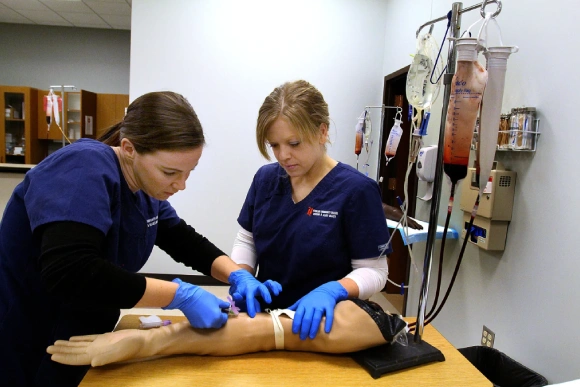
In most states, medical assistants perform venipuncture (blood draws) and collect other specimens such as urine, throat swabs, and wound cultures for laboratory analysis. This is something which medical receptionists don’t do.
- Administering Injections
Under physician delegation, MAs administer intramuscular, subcutaneous, and intradermal injections, including immunizations, allergy shots, and prescribed medications.
- EKG and Diagnostic Testing
Many MAs are trained to perform 12-lead electrocardiograms (EKGs) to assess heart rhythm, as well as other point-of-care tests like glucose checks, urinalysis, and rapid strep tests.
- Assisting With Procedures
During minor in-office procedures such as wound care, suture removal, biopsies, pelvic exams, MAs set up the sterile field, pass instruments, and assist the physician throughout.
- Patient Education and Discharge
After the physician has seen the patient, MAs often explain care instructions, medication directions, and follow-up plans. This patient-facing education role requires both clinical knowledge and strong communication skills.
| For a closer look at the hands-on clinical responsibilities of this career, explore our guide on what a clinical medical assistant does. |
b) Administrative Duties (Front and Back Office)
Medical assistants also perform many of the same administrative functions as receptionists:
- Scheduling appointments and managing patient flow
- Updating and maintaining electronic health records
- Processing prior authorizations and referrals
- Coordinating lab results and communicating them to patients under the physician’s direction
- Handling basic insurance and billing documentation
| For a comprehensive breakdown of administrative duties, read our guide post onhttps://ccitraining.edu/blog/what-does-a-clinical-medical-assistant-do/Medical Administrative Assistant: What They Do In A Day? |
B) Based on The Salary Potential
Salary is one of the most important differentiators between these two roles.
| Metric | Medical Assistant | Receptionist (General) |
| Annual Wage | $41,370 | $36,833 |
| Monthly Wage | $3,447 | $3,069 |
| Weekly Wage | $795 | $708 |
| Hourly Wage | $19.89 | 17.71 |
Sources:
What the numbers tell you:
The salary gap between a medical assistant and a general receptionist is nearly $7,000 per year. This is roughly 19% more for medical assistants. Over a 10-year career, that difference compounds significantly.
But the more striking contrast is in job growth. Medical assistants are projected to grow 12%, labeled “much faster than average” by the BLS, while general receptionist employment is projected to grow 0% over the same decade.
| For a full breakdown of MA pay, see our guide on how much medical assistants make. |
C) Education and Training Requirements
This is where the paths diverge most clearly at the start.
To Become a Medical Receptionist:
- Minimum requirement: High school diploma or GED.
- On-the-job training: Most medical facilities provide orientation training covering HIPAA, EHR systems, scheduling software, and office procedures.
- Recommended: Certificate program in medical office administration (8–12 months).
- Preferred certification: CMAA (Certified Medical Administrative Assistant) through the NHA.
To become a medical receptionist, a degree is not required; employers increasingly prefer candidates with specialized training in medical terminology, billing, and EHR systems.
To Become a Medical Assistant:
- Minimum requirement: High school diploma or GED + completion of an accredited MA program.
- Program length: Typically 7 months for a certificate medical assistant program; some associate’s degree MA programs take 2 years.
- Hands-on training: Externship or clinical practicum is offered by most programs.
- Nationally recognized Certification: CCMA (NHA), CMA (AAMA) or NCMA (NCCT)
| READ MORE: Explore our comprehensive guide to medical assistant certifications, including CMA, RMA, CCMA, and beyond, to understand eligibility requirements, exam differences, and career benefits. |
Unlike the receptionist path, becoming a medical assistant is not something you typically learn entirely on the job. Clinical skills such as venipuncture, injections, EKG, and vital signs require structured training and supervised practice before you can safely perform them on patients.
D) Work Environment and Daily Experience
| Factor | Medical Assistant | Medical Receptionist |
| Work location | Exam rooms + front office | Front desk/reception area |
| Physical demands | Moderate (standing, assisting patients, handling equipment) | Low, primarily desk-based |
| Patient interaction depth | Deep (extended clinical contact, education, emotional support) | High volume but brief (check-in/check-out) |
| Variety of tasks | Very high as no two patients or days are identical | Moderate (repetitive core tasks with varying patient interactions) |
| Stress profile | Clinical urgency, procedure responsibility | Volume management, insurance/billing complexity |
| Work pace | Fast-paced clinical flow | Busy front desk, multi-phone juggling |
| Scrubs required? | Almost always | Not always as business casual is common |
Both roles are people-facing and require genuine patience, empathy, and professionalism. But the nature of the interaction is different. MAs build clinical rapport over the course of a patient visit, while receptionists manage high-volume, time-sensitive patient flow at the entry and exit points.
E) Job Growth and Employment Outlook
The job growth data deserves a deeper look than the summary numbers suggest.
Medical Assistants:
According to the BLS Occupational Outlook Handbook:
- Projected growth: +12% from 2024 to 2034
- Net new jobs: +101,200
- Annual openings: ~112,300/year
- Current jobs: 811,000
- Primary growth driver: Aging U.S. population increasing demand for healthcare services; growing role of outpatient clinics and ambulatory care settings
To better understand the benefits of becoming a medical assistant, read our guide on Is an Online Medical Assistant Program Worth It in 2026?
Receptionists:
According to the BLS Receptionists Outlook:
- Projected growth: 0% (little or no change) from 2024 to 2034
- Net new jobs: +300 (essentially flat)
- Annual openings: ~128,500/year (mostly from replacement, not new positions)
- Current jobs: 1,007,200
Before exploring the steps to “how do I become a medical receptionist”, take time to look at the job outlook and employment demand to see where this career stands in today’s healthcare industry and beyond.
THE TAKEAWAY: If long-term job security and demand growth matter to your decision, the medical assistant trajectory is substantially stronger.
F) Certifications: Side-by-Side
| Certification | Role | Issuing Body |
| CMAA (Certified Medical Administrative Asst.) | Receptionist / Admin | NHA |
| CCMA (Certified Clinical Medical Asst.) | Medical Assistant | NHA |
| CMA (Certified Medical Assistant) | Medical Assistant | AAMA |
| NCMA (National Certified Medical Asst.) | Medical Assistant | NCCT |
Sources: NHA CMAA certification | NHA CCMA certification | AAMA CMA certification | NCCT NCMA certification
G) Career Advancement: Where Each Path Leads
This is the area where the two roles diverge most dramatically over a 5–10 year horizon.
Career Paths From Medical Receptionist
Starting as a medical receptionist gives you strong foundational exposure to healthcare administration. With experience and additional credentials, common advancement paths include:
- Senior Medical Receptionist / Lead Receptionist: Supervising junior front desk staff, managing complex scheduling across multiple providers
- Medical Office Manager / Practice Administrator: Overseeing daily operations, staff scheduling, compliance, and vendor relationships
- Health Information Technician: Managing electronic medical records, data integrity, and compliance
- Patient Care Coordinator / Patient Services Manager: Overseeing patient experience from intake through discharge
- Healthcare Administrator: With an associate’s or bachelor’s degree in health administration, moving into the management of departments or facilities
Career Paths From Medical Assistant
The MA path offers broader and often faster-moving advancement options, particularly because clinical experience opens doors that administrative experience alone cannot:
- Lead Medical Assistant / MA Supervisor: Managing MA staff in larger clinics, training new hires
- Specialized MA: Ophthalmology, cardiology, dermatology, pediatrics, orthopedics; specialization often increases pay
- EKG / Cardiac Technician: With additional CET (Certified EKG Technician) credential
- Office Manager / Practice Administrator: Clinical credibility plus administrative experience is a powerful combination for leadership roles
For more on the full scope of MA advancement options, read our post on Job Outlook for Medical Assistants.
H) Skills Overlap And Where They Diverge
Both roles share a core of healthcare-environment soft skills:
Skills “BOTH” roles require:
- Clear, professional communication with patients and clinical staff
- HIPAA knowledge and strict patient confidentiality practices
- EHR proficiency (Epic, Athenahealth, Practice Fusion, or similar platforms)
- Organizational skills and attention to detail under pressure
- Empathy and patience — particularly with anxious, confused, or distressed patients
- Medical terminology literacy
Skills “UNIQUE” to Medical Assistants:
- Clinical procedure competency (phlebotomy, injections, EKG)
- Sterile technique and infection control
- Vital signs interpretation
- Medication administration knowledge
- Anatomy and physiology fundamentals
- Assisting with minor surgical procedures
Skills where Medical Receptionists tend to go deeper:
- Complex insurance verification and authorization workflows
- Multi-line phone management and high-volume call triage
- Front-end revenue cycle operations
- Billing accuracy and claims support
- Scheduling optimization for multi-provider practices
Medical Assistant vs Medical Receptionist: Which Role Actually Fits Your Personality?
Salary and growth numbers matter, but so does your daily experience at work. Here’s a more honest, qualitative assessment of who thrives in each role.
You will thrive as a Medical Receptionist if you:
- Enjoy being the first face patients see and take pride in creating a welcoming environment
- Are energized by managing multiple tasks and channels simultaneously (phones, walk-ins, scheduling, billing) without losing your composure
- Prefer administrative problem-solving over clinical procedure work
- Are detail-oriented with documentation and accuracy in data entry
- Want a more predictable physical routine (primarily desk-based)
- Are not drawn to clinical hands-on work and don’t want to perform procedures on patients
- Want a faster entry path with lower formal training requirements
You will thrive as a Medical Assistant if you:
- Want direct, meaningful patient contact throughout your workday, not just at check-in
- Are drawn to learning and performing clinical skills (blood draws, injections, EKGs, patient prep)
- Enjoy variety, as no two patients or days are the same in a clinical MA role
- Want a career with strong upward mobility, including pathways into nursing and allied health
- Are comfortable with the physical demands of the role, such as all-day standing, moving between rooms, handling equipment
- Want to be seen as a clinically credible member of the healthcare team, not just an administrative support function
- Are willing to invest in a structured training program (6–12 months) to build those clinical skills
Ready to start your healthcare career? CCI Training Center’s Online Medical Assistant Program can prepare you for both clinical and administrative medical assistant roles in as little as 7 months. With flexible online learning, hands-on externship training, exam preparation, and personalized career services, you will gain the knowledge and practical experience needed to pursue entry-level opportunities with confidence.
Can You Start as a Receptionist and Move Into a Medical Assistant Role?
Yes, and it’s a common career path. Many healthcare professionals begin as medical receptionists because the role typically requires less formal training and provides valuable exposure to the healthcare environment. While working at the front desk, they gain experience interacting with patients, managing schedules, navigating electronic health record (EHR) systems, and handling insurance-related tasks.
By the time you enroll in an online medical assistant program, you are already familiar with many of the administrative processes that keep a medical office running smoothly. As a result, you can focus more of on developing clinical skills such as taking vital signs, assisting with procedures, collecting specimens, and preparing patients for examinations.
Conclusion
The data consistently indicate that medical assistants earn more, face faster-growing job demand, and have more diverse advancement options, including pathways into nursing, allied health, and healthcare management. But that comes with a real training commitment and the willingness to perform clinical procedures on patients every day.
The medical receptionist path isn’t a lesser choice; it’s a strategically different one. Many healthcare administrators, billing specialists, and office managers started at the front desk and built meaningful, well-compensated careers from there. Whatever direction feels right, the most important step is the same “get trained, get certified, and get moving”.
Program Offered
- Pharmacy Technician Training
- Online Medical Assistant
- Medical Billing and Coding Specialist Program
- Cloud Computing Technician Training
- Computer Network Technician
- Business and Accounting
- Radiology Technician Training
- Medical Assistant Program
- Computer Support Technician
- Cybersecurity Program
- Virtual Assistant Training

This article is written by
Share this article
Program Offered
- Pharmacy Technician Training
- Online Medical Assistant
- Medical Billing and Coding Specialist Program
- Cloud Computing Technician Training
- Computer Network Technician
- Business and Accounting
- Radiology Technician Training
- Medical Assistant Program
- Computer Support Technician
- Cybersecurity Program
- Virtual Assistant Training
This article is written by
Share this article
Frequently Asked Questions
Is a medical receptionist the same as a medical assistant?
No. A medical receptionist focuses exclusively on administrative and front-desk tasks such as scheduling, check-in, insurance, phone management, and billing support. A medical assistant performs those same administrative duties plus clinical work in the exam room, including taking vital signs, drawing blood, administering injections, and assisting physicians. The roles work alongside each other but are distinct in scope, training, and pay.
What do medical receptionists do differently from regular receptionists?
Medical receptionists work specifically in healthcare settings and must understand medical terminology, HIPAA patient privacy regulations, health insurance and prior authorization processes, and EHR systems. They also handle sensitive clinical communications (like relaying lab results under nurse/physician direction) and often deal with patients who are anxious, ill, or in distress — which requires a specific kind of empathy and professionalism beyond typical front-desk work.
How do I become a medical receptionist?
The minimum requirement is a high school diploma or GED. Most employers also want some familiarity with medical terminology and EHR software, which you can gain through a certificate program in medical office administration (typically 8–12 months at a community college or vocational school).
Which pays more, a medical assistant or a medical receptionist?
Medical assistants generally earn more due to broader responsibilities. As of June 2026, medical assistants earn an average annual salary of $41,370, compared to $36,833 for medical receptionists. The additional training and broader scope of duties often lead to higher earning potential and greater opportunities for career advancement.
Which has better job growth, a medical assistant or a medical receptionist?
Medical assistants, by a wide margin. BLS projects +12% growth for medical assistants from 2024 to 2034, adding over 101,000 net new jobs. Receptionists are projected to remain relatively flat overall. The healthcare sector continues to expand while general administrative roles face pressure from automation and AI.
Can a medical assistant work as a receptionist?
Yes, responsibilities may overlap in smaller practices. A trained medical assistant has the administrative competencies to cover front-desk duties as needed. Going the other direction (receptionist performing clinical MA duties) is not possible without additional clinical training and often certification.
Do medical receptionists need to know medical coding?
Not to the same depth as a dedicated medical coder, but familiarity with basic coding concepts, particularly CPT procedure codes and ICD-10 diagnosis codes, is increasingly valuable. Front-end billing support, insurance verification, and prior authorization work all benefit from coding literacy. Receptionists who develop this skill set can advance into billing specialist roles with higher pay.
How long does it take to become a medical assistant vs. a medical receptionist?
A medical receptionist can be job-ready in as little as a few weeks with on-the-job training or 8–12 months with a formal certificate program. A medical assistant typically requires 7–9 months for a certificate MA program at a minimum, plus externship hours. CCI Training Center’s Online Medical Assistant Program prepares students for entry-level roles and certification in as little as 7 months.
Related Articles
 Pamela Christianson
 Pamela Christianson
 Pamela Christianson
 Pamela Christianson
 Pamela Christianson

CCI Training Center Proudly Completes
41 Years in Career Training Services