











Summary


Key Takeaways:
|
Walk into almost any doctor’s office, urgent care clinic, or outpatient facility in the country, and you will find a clinical medical assistant somewhere in the mix, taking a patient’s blood pressure, prepping an exam room, drawing blood, or handing the physician exactly the instrument they need before they even ask for it. It’s one of those roles that keeps healthcare running smoothly, yet a lot of people outside the field don’t fully understand what the clinical medical assistant job actually involves day-to-day.
If you are researching what “clinical medical assistant” really means beyond the job title, this guide is for you. Here, we will break down the role from every angle, including its daily responsibilities, the skills it requires, and more.
Clinical Medical Assistant: A Quick Definition
A clinical medical assistant is a trained healthcare professional who works directly with patients under the supervision of physicians, nurse practitioners, or other licensed providers. Unlike administrative medical assistants, who focus almost entirely on front-office work like scheduling and billing, clinical medical assistants are hands-on. They take vitals, prepare patients for exams, assist during procedures, collect lab specimens, and handle a range of tasks that put them in direct contact with patient care.
Many medical assistants end up doing a hybrid of both clinical and administrative work, especially in smaller practices where staff wear multiple hats. But when a job posting or job description specifically says “clinical medical assistant,” it’s signaling that patient-facing clinical duties are the core of the role.
What Does a Clinical Medical Assistant Do?
No two days look identical for a clinical medical assistant, since the specific mix of tasks shifts depending on the practice type, but there’s a consistent rhythm to the role. Here’s what typically fills a shift.
Typical Duties
- Take vital signs (blood pressure, pulse, temperature, weight, height).
- Record medical histories in the patient’s chart/EHR.
- Prepare patients for exams and procedures.
- Assist physicians during exams or minor surgeries.
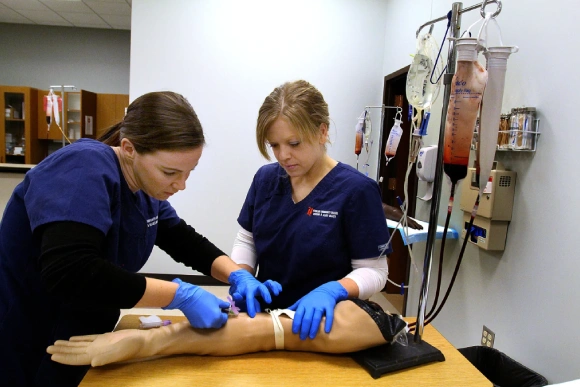
- Draw blood (phlebotomy) and collect lab specimens.
- Administer medications/injections (as permitted by state law).
- Perform EKGs and other diagnostic tests.
- Educate patients about treatments, medication use, and aftercare.
- Sterilize instruments and maintain infection control.
Let’s discuss each duty in a detailed version for better understanding:
1. Taking and Recording Vital Signs
This is one of the most fundamental parts of the job. Before a physician even walks into the exam room, the clinical medical assistant has usually already measured the patient’s blood pressure, pulse, respiration rate, temperature, height, and weight. These numbers get logged into the patient’s chart and give the physician a baseline to work from.
2. Preparing Patients and Exam Rooms
Clinical medical assistants get patients ready for their visit by explaining what to expect, helping them into a gown if needed, and positioning them appropriately for the type of exam or procedure. They also stock and set up exam rooms with the right instruments and supplies ahead of time, so the physician isn’t scrambling mid-appointment.
3. Assisting with Examinations and Procedures
During the actual visit, clinical medical assistants often stay in the room to assist the physician. That might mean handing over instruments, helping position the patient, or documenting notes as the physician dictates. In specialty settings, this could extend to assisting with minor in-office procedures like suture removal, wound care, or biopsies.
4. Administering Injections and Medications
Administering injections is a clinical responsibility that may be assigned to Medical Assistants in certain states. Depending on state regulations, employer policies, and appropriate supervision, they may administer intramuscular, subcutaneous, or intradermal injections. Because scope-of-practice laws differ across the country, not every Clinical Medical Assistant is legally permitted to perform these procedures.
5. Performing EKGs and Basic Diagnostic Tests
In cardiology offices, primary care practices, and urgent care centers, clinical medical assistants frequently run electrocardiograms (EKGs) to measure heart activity. They may also administer other basic diagnostic tests, such as spirometry for lung function or vision and hearing screenings, depending on the practice.
6. Drawing Blood and Collecting Specimens
Phlebotomy is an important clinical skill that many Medical Assistants learn during their training. Depending on their education, employer, and state regulations, they may draw blood, collect urine or other laboratory specimens, and prepare them for testing in an in-house laboratory or for transport to an outside lab. Accuracy is essential, as improperly collected or mislabeled specimens can affect test results and patient care. If you are wondering, “Do Medical Assistants Learn Blood Draw Skills?” read this guide to know how state laws may influence this responsibility.
7. Sterilizing Instruments and Managing Supplies
Infection control is a constant behind-the-scenes responsibility. Clinical medical assistants sterilize reusable instruments, properly dispose of biohazardous materials, and keep supply inventories stocked so the practice never runs short of essentials during a busy day.
8. Documenting in Electronic Health Records
Almost everything a clinical medical assistant does gets documented. Modern practices rely heavily on electronic health record (EHR) systems, so comfort with digital charting software is now a practical necessity rather than a bonus skill. Accurate, timely documentation keeps the whole care team on the same page.
9. Educating Patients
Clinical medical assistants often serve as a bridge between the physician and the patient, reinforcing instructions about medications, follow-up care, or lifestyle changes. A patient who’s nervous or confused after seeing the doctor will frequently turn to the medical assistant with follow-up questions on their way out, so clear communication skills matter as much as clinical technique.
10. Assisting with Minor Office Procedures
Depending on the scope of practice, clinical medical assistants may also assist with small in-office procedures that don’t require an operating room, such as changing wound dressings, applying casts or splints under supervision, or preparing a patient for a minor biopsy. These tasks require a steady hand and careful attention to sterile technique, since even a small procedure carries infection risk if handled carelessly.
Clinical Medical Assistant vs. Other Healthcare Careers
Want to see how a clinical medical assistant compares to other healthcare careers? The comparison below highlights the key differences between clinical medical assistants and other common healthcare roles, helping you better understand where each career fits within the healthcare system.
Clinical Medical Assistant vs Medical Assistant
While all medical assistants receive basic clinical training, “Clinical Medical Assistant” indicates a role that is patient-care focused.
| Aspect | Medical Assistant (General) | Clinical Medical Assistant |
| Primary Duties | Mix of admin & clinical tasks | Mostly clinical tasks with minimal admin work |
| Work Location | Front desk & exam rooms | Exam rooms, labs, procedure areas |
| Skills Emphasis | Billing, scheduling, vitals, injections | Vitals, phlebotomy, injections, assisting in exams |
| Certification | CMA, CCMA, RMA, NCMA | Usually CCMA or CMA with clinical emphasis |
NOTE: To learn how these responsibilities vary by state, read our comprehensive guide: “Medical Assistant Scope of Practice: What You Can and Cannot Do on the Job.”
Clinical Medical Assistant vs CNA
When considering a career in healthcare, understanding the differences between roles like Clinical Medical Assistants and Certified Nursing Assistants (CNAs) is crucial. Below, we break down the key distinctions in responsibilities, training, and more to help you make an informed decision.
| Aspect | CNA (Certified Nursing Assistant) | Clinical MA |
| Primary Work | Bedside care in hospitals/nursing homes | Outpatient care in clinics |
| Duties | Bathing, feeding, lifting patients | Vitals, injections, lab tests |
| Training | 4–12 weeks | 6–12 months |
| Supervision | RNs/LPNs | Physicians/NPs/PAs |
| Pay | $41,734 a year | $42,540 a year |
Similarly, to understand how Medical Assistants and CNAs differ in their roles, responsibilities, training, and career paths, read our guide: “What’s the Difference Between a Medical Assistant and a CNA?“
| NOTE: Salary figures are based on the most recent data available from ZipRecruiter at the time of writing. Because salaries fluctuate with market conditions, employer demand, geographic location, experience, and other factors, these estimates may change over time. So, verify the latest salary information directly through current job postings in your target location. |
Where Clinical Medical Assistants Work?
The role shows up across a wide range of healthcare settings, and the day-to-day emphasis shifts depending on where you land.
- Physician offices and outpatient clinics are the most common environments. In a family practice or internal medicine office, clinical medical assistants handle a steady rotation of vitals, injections, and exam prep across a broad patient population.
- Hospitals also employ clinical medical assistants, though the role tends to be more specialized within a specific department, such as a hospital-based outpatient clinic or a specialty unit. The pace can be faster, and the patient acuity is often higher than in a standard outpatient office.
- Urgent care centers lean heavily on clinical medical assistants because the volume of walk-in patients requires quick, efficient triage, vitals, and prep work throughout the day.
- Specialty practices, including cardiology, dermatology, orthopedics, and OB-GYN offices, often train clinical medical assistants in procedures specific to that specialty — EKGs in cardiology, wound care in dermatology, or prenatal vital tracking in OB-GYN.
- Community health centers and clinics serving underinsured or rural populations also rely heavily on clinical medical assistants to keep patient volume moving while maintaining quality care, often in settings where staff take on a broader range of responsibilities out of necessity.
Skills That Matter in Clinical Medical Assistant Role
Beyond the technical clinical tasks, certain soft skills separate medical assistants who thrive from those who struggle.
- Attention to detail is non-negotiable. Recording an inaccurate vital sign, mislabeling a specimen, or missing a step in a sterilization protocol can have real consequences for patient safety.
- Communication matters constantly, both with patients who may be anxious or in discomfort and with the broader care team, where clear handoffs prevent errors.
- Physical stamina is part of the job description, whether it’s officially listed or not. Clinical medical assistants are on their feet for most of a shift, moving between rooms, patients, and tasks with little downtime.
- Composure under pressure helps enormously in fast-paced settings like urgent care, where the patient queue doesn’t pause, and emergencies can occur without warning.
- Technical comfort with EHR systems, diagnostic equipment, and lab tools has become essential as practices digitize more of their operations.
- Empathy rounds out the list. Patients remember how they were treated as much as what was diagnosed, and a medical assistant who can put someone at ease during a stressful visit adds real value to the practice.
Challenges Faced by Clinical Medical Assistants

While rewarding, the role can be demanding:
- Fast-Paced Work Environment: Handling back-to-back patients and urgent tasks.
- Emotional Demands: Supporting anxious or unwell patients compassionately.
- Physical Requirements: Standing for long periods, moving between exam rooms.
- Adaptability: Switching between clinical duties and occasional administrative needs.
Emerging Trends in Clinical Medical Assisting

- Telehealth Support: Assisting with virtual patient consultations and remote monitoring.
- Expanded Skill Sets: More clinics are training MAs in specialized procedures.
- Electronic Health Record Mastery: High demand for EHR-proficient MAs.
- Preventive Care Focus: Increased role in wellness programs and patient education.
Tips for Success as a Clinical Medical Assistant
To excel in clinical medical assisting, focus on building both technical and interpersonal skills. Here are the key success tips you can follow:
- Stay Organized: Manage patient flow and documentation efficiently.
- Be Compassionate: Patient care is as much about empathy as clinical skill.
- Master Technology: Be proficient with EHR systems and diagnostic equipment.
- Pursue Specializations: Adding phlebotomy, EKG, or bilingual skills can increase your value.
- Network in Healthcare: Build relationships with nurses, doctors, and other MAs to open career opportunities.
PRO TIP: Graduates who combine technical certifications with soft skills often move into leadership or specialized roles faster.
Conclusion
If you are serious about pursuing a career as a clinical medical assistant, then the next step is finding the right training program built around real clinical skill development rather than just classroom theory. CCI Training Center offers a medical assistant program designed to prepare students for the responsibilities outlined above. The program runs about seven months, is delivered through small class sizes for more individualized attention, and is backed by CCI’s ACCET accreditation and more than 40 years of experience training healthcare professionals.
 Pamela Christianson
 Pamela Christianson
 Pamela Christianson
 Pamela Christianson
 Pamela Christianson
 Pamela Christianson