











Summary


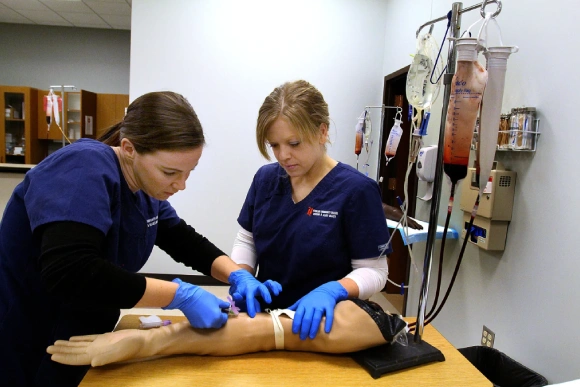
If you’re an aspiring medical assistant or in the market searching for the ideal medical assistant training school, chances are you must’ve come across a lot of training programs that mention the word “hands-on training.”
Now, yes, this is a common phrase in healthcare education, but what does it look like in practice? It means you’ll get in-person training (clinicals), which will help you understand what a medical assistant does day to day. Of course, this requires hands-on experience with medical equipment: diagnostic devices, sterilization tools, and clinical software used in modern clinics. Knowing how to operate these tools ensures you enter the workforce with confidence, technical skill, and job-ready competency.
Here is what medical equipment you can expect to use during your training program.
Key Takeaways
|
What Is Basic Medical Equipment in a Medical Assistant’s Toolkit?
Before jumping into the list of equipment, it is important to understand what tools comprise a MA’s basic toolkit.
What is basic medical equipment, you ask? These refer to the foundational instruments, devices, and machinery used to evaluate patient health, monitor vital signs, perform minor treatments, and maintain sterile clinical environments. In an ambulatory care setting, the medical equipment used by medical assistants falls into four primary functional categories:
- Diagnostic Tools: Devices like otoscopes, ophthalmoscopes, and diagnostic light sources used to inspect physical body structures and assist physicians in identifying medical conditions.
- Monitoring Equipment: Instruments such as blood pressure cuffs, pulse oximeters, and digital thermometers that measure baseline physiological vital signs.
- Therapeutic Supplies & Devices: Tools used to administer treatments, including nebulizers, venipuncture needles, syringes, and wound dressing supplies.
- Sterilization Machinery: Decontamination equipment, primarily high-pressure steam autoclaves, designed to eliminate pathogens from reusable surgical instruments to maintain infection control.
NOTE: Even if you’ve passed a theoretical MA Training Program with flying colors, you won’t be given access to all the tools right away, as you’d have no actual experience with them. This is why our program includes a Practice Kit and a dedicated externship, to gradually help develop essential skills and ensure that you can confidently operate all equipment during your externship and on the job.
|
Diagnostic & Vital Signs Equipment Medical Assistants Learn to Use
Stethoscope

What it is: An acoustic medical instrument designed to transmit sound from the human body to the clinician’s ears.
Why it’s used: It allows clinical staff to listen to internal bodily sounds, such as heart valves closing, air moving through the lungs, and brachial artery pulses during manual blood pressure checks.
How to use it:
- Clean the earpieces and diaphragm with an isopropyl alcohol wipe before patient contact.
- Insert the earpieces into your ears, angling them slightly forward toward your nose for proper acoustic alignment.
- Place the chest piece diaphragm flat against the patient’s skin over the chest, back, or brachial artery.
- Listen attentively while isolating heart rhythms, breath sounds, or vascular pulsations.
Sphygmomanometer (Blood Pressure Cuff)

What it is: A manual or digital device consisting of an inflatable cuff, a pressure gauge (aneroid display), and an inflation bulb or automated pump.
Why it’s used: It measures systolic and diastolic arterial blood pressure to evaluate cardiovascular health and screen for hypertension or hypotension.
How to use it:
- Select the appropriate cuff size and wrap it snugly around the patient’s bare upper arm, positioned one inch above the antecubital fossa.
- Locate the brachial artery pulse and place the stethoscope chest piece directly over the arterial site.
- Inflate the cuff rapidly until the gauge reads approximately 30 mmHg above the patient’s typical systolic pressure.
- Slowly open the valve to deflate the cuff at 2–3 mmHg per second while listening for the first arterial beat (systolic) and the final sound disappearance (diastolic).
Digital Thermometer

What it is: An electronic device equipped with heat sensors that record body temperature across oral, axillary, tympanic, or temporal arterial routes.
Why it’s used: It quickly detects fever or hypothermia, providing a critical baseline indicator of systemic infection or inflammatory response.
How to use it:
- Attach a sterile, single-use disposable probe cover onto the thermometer tip.
- Position the probe correctly based on the target site (under the tongue, inside the ear canal, or across the forehead).
- Hold the probe firmly in place until an audible signal confirms the measurement is complete.
- Note the digital reading, discard the probe cover into a waste receptacle, and record the value in the patient chart.
Otoscope

What it is: A handheld diagnostic tool equipped with a light source, a magnifying lens, and a attachment point for disposable ear speculums.
Why it’s used: It enables healthcare providers to examine the auditory canal and tympanic membrane (eardrum) for signs of infection, fluid, or cerumen buildup.
How to use it:
- Attach a clean, disposable plastic speculum tip securely to the otoscope head.
- Gently pull the patient’s pinna upward and backward (for adults) to straighten the ear canal pathway.
- Carefully insert the speculum tip into the outer third of the ear canal while looking through the magnifying window.
- Inspect the canal wall and eardrum appearance, then carefully remove and detach the speculum into a biohazard receptacle.
Pulse Oximeter

What it is: A non-invasive electronic sensor clamp that measures functional oxygen saturation of arterial hemoglobin (SpO2) and pulse rate.
Why it’s used: It offers rapid assessment of respiratory efficiency and blood oxygenation during triage, asthma evaluations, or emergency procedures.
How to use it:
- Ensure the patient’s finger is clean, dry, warm, and free of artificial nails or dark nail polish.
- Open the spring-loaded clamp and insert the patient’s digit fully into the light-emitting sensor zone.
- Power on the unit and remain steady while the device detects arterial blood flow pulses.
- Read and record the digital display values for both blood oxygen percentage (SpO2) and heart rate.
Clinical Procedure, Lab & Administrative Equipment You’ll Master
Beyond vitals, medical assistant training covers the equipment behind diagnostic testing, minor procedures, and the digital systems that keep a practice running.
EKG (Electrocardiogram) Machine

What it is: A specialized diagnostic machine that records the electrical activity of the myocardium through electrode patches attached to the skin.
Why it’s used: It assists physicians in diagnosing cardiac arrhythmias, myocardial ischemia, heart blocks, and structural abnormalities.
How to use it:
- Prepare the patient’s skin by cleansing target anatomical sites with alcohol wipes and clearing excess body hair if necessary.
- Apply ten self-adhesive electrode patches to specific anatomical positions across the chest (V1–V6) and limbs.
- Attach the corresponding color-coded lead wires to each electrode, input patient data into the console, and instruct the patient to lie still without talking.
- Initiate the 12-lead electrical recording, inspect the printed or digital tracing for artifacts, and present the result to the clinician.
Autoclave & Sterilization Equipment

What it is: A pressurized steam vessel engineered to eliminate bacteria, viruses, fungi, and endospores from heat-resistant tools.
Why it’s used: It sterilizes surgical instruments, speculums, and tray setups to meet strict infection control regulations and prevent cross-contamination.
How to use it:
- Decontaminate, wash, and dry reusable instruments thoroughly to remove all organic debris.
- Enclose instruments inside sterilization pouches with chemical indicator strips and seal them securely.
- Load items into the autoclave chamber on perforated trays, ensuring space between packages for steam penetration.
- Select the designated temperature and pressure cycle (typically 121°C at 15 psi), run the process, and allow items to cool completely before storage.
Venipuncture Supplies (Syringes, Needles, Vacutainer Tubes)

What it is: A specialized phlebotomy collection system containing evacuated blood tubes, multi-sample needles, safety butterflies, tube holders, and tourniquets.
Why it’s used: It enables medical assistants to perform safe venous blood draws for metabolic panels, complete blood counts, and diagnostic laboratory testing.
How to use it:
- Apply a tourniquet 3–4 inches above the antecubital space and locate a suitable vein (median cubital, cephalic, or basilic).
- Cleanse the puncture site with an alcohol swab using expanding concentric circles and allow it to dry completely.
- Insert the needle bevel-up at a 15–30 degree angle into the vein, anchor the holder, and push evacuated tubes onto the inner needle in the correct order of draw.
- Release the tourniquet once blood flow establishes, withdraw the needle while activating the safety device immediately, apply pressure with gauze, and invert additive tubes gently.
Glucometer & Point-of-Care Testing Devices

What it is: Portable digital testing meters that analyze capillary blood drops or bodily fluid samples directly at the point of care.
Why it’s used: It delivers rapid, on-site results for blood glucose, hemoglobin, urine protein, or infectious agents without delay.
How to use it:
- Turn on the glucometer, insert a fresh single-use test strip, and verify control strip coding if prompted.
- Perform a capillary skin puncture on the lateral side of the patient’s fingertip using a sterile safety lancet.
- Wipe away the initial blood drop with clean gauze, then touch the test strip target tip to the second blood drop.
- Read the digital measurement on the screen, log the result in the chart, and dispose of the lancet and test strip in a sharps container.
Electronic Health Record (EHR) Software

What it is: Secure, HIPAA-compliant clinical database applications used to chart, store, and transmit patient health records digitally.
Why it’s used: It organizes clinical documentation, prescription entries, laboratory orders, medical histories, and billing codes across care teams.
How to use it:
- Log into the secure EHR workstation using encrypted personal credentials.
- Select the scheduled patient chart and document chief complaints, recorded vital signs, and screening responses during triage.
- Enter order requisitions requested by the physician, update current medication lists, and document administered immunizations.
- Review entries for accuracy, finalize clinical notes, save the file, and lock the workstation screen.
What Is the Most Essential Medical Equipment for a Medical Assistant?
If training time is any indicator, the stethoscope, sphygmomanometer, and thermometer are the most essential pieces of equipment a medical assistant will use. They appear in nearly every patient encounter, across nearly every specialty.
Not to mention that, as per NHA’s CCMA test plan, Clinical Patient Care accounts for 84 of the 150 scored items, covering patient intake and vitals, general patient care, infection control, point-of-care testing, phlebotomy, and EKG work.
EHR software deserves a place on that list too, even though it’s not a physical instrument. Every vitals reading, lab result, and procedure note eventually lives inside it, which makes digital charting fluency just as “essential” as knowing how to wrap a blood pressure cuff correctly.
Can Medical Assistants Use Type 3 (Class III) Medical Devices?
Generally, no. Operating Type 3 (Class III) devices falls out of the scope of a MA.
The FDA assigns every medical device to one of three regulatory classes based on the level of risk it poses and the control needed to ensure it’s safe and effective, as laid out in the FDA’s device classification guidance — Class I carries the lowest risk, and Class III carries the greatest. Class III devices typically sustain or support life, are implanted, or carry a real risk of illness or injury if something goes wrong.
| Device Class | Risk Level | Typical Examples | Medical Assistant Involvement |
| Class I | Low | Bandages, manual stethoscopes, tongue depressors | Routine, direct use |
| Class II | Moderate | Blood pressure cuffs, EKG machines, glucometers | Routine use under delegation |
| Class III | High | Pacemakers, implanted defibrillators, heart valves | Outside standard MA scope |
Final Words
Please note that these are some of the most frequently used tools by medical assistants. Depending on your employer and specialty, you may need to learn how to use additional equipment.
Also, it is understandable that you may be extremely excited to operate different MA equipment; however, you need to understand that equipment fluency doesn’t happen in one sitting; it’s built the same way any hands-on skill is, through repetition, correction, and eventually real application.
 Pamela Christianson
 Pamela Christianson
 Pamela Christianson
 Pamela Christianson
 Pamela Christianson
 Pamela Christianson