













Summary
How Artificial Intelligence Is Changing the Role of Medical Assistants
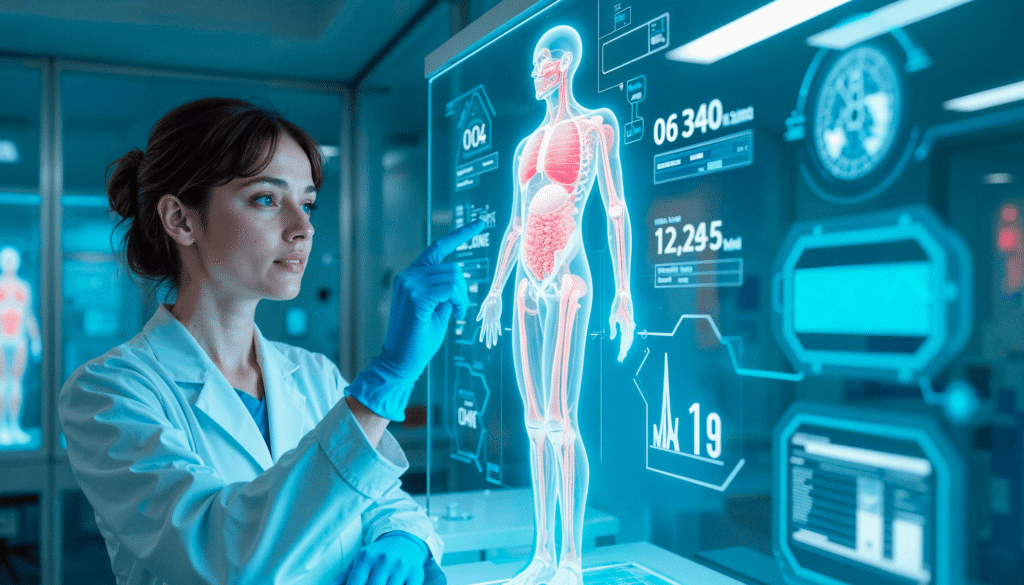
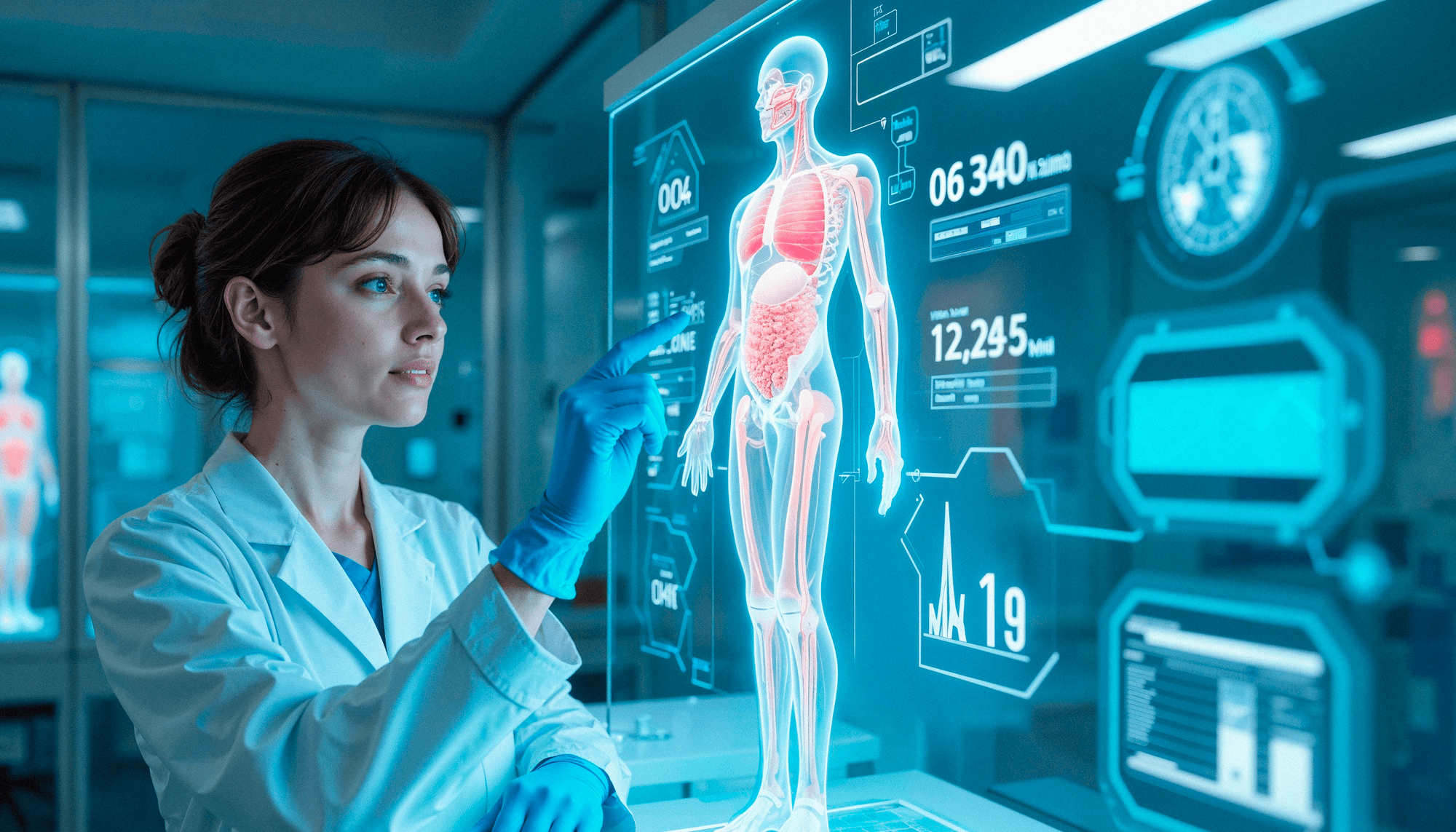
Much like any other industry, artificial intelligence (AI) is steadily transforming healthcare operations, reshaping how clinical teams manage daily tasks, record patient data, and organize administrative workflows.
To quote the research from 2024: “In health care, ML has wide applicability, and may, for example, be used in precision medicine to predict which treatment regimes will be most successful for individual patients”
While this future is still a little far, AI is being significantly used in multiple aspects of healthcare, including allied healthcare roles, such as that of a medical assistant.
Now, many aspirants may have a question (or concern, to put it precisely): Is AI going to take over my MA role?
Along with other questions, such as how these technological shifts will impact your daily responsibilities and long-term job security.
Short Answers:
- AI is not going to take over the clinical roles of an MA.
- Administrative roles that do not require human intervention are likely to be automated.
- To ensure you stay relevant, developing strong hands-on skills becomes essential.
Key Takeaways
|
What’s Actually Different About the MA Role Now
The majority of the fear surrounding the AI and healthcare role comes from not understanding exactly how it is shaping this industry and what it means for human healthcare professionals.
First, you need to understand that when you look at the daily workflow of a medical assistant, it is not the same as it was a decade ago, thanks to the implementation of medical technology. It becomes even more evident when you look at the data shared in this report published in the Journal of Medical Internet Research:
- Electronic Health Records (EHRs) have become the norm. Since 2009, EHR adoption has increased 10-fold among hospitals and 5-fold among physicians, fundamentally changing how patient information is documented and managed.
- Health records are now shared more easily across healthcare organizations. As of 2023, 70% of hospitals can electronically exchange patient information with outside providers, reducing reliance on paper records and manual communication.
- Electronic prescribing is now standard practice. Nearly all pharmacies and 92% of prescribers use e-prescribing systems—an 85-percentage-point increase since 2008—streamlining medication management.
- Patients are far more involved in managing their health information. By 2022, three-quarters of patients were offered access to online patient portals, and 57% actively used them to view and manage their health information.
- Healthcare teams increasingly communicate with patients digitally. Patient portals have become a common way to share test results, visit summaries, and other health information, changing how front-office and clinical staff interact with patients.
- Public health reporting has become more digital. Hospitals and physician practices now electronically report key public health data, replacing many manual reporting processes.
- Despite widespread digital adoption, healthcare workers still face challenges. The study notes that interoperability issues, usability concerns, cybersecurity risks, and unequal patient access remain ongoing obstacles.
What Exactly Is AI Doing in Healthcare? Cutting the Administrative Load
As it is evident from the study above, the healthcare staff have historically lost a significant share of the workday to tasks that do not require a clinical judgment call: data entry, appointment reminders, insurance verification, chasing down missing information.
Additional analysis from McKinsey found that healthcare employees typically spend 20 to 30 percent of their working hours on nonproductive administrative activity of exactly this kind.
And AI models (healthcare-specific) are especially designed to cut into this non-clinical workload, since it is the most repetitive and the easiest to automate safely.
It also makes a lot of sense from a business perspective, i.e., a scheduling system that fills a cancellation automatically, or software that flags a missing insurance field before a claim gets submitted, removes hours of manual checking without touching a single clinical decision.
Persistent Importance of Medical Assistants in Administration Duties
As more of that manual work gets automated, the medical assistant’s role shifts from doing every step by hand to reviewing what the software produced. A scheduling tool still needs someone to confirm it booked the right provider, and an AI-drafted note still needs a human to check it against what actually happened in the room.
This does not shrink the role. It changes what fills the hours that used to go to repetitive data entry, generally toward tasks that need a person’s judgment and a patient’s trust.
Are Medical Assistants Going to Be Replaced by AI?
This has got to be the question of the decade (and it’s being asked by other industries as well).
The short answer is no. In fact, it is one of the roles that is safe from AI automation.
While AI is changing healthcare, the evidence suggests it is changing how healthcare professionals work rather than eliminating the need for them. A peer-reviewed review published in the National Library of Medicine concludes that AI is expected to complement—not replace—healthcare providers, with the greatest benefits coming from collaboration between humans and AI rather than automation alone
For medical assistants, that means routine tasks such as documentation, scheduling, and information retrieval are increasingly supported by technology, while responsibilities requiring hands-on care, communication, empathy, and clinical judgment continue to rely on trained professionals.
So Why Are Employers (Hospitals) Using More AI Tools and Models?
Employers adopting AI tools are not doing so to cut headcount in patient-facing roles; they are doing so to reduce the administrative drag on the staff they already have. The tasks disappearing are the ones that consumed time without adding value, not the tasks that required a person physically present with a patient.
This pattern is not unique to medical assisting. A similar question has come up around AI and pharmacy technicians, where automation is reshaping specific tasks inside the role without eliminating the need for the person performing it.
How AI Actually Shows Up in a Medical Assistant’s Day: A Realistic Take
Most of the AI a medical assistant interacts with directly falls into three categories: tools that draft documentation, tools that manage scheduling and intake, and tools that support clinical tasks like imaging or vitals review. None of them operate unsupervised; every output still passes through a person before it becomes part of the patient’s record or plan.
Documentation: AI Scribes and Ambient Notes
Ambient AI scribes are currently the most visible AI tool in outpatient care. Microsoft’s Dragon Copilot, for example, captures a multiparty conversation during a visit and converts it into a structured clinical note for review, rather than requiring someone to type it out afterward.
For a medical assistant, this often means less time transcribing and more time reviewing drafted notes for accuracy before they get filed. Building comfort with this workflow early makes the transition far smoother, and CCI Training Center’s EMR training guide covers what that documentation workflow looks like in practice.
Scheduling and Patient Intake
Scheduling software increasingly uses AI to predict no-shows, fill last-minute cancellations, and route intake questions to the right staff member automatically. Patient intake chatbots and digital forms handle much of the repetitive information-gathering that used to happen entirely over the phone or on a clipboard.
A medical assistant typically still confirms the details, resolves anything the system flagged as unclear, and handles the conversations a chatbot cannot. The tool speeds up the process; it does not run the front desk on its own.
Clinical Support: Vitals, Imaging Prep, and Decision Tools
On the clinical side, AI shows up mostly in diagnostic support rather than direct patient contact. The FDA’s public list of AI- and machine-learning-enabled medical devices now tracks more than 1,000 authorized devices, with the largest share concentrated in radiology and imaging analysis.
A medical assistant preparing a patient for an imaging study, or entering vitals into a system that flags an abnormal reading, is working alongside that kind of tool rather than being replaced by it. The software surfaces a pattern; a clinician still makes the call.
What AI Still Can’t Do and Why Patients Still Need a Human in the Room
Every AI tool currently used in a clinical setting is designed to draft, flag, or suggest, never to finalize a decision without a person reviewing it. That is true of documentation tools, imaging support software, and scheduling systems alike.
This is by design, not a temporary limitation waiting to be engineered away. Clinical accountability sits with a licensed provider, and the tools are built around that boundary rather than against it.
It should also be noted that independent research backs up how modest AI’s real-world impact has been so far, compared to some of the more dramatic claims made around it. A large multisite study covered by Mass General Brigham, published in JAMA, found that AI scribe adoption was associated with modest reductions in documentation time and EHR use, not a wholesale transformation of clinical work.
| Metric Measured | Finding |
| Daily EHR usage time | Reduced by about 13 minutes per clinician |
| Daily documentation time | Reduced by about 16 minutes (roughly 10%) |
| Weekly visit volume | Increased by about 0.5 visits per clinician |
| Clinicians studied | 8,581 across five health systems |
The same research noted that benefits were concentrated among clinicians using the tools most consistently, and that the reductions alone did not fully explain earlier reports of improved burnout. Coordinating a patient’s actual experience and reading a room a screen cannot remain squarely human tasks.
What Skills Should Medical Assistants Build for an AI-Driven Workplace?
Comfort navigating an EHR and reviewing AI-drafted documentation for accuracy is quickly becoming a baseline expectation, not an advanced skill. Beyond that, the ability to catch when a system got something wrong, whether it is a mis-transcribed detail in a note or a scheduling conflict a chatbot missed, matters more as more of the routine work gets automated.
Communication and patient-facing judgment matter just as much as they always have, arguably more, since those are the tasks least likely to shift to software anytime soon. A graduate who can move fluidly between a digital tool and a difficult conversation with a patient is the one employers are actually trying to hire.
Certifications and Training That Signal AI-Readiness
A recognized certification still signals baseline competency to an employer, and pairing it with genuine comfort in a digital, EHR-driven environment is what sets a candidate apart now. An accelerated certification timeline means little if it skips real practice with the digital tools already common in clinics.
CCI Training Center’s certifications guide breaks down which credentials carry the most weight.
Final Words
AI is redistributing what fills a medical assistant’s day, not eliminating the need for the person filling it. Documentation gets faster, scheduling gets smarter, and imaging tools flag more than they used to, but every one of those outputs still needs a trained person to verify it and a patient who trusts the person standing in front of them.
Graduates who build real technology fluency alongside clinical skill, ideally through a trusted program like CCI Training Center Medical Assistant Training Program (online), step into this shift already prepared rather than caught off guard by it. Just remember, the role is changing shape. It is not disappearing.
Program Offered
- Pharmacy Technician Training
- Online Medical Assistant
- Medical Billing and Coding Specialist Program
- Cloud Computing Technician Training
- Computer Network Technician
- Business and Accounting
- Radiology Technician Training
- Medical Assistant Program
- Computer Support Technician
- Cybersecurity Program
- Virtual Assistant Training

This article is written by
Share this article
Program Offered
- Pharmacy Technician Training
- Online Medical Assistant
- Medical Billing and Coding Specialist Program
- Cloud Computing Technician Training
- Computer Network Technician
- Business and Accounting
- Radiology Technician Training
- Medical Assistant Program
- Computer Support Technician
- Cybersecurity Program
- Virtual Assistant Training
This article is written by
Share this article
Frequently Asked Questions
Are medical assistants going to be replaced by AI?
No. Employment projections for medical assistants remain strong even as AI adoption accelerates, since the tasks being automated are largely administrative rather than the patient-facing and judgment-based work that defines the role.
What is the most common AI tool used in medical clinics today?
Ambient AI scribes that listen to a patient visit and draft a clinical note for review are currently the most widely deployed AI tool in outpatient settings, ahead of scheduling or diagnostic tools.
Is AI changing medical assistant certification requirements?
Not directly. Core certification requirements still center on clinical and administrative competency, though comfort with digital tools and EHR systems is increasingly expected alongside them.
Does AI actually reduce administrative workload for clinical staff?
Yes, though the measured impact so far has been modest rather than dramatic, with research showing meaningful but incremental reductions in documentation and charting time.
What skills should a medical assistant build to work well alongside AI?
Comfort reviewing and correcting AI-generated documentation, general EHR fluency, and strong communication skills matter most, since those are the areas where human judgment still leads.
Related Articles
 Pamela Christianson
 Pamela Christianson
 Pamela Christianson
 Pamela Christianson
 Pamela Christianson
CCI Training Center Proudly Completes
41 Years in Career Training Services