











Summary

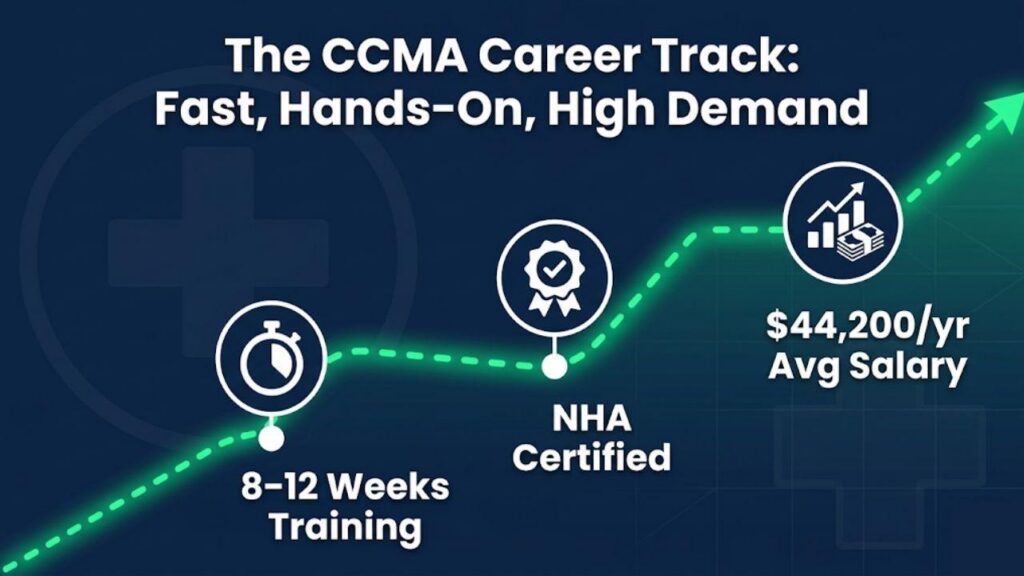
Summary Want to enter healthcare fast? A Certified Clinical Medical Assistant (CCMA) takes only 6–9 months of training. Certified by the NHA, you’ll handle hands-on patient care like drawing blood and taking EKGs, earning an average of $44,200/year. It offers a fast track to a clinical career. |
If you are looking to enter the fast-growing healthcare field without spending years in medical school, becoming a Certified Clinical Medical Assistant (CCMA) might be your perfect match.
A CCMA is a highly versatile allied health professional certified by the National Healthcareer Association (NHA). They serve as the backbone of modern healthcare facilities, supporting physicians and nurses by handling a mix of direct patient care and essential office tasks.
Here is everything you need to know about the CCMA role, from certification to career progression.

What is a CCMA?
A Certified Clinical Medical Assistant (CCMA) is a nationally certified healthcare professional who performs a critical blend of administrative and clinical duties to ensure a medical office or clinic runs smoothly and efficiently. Certified by the National Healthcareer Association (NHA), CCMAs are the vital link between patients, doctors, and nurses, focusing heavily on hands-on patient care and technical skills.
“The demand for medical assistants is projected to increase by 12% over the next decade—much faster than the average for all occupations.”
This makes the CCMA credential one of the most reliable fast tracks into the medical industry.
What Does a CCMA Actually Do? (Core Duties)
Unlike some other entry-level medical roles, the CCMA is known for its diverse and active role. Their responsibilities fall into two primary buckets.

Clinical Patient Care
The majority of a CCMA’s day is spent directly interacting with patients and performing essential diagnostic and preparatory tasks:
- Phlebotomy (Blood Draws): Safely collecting and labeling blood samples for laboratory testing.
- Taking Vitals: Measuring and recording a patient’s temperature, blood pressure, pulse, and respiratory rate.
- Electrocardiograms (EKGs): Performing diagnostic tests to measure the electrical activity of the heart.
- Injections and Immunizations: Administering non-intravenous injections (like flu shots or vaccines) under the direction of a physician.
- Patient Triage: Gathering initial information on a patient’s symptoms and medical history before the doctor’s visit.
- Wound Care and Dressing Changes: Assisting with minor procedures and ensuring hygienic wound management.
Administrative Support
While the “C” in CCMA emphasizes the clinical side, administrative efficiency is still key to the role:
- Scheduling and Check-In: Managing patient appointments and verifying insurance information.
- Electronic Health Records (EHR): Accurately documenting all patient interactions, test results, and medical history in the digital system.
- Basic Billing and Coding: Handling necessary paperwork for insurance and patient payments.
- Managing Supplies: Ensuring examination rooms are stocked, clean, and prepared for the next patient.
| Read More: Dive deeper into the daily life of a Clinical MA. Explore exact duties, workplace environments, and essential skills needed to thrive. |
CCMA vs. CMA vs. CNA: Which One Should You Choose?
One of the biggest points of confusion for those entering the field is the difference between the acronyms. While they sound similar, the required training, core duties, and typical work environments are distinct.
| Credential | Training Time | Core Duty Focus | Ideal Career Path |
|---|---|---|---|
| CCMA | 6–9 Months (Hybrid Fast Track) | Clinical procedures (EKGs, Phlebotomy, Injections) | Specialized outpatient clinics, quick entry into healthcare |
| CMA | 9–24 Months (Degree/Diploma) | Administrative tasks, complex medical record management | Larger hospitals, long-term career stability in administration |
| CNA | 4–6 Weeks | “Bedside” care (Hygiene, feeding, moving patients) | Nursing homes, long-term care facilities, stepping stone to RN/LPN |
CCMA (The Fast Track)
The CCMA certification, primarily through the NHA, is often the quickest route to an entry-level clinical job. The training is concentrated on the technical skills a busy clinic needs most, making it ideal for those who want hands-on patient interaction without the longer schooling commitment of a degree.
CMA (The Gold Standard)
The Certified Medical Assistant (CMA), certified by the AAMA, typically involves a longer educational track (usually an Associate’s degree or accredited diploma). While their clinical scope is similar to a CCMA, the curriculum places a greater emphasis on comprehensive administrative and complex medical-legal knowledge.
CNA (The Nursing Path)
A Certified Nursing Assistant (CNA) is fundamentally different. Their work is often referred to as “bedside care.” This role is physically demanding and focuses on assisting patients with basic daily living activities, hygiene, mobility, and feeding. The CNA path is the common first step for those intending to become Licensed Practical Nurses (LPNs) or Registered Nurses (RNs).
| Related: Torn between nursing and assisting? Compare salaries, job growth, and daily duties in our full CNA vs. Medical Assistant breakdown. |
Salary & Work Environments (2026 Data)
A major factor in choosing a healthcare career path is the earning potential and stability it offers. Fortunately, for Certified Clinical Medical Assistants, the outlook is strong and getting better.
What Does a CCMA Earn?
According to the latest industry data, the average national salary for a Certified Clinical Medical Assistant hovers around $44,200 per year, which translates to approximately $21.25 per hour. This figure often sees upward adjustments based on geographical location (coastal and metropolitan areas typically pay more) and the type of facility.
| Salary Metric | National Average (Annual) | National Average (Hourly) | Key Factors for Variation |
|---|---|---|---|
| CCMA Base Pay | $44,200 | $21.25 | Location, years of experience, and facility type (e.g., hospital vs. private clinic). |
The “Certification Premium”
The CCMA credential itself acts as a strong differentiator, often leading to higher earning potential compared to uncertified medical assistants or other entry-level roles like CNAs.
- CCMA vs. Uncertified MA: Certified assistants are generally preferred by employers and command a salary premium of 5% to 10% over their uncertified peers, as certification provides a verified standard of clinical competency.
- CCMA vs. CNA: CCMAs consistently earn more than Certified Nursing Assistants (CNAs). While the CNA role is essential, the CCMA’s specialized technical skills—like phlebotomy, EKG, and injection administration—are higher-value skills that translate directly to a higher wage.
Where Do CCMAs Work?
Unlike CNAs, who are primarily concentrated in long-term care, CCMAs thrive in outpatient settings where patient throughput and specialized technical procedures are common.
- Specialty Clinics: Dermatology, cardiology, pediatrics, and surgical centers are major employers. In these environments, the CCMA’s proficiency with EKGs, wound care, and specialized blood draws is highly valued.
- Outpatient Centers: This includes urgent care clinics and stand-alone ambulatory surgery centers.
- Hospitals: Yes, a CCMA can work in a hospital! While some hospital roles prefer CMAs (AAMA), many large medical systems hire CCMAs for their outpatient wings, internal clinics, and specialized laboratory drawing stations. The work here is often fast-paced and high-volume.
Inside the NHA CCMA Exam
Once you’ve completed your training program, the final and most crucial step is passing the certification exam administered by the National Healthcareer Association (NHA). This is not just a test of memorization; it’s a comprehensive assessment of your ability to function safely and effectively in a clinical environment.
The Breakdown: What’s on the Test?
The CCMA exam consists of 150 scored questions (plus 30 unscored pre-test items) and is weighted heavily toward the clinical duties you will perform daily. The NHA breaks the content into seven major domains:

| Exam Domain | Percentage of Exam | Core Skills Tested |
|---|---|---|
| Foundational Knowledge | 6% | Medical terminology, anatomy/physiology, legal/ethical issues. |
| Basic Science | 6% | Infection control, waste disposal, safety procedures. |
| Administrative Tasks | 10% | Scheduling, medical records (EHR), billing/coding basics. |
| Patient Care: Prep & Procedures | 20% | Taking vitals, patient intake/triage, physical examination assisting. |
| Patient Communication & Education | 12% | Interacting with diverse populations, health coaching, privacy (HIPAA). |
| Pharmacology | 8% | Medication administration, dosage calculation, non-IV injections. |
| Phlebotomy & Lab Procedures | 38% | Blood draws, specimen collection, venipuncture, EKG, specialized testing. |
The combined focus on Patient Care and Phlebotomy/Lab Procedures (totaling 58% of the exam) underscores the CCMA’s primary clinical role.
Logistics: Where and How Do You Take the Exam?
The NHA CCMA exam is taken as a secure, computer-based test (CBT).
- Location: Most candidates test at approved PSI testing centers nationwide. Your training program may also host the exam on-site.
- Duration: You are allotted a total of 3 hours to complete the 180 questions.
- Cost: The current cost to register for the CCMA exam is approximately $160. Note: This fee is separate from any costs associated with your training program.
Passing Score & Study Tip
To earn your CCMA credential, you must achieve a minimum scaled score of 390 out of 500.
PRO-TIP FOR STUDYING: > NHA exams are scenario-based. Don’t just memorize terms; focus on understanding why a procedure is done a certain way (e.g., Which site is preferred for an infant immunization? or What is the appropriate action if a patient faints during a blood draw?). Practice applying your knowledge to real-world situations.
How to Become a CCMA (Step-by-Step Guide)
Ready to launch your career? Becoming a Certified Clinical Medical Assistant is a streamlined process that can take as little as 6–9 months, making it one of the fastest routes to a professional, certified role in clinical medicine.
Here is the step-by-step roadmap for earning your CCMA credential:
Step 1: Meet the Prerequisites
Before enrolling in a training program, you must meet the basic educational requirements set by the NHA:
- Age: Be at least 18 years old.
- Education: Possess a high school diploma or a GED equivalent.
Step 2: Complete an Accredited Training Program
The core of your preparation is completing an accredited medical assistant training program. You generally have three paths:
- Hybrid Programs (6–9 Months): Programs like hybrid or fast-track certificates combine flexible online lectures with intensive, in-person clinical labs. This gets you certified quickly while ensuring you actually have the hands-on skills employers demand.
- Crash Courses (8–12 Weeks): Extremely fast, but highly compressed. These are often difficult for working adults to keep up with and offer minimal hands-on lab time.
- Degree Programs (18–24 Months): Community colleges offer Associate’s degrees. These provide a deeper grounding in administrative theory, but require a massive commitment of time and tuition.
Step 3: Complete Your Externship (The Resume Booster)
Most accredited CCMA programs require a hands-on clinical externship or practicum. This is often an unpaid portion of the training, but it is arguably the most valuable.
- Why it Matters: The externship provides the required real-world experience. You’ll apply the skills you learned—taking vitals, drawing blood, charting in an EHR—under the direct supervision of experienced staff.
- Career Impact: Externships frequently lead to job offers. Even if they don’t, the practical experience gained is the single biggest differentiator on your resume when applying for your first CCMA position.
Step 4: Pass the NHA CCMA Certification Exam
Once your training is complete and your externship hours are signed off, you are eligible to sit for the National Healthcareer Association (NHA) CCMA exam. (See Section 5 for a detailed breakdown of the exam content).
- Schedule: Register for the exam through the NHA website and schedule a test date at a PSI testing center.
- Study: Utilize practice tests and focus on the clinical domains that account for the majority of the score (Phlebotomy, EKG, Patient Care).
Step 5: Maintain Your Certification
The CCMA credential is valid for two years. To maintain your certified status, you must renew it before the expiration date.
- Requirements: You must complete 10 Continuing Education (CE) credits and pay the renewal fee (currently around $80). This ensures your knowledge remains current with medical advancements and regulatory changes.
| Next Steps: Ready to start? Follow our complete step-by-step guide to becoming a Medical Assistant, covering everything from education to certification. |
Career Progression & The Final Verdict
The CCMA is not a dead-end job; it is a powerful entry point that provides immediate employment and numerous options for career advancement.
Advancing Your CCMA Career
Once you have a few years of experience as a CCMA, several opportunities become available:
| Career Path | Description | Typical Timeframe |
|---|---|---|
| Specialization | Mastering skills in one area (e.g., becoming the clinic’s dedicated phlebotomy expert or EKG technician) can lead to higher wages and more responsibility. | 2–3 Years |
| Office/Clinic Management | Using your knowledge of both clinical flow and administrative tasks to move into a supervisory role, managing staff, scheduling, and inventory. | 3–5 Years |
| Pursuing Advanced Clinical Roles | Leveraging your hands-on patient contact hours to strengthen applications for Registered Nurse (RN) or Physician Assistant (PA) programs. | Varies (often 5+ Years) |
The Verdict: Is it Worth It to Become a CCMA?
The short answer is yes.
The Certified Clinical Medical Assistant credential offers a high Return on Investment (ROI) for those seeking a fast, stable, and hands-on career in healthcare.
- Low Barrier to Entry: The combination of fast training (6–9 months) and low educational cost provides immediate job access without the years of debt associated with a four-year degree.
- Guaranteed Demand: The projected 12% job growth ensures career stability.
- Clinical Experience: The CCMA role is one of the best ways to determine if you enjoy direct patient care before committing to a longer, more expensive nursing or advanced practice degree. It provides the foundational experience needed to succeed later on.
 Pamela Christianson
 Pamela Christianson
 Pamela Christianson
 Pamela Christianson
 Pamela Christianson
 Pamela Christianson