








Key takeaways:
|
With 112,300 openings per year for medical assistants, it’s clear this career is in high demand.
However, becoming a medical assistant involves more than just earning a certificate or degree, as many people achieve those qualifications. Yet, not everyone succeeds or remains in the field long-term.
Why is that?
Because education is only half the journey. The other half depends on the skills you apply every single day. So, what are those skills that truly make the difference between just landing the job and excelling in it?
From handling patients with empathy to managing clinical tasks with precision, the skills required of a medical assistant extend far beyond what you learn in a classroom or from textbooks. Read this guide to learn about the highest-paying skills required to be a medical assistant that truly succeed in life.
In healthcare, small mistakes aren’t really “small.”
All of these can create bigger problems down the line. That’s why being detail-oriented isn’t just a “good trait”, it’s a high-value skill. Medical assistants who pay attention to details:
The outcome? More trust from doctors, fewer mistakes, and a stronger reputation at work.
| NOTE: For new medical assistants, accurate documentation is both a clinical and legal responsibility. Errors can create liability risks and violate HIPAA rules. Learn more about the ethics and legality of medical records in this NIH study. |
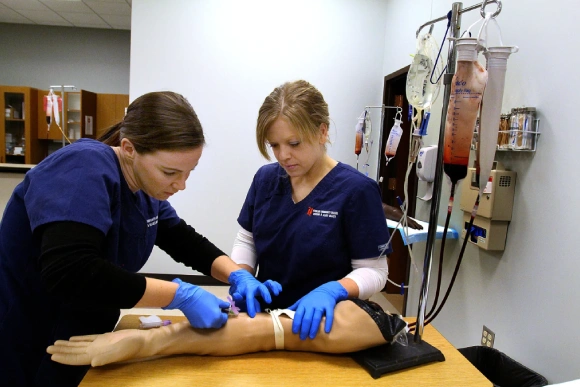
Clinical skills, such as phlebotomy (drawing blood), EKG/ECG testing, or assisting in minor procedures, are where your hands-on ability truly shows.
Example:
When you can confidently draw blood, assist in minor procedures, or perform an EKG, patients don’t need to be referred elsewhere. This saves time, improves their experience, and allows the clinic to provide more services in one place. Medical assistants who are skilled in these areas:
With these mastered skills, you are no longer just assisting; you are actively contributing to the clinic’s effectiveness. And that’s exactly what makes these skills high-paying.
| READ MORE: If you are curious about knowing the highest-paying medical assistant specialties that offer the highest salaries and best growth opportunities, read our guide, which breaks it all down for you. |
A well-functioning healthcare workplace depends heavily on strong administrative support. These responsibilities happen behind the scenes, but they play a critical role in keeping everything organized, efficient, and financially stable. This includes:
A small scheduling error can lead to long wait times and frustrated patients. Similarly, incorrect billing or coding can delay payments or result in claim rejections. When you are confident with these tasks;
| If you are not sure whether you should choose an administrative or clinical MA role. Read what a medical administrative assistant and a clinical medical assistant do in a day to better understand what both roles look like day-to-day and make a right choice accordingly. |
Patients may forget what you said, but they won’t forget how you made them feel. You could do everything right technically, yet if a patient feels rushed or unheard, that experience stays with them.
By speaking calmly and listening without interrupting, you can make a routine visit of someone a positive experience. And here’s the truth. Patients are more likely to return to a place where they feel respected. This means the way you interact directly impacts the healthcare workplace’s reputation and your value in it. To know more in detail about the ideal soft skills needed for your dream job, read our guide.
Some days in a healthcare workplace feel calm. Most don’t!
➜ Phones are ringing.
➜ Patients are waiting.
➜ Doctors need assistance.
➜ Tasks piling up.
This is where organization and multitasking matter most. If you can:
You become the person everyone relies on. And in a fast-paced environment, that’s a high-paying advantage. Technical skills are something you can learn from books and hands-on practice. But soft skills? Those are built over time through real patient interactions, pressure, and experience.
No healthcare workplace runs on one person. Doctors, nurses, front desk staff, and everyone depend on each other. And medical assistants are right in the middle of it all. When you are a strong team player:
That kind of reliability stands out fast. Because employers don’t just want someone who can do their job, but they want someone who makes the whole team better.
Having technical expertise alone isn’t enough. Success depends on combining the hard skills needed to perform tasks with the soft skills that allow you to communicate, collaborate, and adapt effectively. A skill becomes high-paying when it does more than just “get the job done.” It needs to add measurable value to the healthcare setting. In most cases, that value shows up in three key ways:
Suppose two medical assistants work in the same clinic.
Person A Person A is technically proficient and completes responsibilities such as taking vitals, updating records, and assisting the doctor in a timely manner. However, they lack effective communication with patients. Person B Person B performs all the same technical tasks but also excels at soft skills:
|
So, what’s the real impact?
Even though both are completing the same job, Person B adds measurable value:
And in healthcare, that matters a lot.
| Key Message: To truly succeed and earn top pay, you need both soft and technical skills. Mastering technical skills makes you competent, while developing soft skills makes you indispensable. |
These aren’t just “nice-to-have” traits; they are the skills that truly define a successful medical assistant. In the end, success in this field doesn’t come from doing more tasks; it comes from doing them better, smarter, and with purpose.
Now that you understand the highest-paying medical assistant abilities needed to excel, are you ready to take the next step? Consider enrolling in CCI Training Center’s online medical assistant program, designed to equip you with both the technical and soft skills that employers value most.
This article is written by
Share this article
This article is written by
Share this article
Yes, soft skills like empathy, communication, and teamwork are essential because they directly impact the patient experience and the clinic’s reputation.
Administrative skills include scheduling, managing patient records, handling insurance information, and maintaining office workflow.
You can improve your skills through practice, additional certifications, hands-on training, and real-world experience.
Good communication helps build trust with patients, improves satisfaction, and ensures a clear understanding of medical instructions.
Yes, stronger and more advanced skills can lead to promotions, specialization, and higher-paying roles.
High-paying medical assistant skills are in demand because they improve efficiency, reduce errors, enhance patient care, and help healthcare facilities operate more effectively.


CCI Training Center Proudly Completes
41 Years in Career Training Services