













Summary
Are Trade Schools Worth It? A Practical Guide for Career Changers

So, are trade schools worth it? For many career changers, the answer is yes if the program fits their goals, budget, schedule, and target career. Trade school can be a practical alternative to a traditional four-year degree because it focuses on specific, job-ready skills instead of broad general education.
That said, trade school is not automatically the best choice for everyone. The value depends on what you want to study, what credential you’ll earn, how much the program costs, and whether the school offers support beyond the classroom. If you’re comparing college, work, online training, and career-focused programs, this guide will help you decide whether trade school is a smart next step.
Key Takeaways
|
What Is A Trade School?
Trade school is a type of career-focused education that prepares students for specific jobs. Instead of spending several years taking a wide range of academic courses, students usually study practical skills connected to a particular field.
You may also hear trade schools called vocational schools, technical schools, career colleges, or workforce training programs. No matter the name, the goal is usually the same: help students build the skills they need to qualify for entry-level work, certification exams, apprenticeships, or career advancement.
| NOTE: While trade school is often associated with fields like HVAC, electrical work, welding, automotive repair, and construction, it can also include healthcare, information technology, business, medical billing and coding, pharmacy technician training, computer support, and other practical career paths. |
How Many Types of Trade Schools Are There?
When it comes to trade schools, there isn’t a single “one-size-fits-all” model. Instead, they are generally categorized by the types of credentials they offer and the industries they serve.
While you can find hundreds of specialized programs, trade schools typically fall into these categories:
- Public Vocational & Technical Schools: Often run by local school districts or community colleges, these offer affordable, state-subsidized programs. They frequently partner with local industries to fill immediate job openings in the community.
- Private Career Colleges: These are independent, specialized institutions. While they can be more expensive than public schools, they often boast highly modern facilities, flexible schedules, and fast-tracked graduation timelines.
What Does Trade School Offer?
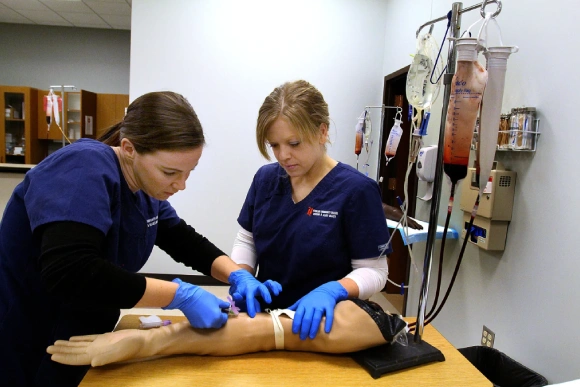
In summary, trade schools usually offer structured, skill-based training. Depending on the program, that may include hands-on labs, online coursework, live instruction, certification preparation, externships, career coaching, and job-readiness support.
What Degree Does a Trade School Give You?
Trade schools typically do NOT offer a degree (of course, there are exceptions to this); instead, they offer certificates and diplomas.
- Certificate of Completion/Achievement: This is the most common credential, and you can expect to receive this upon completion of your training program. These type of certificates makes you eligible for national, industry-standard certification exams. It usually takes 15 to 30 weeks to complete.
- Diploma: Similar to a certificate, but it typically requires a slightly broader set of courses related to your trade and can take up to two years to complete.
The reason why they offer non-degree awards and diplomas is that it enables students to enter the workforce quickly. For example, the U.S. Bureau of Labor Statistics notes that medical assistants typically need a postsecondary nondegree award, such as a certificate.
So, the better question is not only “What degree does a trade school give you?” It is also: “Does this credential match what employers expect in the career I want?”
NOTE: Some trade schools offer an Associate of Applied Science (AAS), a two-year degree, which is ideal for students who eventually want to enter a college/university.
Are Trade Schools Worth It?
Trade schools are worth it when they help you move toward a specific career without wasting time or money. The strongest trade school programs are focused, transparent, and connected to real workforce needs.
A good trade school should help you answer four questions:
- What job can this training help me pursue?
- What skills will I learn?
- What credential, certificate, or exam preparation will I receive?
- What support is available for financial aid, career planning, and job readiness?
If those answers are clear, trade school can be a smart financial investment. If they are vague, keep looking.
When Trade School Is Worth It
Trade school may be worth it if you already have a career direction in mind. For example, if you know you want to work in healthcare administration, medical assisting, IT support, cybersecurity, HVAC, electrical work, or another specific field, career-focused training can help you move faster than a broad academic path.
It can also be worth it if you want practical skills that connect directly to job duties. Many students prefer this approach because they can see how each class relates to the work they want to do.
Trade school is especially appealing for adults who want a structured, accelerated, and career-focused option. If you are balancing work, family, bills, and a career change, a shorter training path may feel more realistic than starting a traditional four-year degree.
When Trade School May Not Be Worth It
Trade school may not be worth it if the program is poorly aligned with your career goals. If the school cannot clearly explain what jobs the program prepares you for, what credential you’ll earn, or how students are supported after graduation, that is a red flag.
It may also be a poor fit if the cost is too high compared with the realistic earning potential of the career. Always compare total program cost with likely entry-level pay, local job demand, and whether financial aid or payment options are available.
Trade School: Pros and Cons
It is also a good idea to weigh the pros and cons of a trade school to know if it’s right for you.
| Pros | Cons |
| Practical Learning: Focuses on experiential learning, often including virtual labs or externships. | Additional Credentials Required: Moving into advanced roles often requires a degree. |
| Directly Applicable Skills: Zero general education courses; most of the curriculum focuses on your exact career path. | Fewer School Choices: Specialized programs are rarer than standard universities, which may require relocation. Unless you choose online training programs. |
| Faster Graduation: Completed in under a year, leading to a much quicker entry into the workforce. | Certification Exams: After graduation, you are required to pass industry-standard certification exams for jobs in healthcare and IT. |
| Smaller Class Sizes: More individual instructor attention and tight-knit networking with peers in your field. | Local Job Competition: A surge of local graduates in the same trade can saturate the market for entry-level roles. |
| Economic Stability: Focuses on essential, in-demand careers (like medical assisting) that resist economic downturns. | Intense Schedule: Accelerated programs often run year-round with minimal breaks, which can become hectic for some. |
What Can You Learn in Trade School?
Trade school can prepare you for a wide range of career paths. Some are hands-on technical roles. Others are office-based, healthcare-focused, or technology-driven.
The best choice depends on your strengths, lifestyle, and long-term goals. If you like solving practical problems, working with tools, helping people, organizing information, or troubleshooting technology, there may be a career-focused training path that fits.
Healthcare Skills
Healthcare trade and career training programs may teach skills related to patient care, medical office procedures, health records, billing, coding, pharmacy support, radiography imaging, and clinical or administrative workflows.
For example, the BLS projects 1.9 million healthcare job openings from 2024 to 2034. Most of the roles typically require postsecondary education, such as a certificate, making it ideal for individuals who want a meaningful healthcare career without a degree.
CTA: Explore Healthcare Programs
Information Technology Skills
IT-focused trade and career programs may teach computer support, networking, cybersecurity fundamentals, troubleshooting, cloud basics, operating systems, and certification-aligned skills.
This path can be a strong fit if you enjoy solving problems, learning systems, and helping people use technology more effectively. For students interested in tech but unsure where to begin, an entry-level computer support role can create a practical starting point.
CTA: Explore IT Programs
Business Administration Skills
Such programs are designed to help students develop administrative skills that they can apply in any office setting and ensure a smooth workflow.
Skilled Trades and Technical Skills
Traditional skilled trades include fields like HVAC, electrical work, welding, automotive technology, plumbing, construction, and industrial maintenance. These programs often combine technical instruction with hands-on practice.
These careers can be a good fit for people who like active work, technical problem-solving, and building or repairing systems that people depend on every day.
How Much Do Trade Schools Cost?
Trade school costs vary widely. The price depends on the program, delivery of instructions, school type, program duration, supplies, and other factors.
That is why you should never compare programs based only on the advertised tuition number. Look at the full cost of attendance and the value of the support you receive.
| Cost Factor | What to Check |
| Tuition | Total program tuition, not just the monthly payment |
| Fees | Registration, technology, lab, graduation, or administrative fees |
| Books and supplies | Textbooks, software, tools, or equipment |
| Certification exams | Whether exam preparation is included |
| Financial aid | Grants, loans, scholarships, payment plans, or employer assistance |
| Career support | Resume help, interview prep, job-search guidance, or employer connections |
NOTE: If cost is one of your biggest concerns, review CCI’s financial aid options and ask what may be available to qualified students.
Trade School vs. College: Which Is Better?
The answer to this question depends on your career goal.
Choose a trade school if you want a focused path into a specific career and do not need a bachelor’s degree for your target role. This may be a good fit if you want to build practical skills, complete training faster, and move toward employment with a clear plan.
Choose a college if your goal requires a bachelor’s degree or higher. Careers in fields like engineering, teaching, law, advanced healthcare, and some corporate roles may require a traditional degree path.
Just do not make the mistake of choosing either option because it sounds more impressive. Instead, choose the path that gets you closer to your goal with the right training, credentials, timeline, and cost.
Why Is Gen Z Going to Trade School?
Due to economic uncertainty and rapid inflation, Gen Z are forced to pay attention to cost, debt, job security, and speed. Many young adults are now questioning whether a traditional degree is even worth it or the only way to build a stable future.
These are the reasons why the demand for trade schools is rising in the U.S. as more students consider career-focused alternatives.
However, it should be noted that this does not mean traditional colleges are disappearing. It means students are becoming more practical. They want training that connects to work, income, and real-world skills.
Are Trade Schools Good for Women?
Yes, trade schools can be a strong option for women. In fact, the demand for women is rising in the IT industry. Additionally, you can also pursue healthcare roles, where your natural empathy and communication skills can make you an ideal candidate.
Is 25 Too Old to Start a Trade?
No, 25 is not too old to start a trade or career training program. In fact, 25 can be a smart time to begin because you may have more clarity about what you want from work.
Many adults return to school because they want better pay, more stability, a new industry, or a career that fits their life better.
If you are nervous about balancing school with adult responsibilities, check this guide on how to overcome the challenges of going back to school as an adult, which can help you think through time management, confidence, and support.
The Bottom Line: Is It a Good Idea to Go to Trade School?
It can be a very good idea to go to trade school if you choose the right program for the right reason. Trade school is strongest when it gives you practical skills, a clear credential, a realistic timeline, and support for your next career step.
For many adults, this career-focused education can be a practical reset. It gives you a structured path forward without requiring you to put your life on hold for years.
If you are exploring healthcare, IT, or business training, CCI Training Center online career training programs can help you compare options and see what type of fast-track path may fit your goals.
Program Offered
- Pharmacy Technician Training
- Online Medical Assistant
- Medical Billing and Coding Specialist Program
- Cloud Computing Technician Training
- Computer Network Technician
- Business and Accounting
- Radiology Technician Training
- Medical Assistant Program
- Computer Support Technician
- Cybersecurity Program
- Virtual Assistant Training

This article is written by
Share this article
Program Offered
- Pharmacy Technician Training
- Online Medical Assistant
- Medical Billing and Coding Specialist Program
- Cloud Computing Technician Training
- Computer Network Technician
- Business and Accounting
- Radiology Technician Training
- Medical Assistant Program
- Computer Support Technician
- Cybersecurity Program
- Virtual Assistant Training
This article is written by
Share this article
Frequently Asked Questions (FAQs)
Is trade school worth it?
Trade school can be worth it if it prepares you for a specific career, teaches skills employers value, and fits your budget. It is often a strong choice for students who want practical training instead of a broad academic degree. The value depends on the program. Look at the credentials, cost, job outlook, career support, and whether the training matches your target role.
What is trade school?
Trade school is career-focused education that teaches practical skills for specific jobs. It may also be called vocational school, technical school, career training, or workforce training.
What are the admission requirements for trade school?
Admission requirements will vary based on the trade school; however, it is much less strict than traditional college or university. Typical admission criteria are:
- High school diploma or equivalent GPA
- Standardized test scores
- Equipment (laptop) for online learning. In some cases, the school provides the equipment.
Are trade schools better than colleges?
Inherently, neither option is better or worse than the other. If you want to quickly enter the workforce by gaining relevant (specific) skills and knowledge, then a trade school is better for you.
How long does it take to complete a trade school program?
It depends on the school and the curriculum. However, most fast-track programs can be completed under a year.
Are trade schools worth it for women?
Yes, trade schools can be worth it for women when the program supports their goals and leads to a career path they want. Women can pursue healthcare, IT, business, skilled trades, tech support, cybersecurity, and many other fields. The most important factors are program quality, career alignment, instructor support, flexibility, and transparent costs.
Is 25 too old to start a trade?
No, 25 is not too old to start a trade. Many adults begin career training in their 20s, 30s, 40s, or later. At 25, you may actually have an advantage because you likely understand your goals, work habits, and financial priorities better than you did right after high school.
Related Articles

 Pamela Christianson
 Pamela Christianson
 Pamela Christianson
 Pamela Christianson
 Pamela Christianson

CCI Training Center Proudly Completes
41 Years in Career Training Services