











Summary


Quick Takeaways:
|
One of the biggest concerns students have about enrolling in an online medical assistant program is, “If I am learning from home, when will I get hands-on experience with real patients?” It’s a completely valid question and one that often makes many students hesitate before choosing online training. After all, healthcare is a hands-on field, and employers expect graduates to know how to work in real clinical environments, not just understand textbook concepts.
But the best online medical assistant programs have already solved this problem by including a medical assistant externship as part of their online training. For online students especially, the externship is what transforms online education into practical career readiness.
Read this guide as we will break down exactly what a medical assistant externship is, what you’ll do during one, how many hours are typically involved, what skills you build, and how programs arrange clinical placements for students training entirely online.
What Is a Medical Assistant Externship?
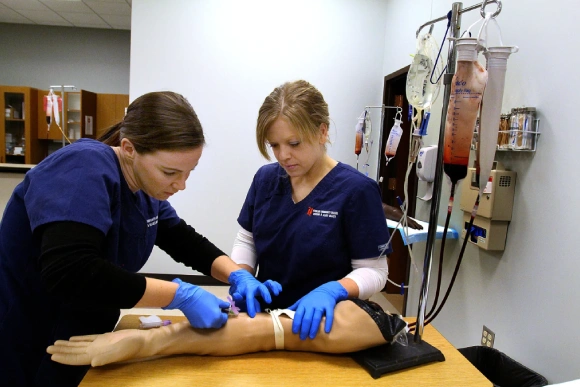
A medical assistant externship is a supervised, hands-on clinical experience that takes place at a real healthcare facility, typically near the end of your training program. During your extern, you leave the virtual classroom and step into the actual work environment of a practicing medical assistant.
You are not just observing from a distance. You are working alongside licensed professionals, practicing the clinical and administrative tasks you have been learning, and experiencing the rhythm of a functioning healthcare office.
Here’s how to think about it simply:
Your coursework teaches you what to do and why it matters. Your externship teaches you how it actually feels work as a MA and deal with real patients, real time pressures, and real professional expectations. Make sure to guide this to know how to make the most out of your externship.
Externship vs. Internship: What’s the Difference?
These two terms are often confused, but they are not the same thing. Here’s a quick key differences table around them:
| Feature | Externship | Internship |
| Compensation | Typically unpaid | Sometimes paid |
| Primary purpose | Hands-on learning and observation | Work contribution + learning |
| Duration | Shorter (weeks to a couple of months) | Longer (semester or more) |
| Who arranges it | Usually, the school or program | Student and employer, often independently |
| Academic credit | Often tied to program completion | Sometimes credit, sometimes employment |
| Stage in training | Near the end of your program | Can occur at various stages |
For medical assisting students, the externship is the standard clinical experience model. It’s structured specifically to fulfill training requirements and, in many cases, certification exam prerequisites, not as a job audition, but as a learning experience first and foremost.
Why Externships Matter So Much for Medical Assistant Students?
A medical assistant who has only studied theory is not what most healthcare employers are looking for. The role requires clinical confidence, and that confidence only comes from real-world practice. Let’s learn in detail why the externship is one of the most important components of any quality medical assistant program:
1. Bridges the Gap Between Theory and Practice
There’s a meaningful difference between understanding how to take a patient’s blood pressure and actually doing it correctly, calmly, efficiently, in a real clinical setting, with a real patient looking at you. Externships close that gap. You build the muscle memory, the communication habits, and the clinical instincts that no textbook or virtual lecture can fully replicate.
2. Builds Certification Readiness
The Certified Clinical Medical Assistant (CCMA) exam through the National Healthcareer Association (NHA) is one of the most widely recognized credentials for medical assistants. Hands-on clinical experience makes you a stronger candidate going into the exam, as you will be answering questions based on scenarios you have actually lived, not just studied.
To learn more about CCMA and CMA exams, read our guides on the Certified Clinical Medical Assistant (CCMA) exam, including salary insights, exam preparation tips, and career paths, as well as the Certified Medical Assistant (CMA) comprehensive guide covering certification requirements, salary expectations, and long-term career opportunities.
3. Makes Your Resume Stand Out
Entry-level job listings for medical assistants frequently mention preferred or required “clinical experience.” An externship gives you something real to put in that box: verified, supervised hours in an actual healthcare environment. It’s the kind of experience that separates a new graduate from every other applicant who doesn’t have it. To learn how to showcase this experience effectively, read our guide on how to build a medical assistant resume that leaves a strong first impression on employers.
4. Can Lead Directly to Employment
This is the part that surprises students. According to career guidance data across the medical assisting field, many students receive job offers from their externship site or from facilities within the same healthcare network before they even complete their program. Your extern supervisor becomes a professional reference. The facility gets to evaluate your work ethic and skills firsthand. It’s essentially an extended job interview for which you get academic credit.
What Do You Actually Do During a Medical Assistant Externship?
A medical assistant externship covers both the clinical (back-office) and administrative (front-office) sides of the role, depending on the facility and your program’s requirements.
Here’s a breakdown of what you can expect to practice:
Clinical / Back-Office Skills

These are the hands-on patient care competencies that define the clinical medical assistant role. During medical assistant externship, students typically perform these tasks under supervision to meet competency-based training standards:
- Taking and recording vital signs (blood pressure, pulse, temperature, respiration rate, oxygen saturation)
- Assisting physicians during patient examinations
- Performing phlebotomy (blood draws) and collecting lab specimens
- Administering injections under supervision (including immunizations)
- Performing EKG (electrocardiogram) procedures
- Wound care basics such as dressing changes, sterile technique
- Preparing examination rooms between patients
- Operating and sterilizing medical equipment
- Documenting clinical findings in electronic health records (EHR) systems
To explore these responsibilities in more detail, read our guide on “what does a clinical medical assistant do?”.
Administrative / Front-Office Skills

The administrative side is equally important in most physician office settings, especially since medical assistants are often the first point of patient contact.
Externs typically gain experience in:
- Patient check-in and registration
- Scheduling and managing appointments
- Verifying insurance information and processing prior authorizations
- Maintaining and updating patient medical records
- Handling medical billing and coding basics
- Managing prescription refill requests under physician direction
- Answering and triaging patient phone calls professionally
Learn more about what administrative medical assistants do daily by reading our guide.
| READ MORE: For a deeper understanding of how these roles differ, explore our guide on medical assistant vs administrative medical assistant. |
How Many Hours Does a Medical Assistant Externship Require?
Medical assistant externship requirements vary depending on the type of program, accreditation standards, and the school’s curriculum structure. Most programs include hands-on training to ensure students gain real-world clinical and administrative experience before graduation.
Here’s a general breakdown of what students can typically expect:
| Program Type | Typical Externship Hours |
| Certificate program (career school) | 80-240 hours |
| Associate degree programs | 160–240 hours |
| Some specialized programs | Up to 225 hours |
Most externships are broken into weekly commitments typically 12 to 20 hours per week, which means working adults can often manage their extern schedule alongside part-time work or family responsibilities.
WHAT TO DO BEFORE ENROLLING IN ANY MEDICAL ASSISTANT PROGRAM: Ask your school prior exactly how many hours are required and how those hours are scheduled. A clear answer protects your timeline and helps you plan around your existing commitments. Also, if you are doing your research thoroughly, don’t skip the part to understand why online medical assistant program is worth it in 2026. |
How Online Students Get Hands-On Experience: The Externship Placement Process?
This is the part that surprises most online learners: your online program can and should arrange real, in-person clinical experience for you, even if you live far from the school’s campus.
Here’s how the placement process typically works for reputable online medical assistant programs:
1. The Program Establishes Facility Partnerships
Accredited medical assistant schools build relationships with healthcare facilities, including physician offices, urgent care centers, outpatient clinics, and community health centers in a variety of geographic locations. These partnerships create a network of approved externship sites where students can be placed.
2. Your Location Drives Your Externship Placement
Because you are an online student who can be located anywhere, placement coordinators work to find an approved facility near you, not near the school’s campus. This is critical. You should always confirm with your program: “How do you place online students in a medical assistant externship? Will the site be near where I live?”
3. The School Coordinates the Logistics
Your medical assistant program handles the formal agreements between the school and the facility (called affiliation agreements), confirms that the site meets training standards, and ensures that your extern supervisor understands their role. You are not cold-calling clinics on your own; the coordination is handled for you.
4. You Complete Your Hours and Document Progress
During your externship, your performance is typically evaluated by your on-site supervisor. Many programs use a competency checklist, a structured assessment that confirms you can perform each required skill at a satisfactory level. Completing this documentation officially credits your externship toward your program requirements.
If you are still avoiding an online medical assistant program because you think it only provides theory, understand that quality schools solve this problem through hands-on externship training. For a better understanding of why online learning can be a strong option for many students, read our guide: Online vs In-Person Medical Assistant Programs: Which Is Better?
What Makes a Good Medical Assistant Externship Program?
Not every medical assistant program handles externship placements equally well. Before committing to any online medical assistant program, these are the questions you need answered:
About placement:
- Does the school arrange my medical assistant extern, or do I have to find my own site?
- How do you place students who live outside your campus area?
- How far in advance is placement confirmed?
- What happens if no site is available near my location?
About the facility:
- What types of facilities are in your medical assistant externship network (clinics, hospitals, specialty offices)?
- Will I have both clinical and administrative exposure, or only one?
- Is there a supervising clinician assigned specifically to extern students?
About requirements:
- Externship for medical assistant programs is of how many hours, and how are they typically scheduled?
- Is the externships for medical assistants graded or evaluated? What does the evaluation look like?
- Is completing the externship for medical assistants required to receive my certificate of completion?
- Is externship experience required to sit for the CCMA or other certification exams?
About career outcomes:
- Do any students receive job offers from their externship sites?
- What career support does the school provide after the externship?
These questions should be part of every enrollment conversation, not something you think about later. Don’t hesitate to ask for clarity, verify the details, and address any concerns you may have before enrolling.
How CCI Training Center Handles Externship Placement for Online Students?
The CCI Training Center includes 240 externship hours as part of our blended online medical assistant program format. This means no students are left to arrange on their own. This externship portion is designed to help students apply everything they have learned in the classroom in a real-world healthcare environment under direct supervision. The program is designed so that clinical practice happens alongside the academic coursework, not as a separate, disconnected phase at the very end.
The most relieving news??
CCI Training Center will arrange an extern site within 30 miles of the student’s zip code, and they need to attend the externship site according to the available schedule.
A few notable details about CCI’s approach:
- Externship sites are sourced locally to each student, not concentrated near the Dallas/Arlington campuses.
- CCI has been training healthcare professionals for over 40 years, with more than 24,000 graduates.
- Monthly career check-ins and job placement assistance continue throughout and after the program.
- Also, prepares students to sit for the CCMA (Certified Clinical Medical Assistant) exam through NHA.
To learn more about the quality of our Medical Assistant program and instruction, hear directly from our graduate medical assistant students and their real experiences.
What to Expect on Your First Day of Externship (And How to Make a Strong Impression)?
Walking into a healthcare facility as an extern for the first time can feel intimidating, even if you feel well-prepared. Here’s what to expect and how to approach it:
Before day one:
- Confirm your schedule, dress code, and parking/check-in procedures with your externship site.
- Review the clinical and administrative skills you will be expected to demonstrate.
- Bring a copy of your enrollment verification or externship confirmation letter from your school.
- Come prepared with a professional, healthcare-appropriate appearance (usually scrubs unless otherwise specified).
On arrival:
- Introduce yourself clearly to the office manager or lead medical assistant; they are your primary point of contact.
- Ask for a brief orientation of the facility: where supplies are kept, how the EHR system is used, and which areas you will be working in.
- Observe first, act second, even if you are confident in a skill, wait for an invitation or direction before stepping in.
Throughout your extern:
- Ask questions consistently. It signals engagement and a desire to learn, not weakness.
- Document your hours accurately in your competency log.
- Treat every patient interaction with the same professionalism as a full-time employee would. Even you can focus on learning soft skills that make you a successful medical assistant in future.
- Be reliable. Showing up on time, every day, may be the single most important thing you can do for your career reputation at that facility.
The externship is your first professional impression in healthcare. Approach it with the same mindset you’d bring to an actual job interview, because for many students, it becomes exactly that.
How Does the Externship Connect to the Bigger Picture of Your Medical Assisting Career?
The externship isn’t just about completing a graduation requirement. It’s a strategic career move that benefits you in multiple ways beyond the hours themselves.
- Certifications: The hands-on experience you gain makes you a more confident and competent candidate for the CCMA or CMA exam. You will recognize scenarios from real clinical experience, not just classroom simulation.
- Your resume: “Externship — [facility name], [dates], [number of hours]” is real clinical experience. List it. Describe the skills you practiced. Employers notice.
- Professional references: Your extern supervisor can become one of your strongest professional references, someone who has seen your work ethic and clinical skills firsthand. This is more valuable than a generic academic reference.
- Career clarity: Not sure whether you are more suited for clinical or administrative medical assisting? Your externship will tell you. Spending time in both environments helps you identify where your strengths and preferences truly lie.
Conclusion
The best programs, the ones worth your time and your investment, understand that clinical competence can’t be developed entirely on a screen. That’s exactly why the externships for medical assistants exists to put you in a real environment, building real skills, under real supervision, before your career officially starts. For working adults and career changers, the externship model is genuinely practical.
You train online on your schedule, complete live lectures with experienced instructors, and then step into a local facility for supervised clinical hours without having to relocate or disrupt your current life. Your career change is closer than you think, and it starts with choosing a program that takes clinical training seriously. Speak with an admissions advisor about how the externship process works for
 Pamela Christianson
 Pamela Christianson
 Pamela Christianson
 Pamela Christianson
 Pamela Christianson
 Pamela Christianson