












Summary


Have you ever wondered how hackers infiltrate systems? Ethical hacking, or white-hat hacking, involves identifying vulnerabilities in systems to fix them before malicious hackers exploit them. With the rise of cyberattacks, ethical hackers are in high demand. According to a report by Cybersecurity Ventures, the global shortage of cybersecurity professionals is expected to reach 3.5 million by 2025.
As organizations face growing threats, ethical hackers play a crucial role in protecting sensitive data. Whether you’re just starting or transitioning into cybersecurity, ethical hacking offers a rewarding career path.
At CCI Training Center, individuals can benefit from expert-led training and certification programs in ethical hacking, designed to prepare them for the fast-paced and ever-changing cybersecurity field. With a hands-on learning approach, the training ensures participants are equipped to address real-world challenges and contribute effectively to the cybersecurity industry.
What is Hacking? Understanding the Basics
Dealing with the rise of cyberattacks, “hacking” is often misunderstood. What does it really mean, and how does it impact businesses? Hacking, both ethical and malicious, plays a critical role in cybersecurity. Let’s dive into its significance.
Hacking Defined
What is hacking? Hacking is the act of gaining unauthorized access to computer systems, networks, or devices to manipulate, steal, or damage data. However, not all hacking is bad. There are two primary types of hacking—ethical hacking and malicious hacking—and both have a significant impact on the digital world.
Ethical Hacking vs. Malicious Hacking
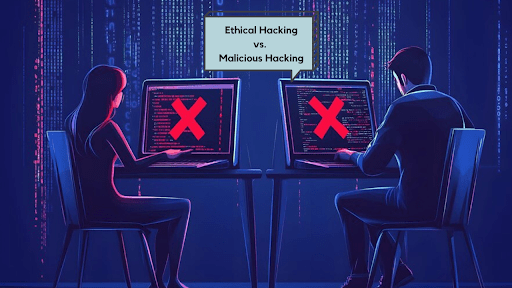
- Ethical Hacking (White-Hat): Ethical hackers use their skills to help organizations identify and fix vulnerabilities, ensuring systems stay secure from cybercriminals.
- Malicious Hacking (Black-Hat): Malicious hackers exploit system weaknesses for personal gain, leading to theft, fraud, and damage such as data breaches or ransomware attacks.
While malicious hackers cause harm, ethical hackers work to prevent it, playing a vital role in cybersecurity. Ethical hacking is a career path that not only offers job security but also contributes to protecting businesses and individuals from online threats.
Types of Hackers
Hacking isn’t just about breaking into systems. There are distinct types of hackers, each with a different motive and impact on cybersecurity. Understanding these categories helps us see why ethical hackers are crucial in defending against cyber threats.
| Type of Hacker | Motivation/Intent | Impact |
|---|---|---|
| White-hat hackers | Use their skills for good, securing systems and preventing breaches. | Help businesses protect systems, prevent data breaches, and strengthen security. |
| Black-hat hackers | Exploit system weaknesses for personal or financial gain. | Cause financial losses, reputational damage, and significant security breaches. |
| Grey-hat hackers | Operate between legal and illegal, finding vulnerabilities without permission. | Can improve security but risk causing harm through unauthorized disclosure. |
Each type of hacker plays a role in the cybersecurity ecosystem. While black-hat hackers continue to pose a massive threat, white-hat hackers are the key players in defending against them. In 2023, investment fraud losses surged from $3.31 billion in 2022 to $4.57 billion, a staggering 38% increase. This highlights the growing need for skilled ethical hackers to protect sensitive data, prevent system breaches, and safeguard digital infrastructures.
Real-World Examples of Hacking
Hacking has caused some of the most significant data breaches and cybersecurity incidents in recent history, impacting businesses, governments, and individuals alike. Here are a few notable examples of hacking incidents and how ethical hacking played a role in preventing similar attacks in the future:
- Equifax Data Breach (2017): One of the largest data breaches in history, the Equifax breach exposed the personal data of 147 million people, including Social Security numbers, birth dates, and addresses. The breach was caused by an unpatched vulnerability in the Apache Struts framework. Ethical hackers play a critical role in identifying such vulnerabilities before they are exploited, emphasizing the importance of regular security testing and patching.
- Yahoo Data Breach (2013-2014): Over 3 billion user accounts were compromised in one of the largest data breaches ever recorded. The breach, which remained undiscovered for years, was attributed to state-sponsored actors. It highlighted the need for improved cybersecurity measures and proactive ethical hacking to protect against such threats.
- Target Data Breach (2013): In a major cyberattack, hackers gained access to the payment card information of over 40 million customers at Target. The breach was traced back to compromised vendor credentials. This incident underscored the importance of securing third-party access and the vital role of ethical hackers in testing security at every level.
Ethical hackers identify vulnerabilities before they’re exploited, using penetration testing and security audits to strengthen defenses. They play a crucial role in safeguarding personal and organizational data in today’s digital world.
How to Get Into Hacking: A Beginner’s Roadmap
With the rise of cybercrime, the need for skilled ethical hackers has never been greater. What it takes to become a hacker is a mix of continuous learning, hands-on experience, and certifications. Whether you’re just starting or shifting to cybersecurity, this guide will help you break into this rewarding field.
Why Learn Hacking?
Cybersecurity professionals, especially ethical hackers, are among the most sought-after experts in the tech industry.
According to the FBI’s 2022 Internet Crime Report, losses from cybercrime have surpassed $10.3 billion in 2022 alone, with email and cloud-based threats leading the charge. Ethical hackers are not only critical in preventing such attacks but also enjoy lucrative careers. But what makes this field so appealing?
Top-paying jobs include roles like Penetration Tester, Cloud Security Engineer, and Security Consultant, with annual salaries ranging from $80,000 to over $150,000. The cybersecurity field offers high job stability and room for career growth, making it an attractive profession in 2025.
Skills Required to Become a Hacker
To become a successful hacker, you need a mix of technical skills and soft skills:
1. Technical Skills:
- Programming: Familiarity with languages like Python, JavaScript, or C++ is crucial for writing scripts and tools.
- Networking: Understanding networking protocols, IP addresses, and network security measures is essential.
- Operating Systems: Proficiency with Linux, Windows, and macOS helps in hacking and securing various systems.
2. Soft Skills:
- Problem Solving: Ethical hackers need to think creatively to find and fix vulnerabilities.
- Critical Thinking: Identifying patterns and thinking outside the box are key to penetration testing.
- Curiosity and Persistence: Hacking requires an inquisitive nature and persistence to overcome challenges.
By mastering these skills, you’ll be well on your way to becoming an ethical hacker and carving out a rewarding career in cybersecurity.
Hacking for Beginners: Where to Start
Ready to dive into the world of ethical hacking? How do I become a hacker? It’s more than just learning how to crack passwords; it’s about understanding the cybersecurity landscape and developing the skills to protect systems. Here’s your kickoff guide to get started:
Basic Concepts to Learn:
| Concept | What You Need to Know |
|---|---|
| Networking | Learn about IP addresses, routers, switches, and protocols (TCP/IP, HTTP). Understand how data flows across networks. |
| Linux | Master the terminal, basic commands, and file navigation. Linux is the hacker’s OS. |
| Programming Languages | Start with Python for automation and Bash for scripting on Linux. Get comfortable with writing scripts. |
Tools to Familiarize Yourself With:
Now that you know the essential concepts, here are the powerful tools you’ll need to get hands-on experience:
| Tool | Why It’s Essential |
|---|---|
| Wireshark | Capture and analyze network packets. Gain insights into how data is transmitted and where vulnerabilities can exist. |
| Nmap | Network scanner for discovering active devices, mapping networks, and finding vulnerabilities. |
| Metasploit | A powerful penetration testing framework to identify and exploit vulnerabilities like a hacker would—only for ethical purposes. |
Mastering these tools and concepts is the first step towards becoming a skilled ethical hacker. If you’re ready to step up your game, it’s time to dive deeper into these foundational skills and start hacking for good!
Step 1: Learn the Fundamentals of IT and Networking
Before diving into the world of hacking, it’s essential to understand the core fundamentals of IT and networking. Gaining a solid foundation in these areas will equip you with the knowledge needed to identify, exploit, and protect vulnerabilities in systems.
As Albert Einstein once said, “If you can’t explain it simply, you don’t understand it well enough.”
Understanding IT and networking at a fundamental level is crucial, as it provides the clarity needed to troubleshoot issues, protect systems, and ultimately excel as an ethical hacker.
Key concepts to master include:
- IP Addresses: Understand how devices are identified on a network and how communication happens over the internet.
- DNS (Domain Name System): Learn how domain names translate into IP addresses and how this enables devices to find each other online.
- Firewalls: Explore how firewalls protect networks by monitoring and controlling incoming and outgoing traffic.
- Protocols: Master essential protocols like TCP/IP, HTTP, HTTPS, and FTP to understand how data moves across the internet.
- Network Security: Get familiar with securing networks, including encryption, VPNs, and methods to prevent unauthorized access.
This foundational knowledge will help you understand how data flows, how to troubleshoot network issues, and how to secure systems, all of which are key to your success as an ethical hacker.
Step 2: Master Programming and Scripting
In the world of ethical hacking, programming is your superpower. But why is it so crucial? It’s what turns a good hacker into a great one. To find vulnerabilities, automate tasks, and stay ahead of the game, you need to become fluent in key languages. The best hackers know that writing code isn’t just a skill—it’s a way of thinking.
Here are the must-learn languages:
| Language | Why It’s Essential |
|---|---|
| Python | Fast, versatile, and perfect for automation. Write scripts to scan networks, analyze data, and test vulnerabilities. |
| JavaScript | Crucial for web security. It helps you test for vulnerabilities like Cross-Site Scripting (XSS) in websites. |
| SQL | Essential for SQL injection. Enables you to explore databases and identify exploitable security gaps. |
Learning these languages will unlock a world of possibilities, allowing you to automate attacks, create custom hacking tools, and better understand the systems you’re testing. It’s not just about coding—it’s about hacking smarter, faster, and more effectively.
Step 3: Understand Cybersecurity Basics
To become an effective ethical hacker, you need to grasp the core concepts of cybersecurity. Why is understanding vulnerabilities, exploits, and attack vectors so important? In 2021 alone, the FBI’s Internet Crime Complaint Center (IC3) reported losses of $6.9 billion due to cybercrimes, including hacking, phishing, and ransomware attacks.
Here’s where your journey into cybersecurity begins:
- Vulnerabilities: These are weaknesses in systems that hackers can exploit to gain unauthorized access.
- Exploits: The methods or tools used to take advantage of vulnerabilities.
- Attack Vectors: The path or method that an attacker uses to gain access to a system, such as through email, networks, or websites.
Study Common Cyber Threats:
- Malware: Software designed to harm or exploit a system, such as viruses, worms, and ransomware.
- Phishing: A technique used to trick individuals into revealing sensitive information through fraudulent emails or websites.
- DDoS Attacks: Distributed Denial of Service attacks overwhelm a server, making it unavailable by flooding it with traffic.
Understanding these basics is the first step in protecting systems from the most common and dangerous types of cyber threats.
Step 4: Practice Ethical Hacking Techniques
To truly excel as an ethical hacker, practicing real-world techniques in a safe environment is key. Set up a lab environment to experiment and sharpen your skills without the risk of causing harm.
- Use Virtual Machines: Create isolated environments to practice penetration testing and security attacks safely.
- Tools like Kali Linux: This specialized ethical hacking distribution provides everything you need, from tools to scripts, for simulating cyberattacks.
Building your hands-on experience in a lab will help you develop the confidence and expertise to tackle real-world cybersecurity challenges.
Step 5: Earn Certifications for Ethical Hacking
Earning certifications validates your ethical hacking expertise and boosts your employability. Here are key certifications every ethical hacker should consider:
- CEH (Certified Ethical Hacker): This certification focuses on hacking techniques, penetration testing, and network security.
- OSCP (Offensive Security Certified Professional): Known for its rigorous exam, OSCP focuses on practical hacking and the ability to conduct penetration tests.
- CompTIA Security+: A foundational certification that covers a wide range of cybersecurity topics.
Certifications not only validate your skills but also give you a competitive edge in the job market, proving your expertise and increasing job prospects.
How Do You Become a Hacker? Exploring the Path
Becoming a hacker is an exciting and challenging journey, but how do you get started? Whether you’re starting as a beginner or aiming to be a certified ethical hacker, it’s essential to build a strong foundation in technical skills and hands-on experience. Here’s a roadmap to guide you to success in ethical hacking.
Self-Learning vs. Formal Education
When deciding how to become a hacker, two paths are available: self-learning or pursuing formal education.
- Self-learning: Thanks to online resources and communities, hacking for beginners has never been more accessible. However, it requires self-discipline and navigating through countless sources. Explore free resources, forums, and YouTube tutorials, but be wary of information overload.
- Formal education: Enroll in ethical hacking classes for a structured approach. Programs like Certified Ethical Hacker (CEH) provide guidance, hands-on labs, and mentorship. Certification programs give you credibility and set you up for career success in ethical hacking. Interested? Check out the CEH Certification.
Ethical Hacking Classes and Training Programs
If you’re serious about becoming an ethical hacker, a solid course is essential. Top online platforms such as Udemy, Coursera, and Cybrary offer ethical hacking classes that cater to all skill levels.
When choosing a course, ensure it covers:
- Hands-on experience with hacking tools like Kali Linux and Metasploit.
- Certifications for ethical hacking (CEH, OSCP) that boost employability.
- Practical assignments to apply your knowledge in real-world situations.
To build a strong foundation in information technology and prepare for a successful career, consider taking courses related to computer and network technician roles. Ethical hacking is a critical component of growing and solidifying your expertise, enabling you to contribute meaningfully to the IT industry.
For deeper insights into the essential skills required, visit the Top 10 Skills Every Certified Ethical Hacker Should Master. Start your journey today and take the first step toward becoming a skilled professional in the ever-evolving field of information technology.
Building a Portfolio
Building a portfolio is key to showing your expertise. Employers want to see practical skills in action. Here’s how you can stand out:
- Document your hacking projects and share them on GitHub.
- Showcase penetration testing, vulnerability assessments, or ethical exploits you’ve carried out.
- Ensure your projects highlight your ability to tackle real-world problems with your ethical hacker skillset.
By showcasing your work, you’ll prove that you not only know how to get into hacking but also have the ability to make meaningful contributions to cybersecurity. Through a mix of self-learning, formal education, and a strong portfolio, you’ll be well-prepared to embark on your career as an ethical hacker.
How to Become an Ethical Hacker: A Career Guide
Becoming an ethical hacker offers rewarding opportunities, combining technical skills and a passion for cybersecurity. As demand for cybersecurity professionals grows, this career path provides job security and high earning potential.
Roles and Responsibilities of an Ethical Hacker
As an ethical hacker, your role is to proactively identify security flaws before malicious hackers can exploit them. Here’s a quick overview of your daily tasks:
- Penetration Testing: Conducting controlled attacks on systems to find weaknesses.
- Vulnerability Assessments: Identifying and assessing security risks in networks and applications.
- Reporting: Documenting security flaws and suggesting solutions for remediation.
Industries that hire ethical hackers include IT, government, finance, and healthcare, with companies continuously seeking skilled professionals to safeguard their systems and data from cyber threats. Ethical hackers are highly valued across sectors, making this career path both rewarding and secure.
Certifications for Ethical Hacking
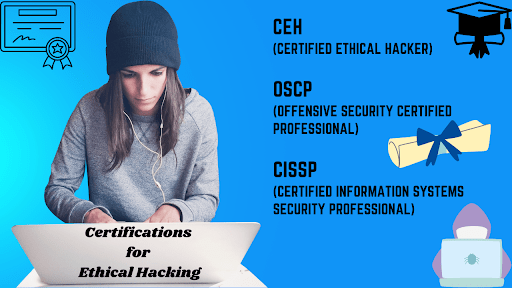
To advance in ethical hacking, obtaining certifications is essential. Here are some of the most recognized certifications in the industry:
- CEH (Certified Ethical Hacker): Covers tools and techniques for ethical hacking and penetration testing.
- OSCP (Offensive Security Certified Professional): A hands-on certification that demonstrates real-world penetration testing skills.
- CISSP (Certified Information Systems Security Professional): Focuses on high-level security knowledge for senior security positions.
These certifications not only equip you with critical skills but also significantly enhance your earning potential. Companies actively look for certified ethical hackers, making these credentials an investment in your future.
Career Pathways in Ethical Hacking
The career opportunities in ethical hacking are vast, ranging from entry-level to advanced roles:
1. Entry-Level Roles:
- Security Analyst: Monitor systems for security breaches and assist in penetration testing.
- Penetration Tester: Specialize in ethical hacking to find and fix vulnerabilities.
2. Advanced Roles:
- Cybersecurity Consultant: Advise organizations on securing their digital assets.
- Security Architect: Design and implement robust security frameworks for businesses.
- Chief Information Security Officer (CISO): Lead organizational security strategies at an executive level.
With the right certifications for ethical hacking, you can move from entry-level positions to top-tier roles, where you will shape security policies and protect organizations against the evolving cyber threat landscape.
Ready to take the first step? Explore our CEH training program and begin your ethical hacking career today!
Conclusion
Becoming an ethical hacker involves mastering essential skills, obtaining relevant certifications such as CEH or OSCP, and gaining practical experience. With the increasing demand for cybersecurity professionals, now is an excellent time to pursue this fulfilling career path. Institutions like CCI Training Center provide comprehensive ethical hacking courses and certifications designed to equip individuals with the knowledge and tools needed to succeed in this field.
Aspiring ethical hackers are encouraged to explore available courses, engage with cybersecurity communities, and begin practicing their skills. The digital landscape is in constant need of skilled professionals—will you step up to meet the challenge?
 Martin Zandi
 Carey Maceira
 Carey Maceira
 Carey Maceira
 Carey Maceira
 Joseph Weber