








Generic selectors
Exact matches only
Search in title
Search in content
Post Type Selectors

Summary

When choosing a medical assistant program, consider accreditation, certification preparation, externship opportunities, faculty qualifications, class format, financial aid, schedule flexibility, and
ℹ️ This summary was generated by AI and may contain inaccuracies or omissions. Please refer to the full article for complete information.


How Employers Evaluate Medical Assistant Graduates During Hiring

Contact Us

    View full terms

    This enables CCI Training Center to contact you regarding our services via SMS message to the phone number you provided above. Message and data rates may apply. Text "HELP" for support and "STOP" to cancel.

    * By clicking the button below as my official signature, I consent to representatives of CCI Training Center contacting me about educational opportunities via phone, text message, and email. I understand that my consent is not a requirement
    for any purchase.

    For more information about our graduation rates, the median debt of students who completed the program, and other important information, please refer to the Gainful Employment Disclaimers.

    Medical assistant hiring evaluation process.

    Originally, it may seem like graduating (completing) a medical assistant training program is the finish line; it is just the beginning of a new chapter. Because the ultimate goal is to get a job. However, given the immense competition and growing demand for this specific role, employers (clinics and hospitals) are constantly looking for the “ideal candidate” who checks all the boxes during the evaluation/interview process.

    But what exactly are they looking for in this ideal candidate? And how do they evaluate them?

    These are natural questions that you and many other aspiring MAs may have. Don’t worry, this guide breaks down exactly how hiring managers evaluate medical assistant graduates today.

    Quick Overview: How Employers Evaluate Medical Assistant Candidates

    Evaluation StagePrimary Employer FocusKey Success Factor
    ATS Resume ScreeningActive certifications (CCMA) and accredited education.Matching targeted keywords and verified national credentials
    Background ScreeningIdentity, criminal record, drug panel, immunization recordsClean compliance record and proactive honesty
    Clinical CompetencyVital signs, phlebotomy, EKG setup, infection controlConfident, step-by-step physical demonstration
    EHR & Tech LiteracyDigital charting navigation, scheduling speed, documentation accuracyTransferable software confidence and data precision
    Behavioral InterviewCommunication, stress tolerance, patient empathy, adaptabilitySolutions-oriented answers detailing past experience

    What Employers Look for Before You Even Get Shortlisted

    Certifications and Credentials That Get a Resume a Second Look

    Gone are the days when a firm handshake with a smile will get you a medical assistant job. 

    These days, your resume gets filtered out by Applicant Tracking Systems (ATS) even before they reach an actual human hiring manager/recruiter. This means that if your resume doesn’t specifically highlight a national certification like the Certified Clinical Medical Assistant (CCMA) by NHA, chances are your application will be pushed aside in mere seconds. 

    Not sure how to create the ideal MA resume? Learn how to build a medical assistant resume

    But Why Are Certifications So Important For A Medical Assistant Role?

    There are multiple factors that work in combination; however, the two main reasons are:

    1. These national certifications validate your clinical skills. 
    2. Employers don’t have to spend additional time and resources to train you on-site. 
    Want to learn more about the most recognized MA certification? Check our CCMA Certification Guide.

    State- and Facility-Specific Requirements

    Beyond national certification, some states regulate specific clinical tasks like phlebotomy. 

    A current BLS or CPR card from an approved training center is close to universal, regardless of state or specialty. Facility-specific requirements, such as immunization documentation or specialty certifications, typically get layered on top of these baseline standards.

    Specialty practices add their own layer as well. A dermatology office may expect familiarity with minor in-office procedures, while a pediatric clinic may prioritize experience with vaccine schedules and comfort working with young patients. Reviewing a job posting closely for these specifics, rather than assuming every medical assistant role looks the same, helps set realistic expectations before an interview.

    Background Checks and Documentation Employers Require

    Once you are shortlisted (you can increase your chances by adhering to tips shared in the MA resume guide), the next step in evaluation is to check your background. 

    What a Standard Background Check Includes

    Nearly every healthcare employer runs a background check before finalizing an offer, and medical assistants are no exception given their access to patient records and medications. 

    A standard check typically verifies identity, confirms education and certification, and searches criminal history at the state and federal level.

    Many employers also cross-reference applicants against federal exclusion lists that bar individuals from working at facilities receiving Medicare or Medicaid funding. 

    NOTE: These screenings are also legally structured, not informal. Employers running background checks are required to follow the Fair Credit Reporting Act, which means candidates are entitled to consent to the check and to see the results if something in the report affects the hiring decision.

    Drug Screening, Immunizations, and License Verification

    • Pre-employment drug screening is close to standard practice in clinical settings, and a positive result typically ends the hiring process immediately. 
    • Employers also confirm immunization records are current, since medical assistants work in close contact with patients and biological specimens.
    • Certification and license numbers get verified directly with the issuing organization rather than taken at face value from a resume. An expired or unverifiable credential can stall an otherwise strong application before it moves any further.

    What Happens If a Background Check Reveals a Past Conviction?

    A criminal record doesn’t automatically disqualify a candidate from a medical assistant role. Employers are expected to individually assess how a conviction relates to the duties of the position before making an adverse decision, rather than applying a blanket rejection.

    Convictions tied to healthcare fraud, abuse, or violence against patients carry far more weight than older, unrelated offenses. Being upfront about any past issues early in the process is generally viewed far more favorably than having it surface unexpectedly during screening.

    What Medical Assistant Skills Do Employers Evaluate During the Hiring Process?

    Hands-On Clinical Competency Checks

    Many interviews for medical assistant positions include a practical component, not just a conversation. Candidates may be asked to demonstrate taking vital signs, walk through an EKG setup, or explain proper injection technique on the spot.

    Employers use these moments to confirm that training translated into muscle memory, not just textbook familiarity. A candidate who can narrate each step while performing it tends to leave a stronger impression than one who can only describe the process afterward.

    EHR and Technology Proficiency

    In the age of AI automation, it shouldn’t come as a surprise that you are expected to be comfortable with digital tools, especially Electronic Health Record (EHR) systems. 

    Employers also evaluate how confidently you can document a patient encounter OR book an appointment without slowing down an already busy clinic. 

    Does This Mean New MA Graduates Need to Know Every Single EHR System?

    Not necessarily. The reality is that no single system is accepted across healthcare systems, so employers generally don’t expect a graduate to have used their exact software before. What they do expect is comfort navigating digital charting in general, since that skill transfers quickly between platforms.

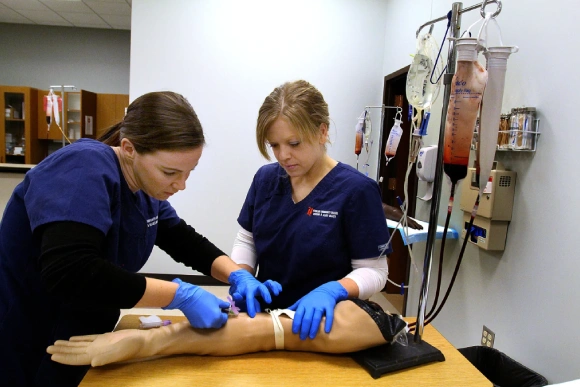
    Now, if you’ve completed your MA training with an accredited school like CCI Training Center, then you can be certain that you will be well-versed in these technical skills, thanks to the included practice kit and dedicated 240-hour externship. 

    Explore MA Training Program

    How Employers Evaluate You in the Interview and Beyond

    Behavioral and Situational Interview Questions

    Interviews for medical assistant roles typically combine technical questions with situational ones. A hiring manager might ask how a candidate would handle a packed schedule, a frustrated patient, or a conflicting priority between two providers.

    These questions are designed to reveal composure under pressure, not just the technically correct answer. Employers often follow up with a second, harder question specifically to see how a candidate adjusts on the fly

    Soft Skills Employers Weigh Just as Heavily as Technical Ability

    Communication, adaptability, and professionalism get assessed with the same seriousness as clinical technique, not treated as a bonus. Employers pay close attention to how a candidate describes a past difficult patient interaction or workplace disagreement, since the tone of that answer says as much as its content.

    A candidate who stays composed and solutions-focused signals readiness for the pace of a clinic floor. For a deeper look, check our guide on what medical assistant soft skills matter most.

    Got an interview lined up? Prepare with these 18 proven interview tips.

    Final Words

    Every stage of medical assistant hiring functions as its own checkpoint, from the first resume scan to the skills demonstration on day one. Certifications open the door, but background checks, hands-on competency, and interpersonal presence decide who actually walks through it.

    However, none of these checkpoints have to be a surprise once you know what’s being measured and why. Graduates who train with a trusted, structured program tend to walk into each of these evaluations already prepared, rather than encountering them cold for the first time.

    This article is written by

    Pamela Christianson
    Licensed educator in the State of Montana and Certified Medical Assistant (CMA, AAMA) with 10+ years of experience in healthcare education and allied health program leadership. Dedicated to delivering career-focused training that prepares students for success in today’s healthcare workforce.

    Share this article

    Frequently Asked Questions

    Do employers require certification to hire a medical assistant?

    Certification isn’t a federal requirement in most states, though a growing number of employers list it as required or strongly preferred. Some employers still hire non-certified candidates and provide on-the-job training, but certified applicants are typically considered first.

    Resume errors, unverifiable certification claims, and failed background checks eliminate more candidates than a lack of experience does. Communication issues and a lack of composure during the interview are the next most common reasons for rejection.

    Yes, nearly every healthcare employer conducts a background check and drug screening before finalizing a job offer. These checks typically include criminal history, identity verification, license confirmation, and a search of federal healthcare exclusion lists.

    Externships often function as an extended interview, giving site supervisors a firsthand look at reliability and professionalism before a formal interview happens. Many graduates receive job offers directly from their externship site once the placement ends.

    Communication, adaptability, and composure under pressure get evaluated with the same weight as clinical technique. Employers pay close attention to how candidates describe past patient interactions and workplace challenges during the interview.

    Related Articles

    CCI Training Center Proudly Completes

    41 Years in Career Training Services