










Summary


Quick Summary
- Modern accounting skills go beyond numbers, employers expect digital proficiency, analytical thinking, and communication abilities.
- Must-have skills needed for accounting in 2026 include proficiency with QuickBooks and Excel, payroll processing, financial reporting, and compliance.
- Important business skills that are now non-negotiable are communication, collaboration, time management, and ethics.
- See why simulated business projects are becoming the gold standard for career prep.
- AI and automation are shifting accountants from data entry to strategic decision-making roles.
Ever thought? Why just “knowing numbers” won’t cut it in 2026
Gone are the days when accountants and business professionals could hide behind spreadsheets. In today’s workplace, professionals are expected to understand the data, use the tools, communicate the story, and solve problems on the fly.
According to the U.S. Bureau of Labor Statistics, employment for Accountants and Auditors is projected to grow by 5% from 2024 to 2034, with an estimated 72,800 new jobs added during this period. This steady growth reflects consistent demand for financial reporting, compliance, and auditing services across industries.
To succeed in this fast-moving, tech-first world, professionals must bring a full spectrum of technical, analytical, and interpersonal skills to the table.
Essential Digital Tools for Accountants & Business Professionals
QuickBooks, Excel, Word, Outlook, and PowerPoint are essential digital tools that every accountant and business professional is expected to master. These applications are widely used in daily financial operations, reporting, communication, and data management. The tables below explain how each tool supports real-world accounting tasks.
Why QuickBooks and Excel Are Must-Have Skills Needed for Accounting?
| Tool | Why It Matters | How It Helps |
| QuickBooks | Dominates small-to-mid-sized business finance systems | Manage payroll, invoicing, and reporting |
| Excel | Still the go-to for financial modeling and analysis | Create dashboards, pivot tables, smart formulas |
Both tools are foundational in real-world settings. In fact, programs like CCI Training Center’s Business & Accounting Program build QuickBooks and Excel directly into their hands-on curriculum.
MS Office & Outlook Still Rule Business Operations
| Software | Core Functionality |
| Word | Write reports, contracts, and internal policies |
| Outlook | Manage scheduling, calendars, and email correspondence |
| PowerPoint | Create executive-level presentations and briefings |
These aren’t just “nice-to-have”—they’re baseline expectations in any business role.
Top Accounting Skills Employers Want in 2026

1. Payroll Processing & Labor Law Knowledge
- Understand tax deductions, employer contributions, and regulatory deadlines
- Handle multi-state payroll issues, minimum wage laws, and compliance audits
- Employers expect autonomy—not handholding—in these areas
CCI’s payroll-focused training teaches students to manage these essentials through practical application.
2. Reading & Creating Financial Reports
| Report Type | Why It Matters |
| Balance Sheet | Tracks company’s assets, liabilities, and equity |
| Income Statement | Shows profitability over a specific period |
| Cash Flow Statement | Measures liquidity and operational health |
Professionals trained in financial reporting through programs like CCI’s Accounting Practicum Module gain real-world experience beyond theory.
3. HR Basics & Business Ethics Knowledge
Today’s accounting and admin professionals are expected to understand:
- Workplace ethics, confidentiality, and discrimination laws
- Recruitment protocols, onboarding steps, and team management
- Navigating legal gray areas with professionalism
These are increasingly required in hybrid finance-HR roles.
Business Professional Skills 2026 That Set You Apart
1. Business Communication That Gets Results
Whether you’re explaining a budget variance or emailing a vendor, communication is key.
- Write emails that inspire action
- Speak clearly in meetings, even over Zoom
- Translate numbers into narratives for stakeholders
2. Time Management, Digital Etiquette & Collaboration Skills
| Skill | Why It’s Vital |
| Time Prioritization | Meet deadlines, juggle multiple accounts or teams |
| Remote Communication | Professionalism over Zoom, Slack, Teams |
| Digital Collaboration | Share files, co-edit spreadsheets, maintain clear logs |
In today’s remote-first environment, these skills are often what separate high performers from average ones.
3. Simulated Projects = Job-Ready Confidence
Forget worksheets—simulations are where true prep happens.
At CCI Training Center, students complete a Business Practicum where they:
- Establish and operate a simulated business environment
- Make strategic decisions related to daily business operations
- Manage customer expectations and service scenarios
- Prepare and analyze financial statements
- Evaluate outcomes and make informed business decisions
- Identify and respond to factors that impact business success
- Develop a deeper understanding of how real-world business decisions are made
This “learn by doing” approach leads to deeper confidence and employer trust.
Accounting Industry Trends 2026 — What’s Changing Fast
| Trend | Impact on Professionals |
| AI & Automation | Replaces repetition—humans now own insight, ethics, and leadership |
| Remote & Hybrid Work | Self-management, digital fluency, and flexibility are critical |
| Cross-Functional Roles | Accounting + HR + Compliance is the new normal |
What skills do accountants need in 2026? A blend of tech know-how, adaptability, and strategic insight.
How to Build Your Business Skillset for 2026 and Beyond
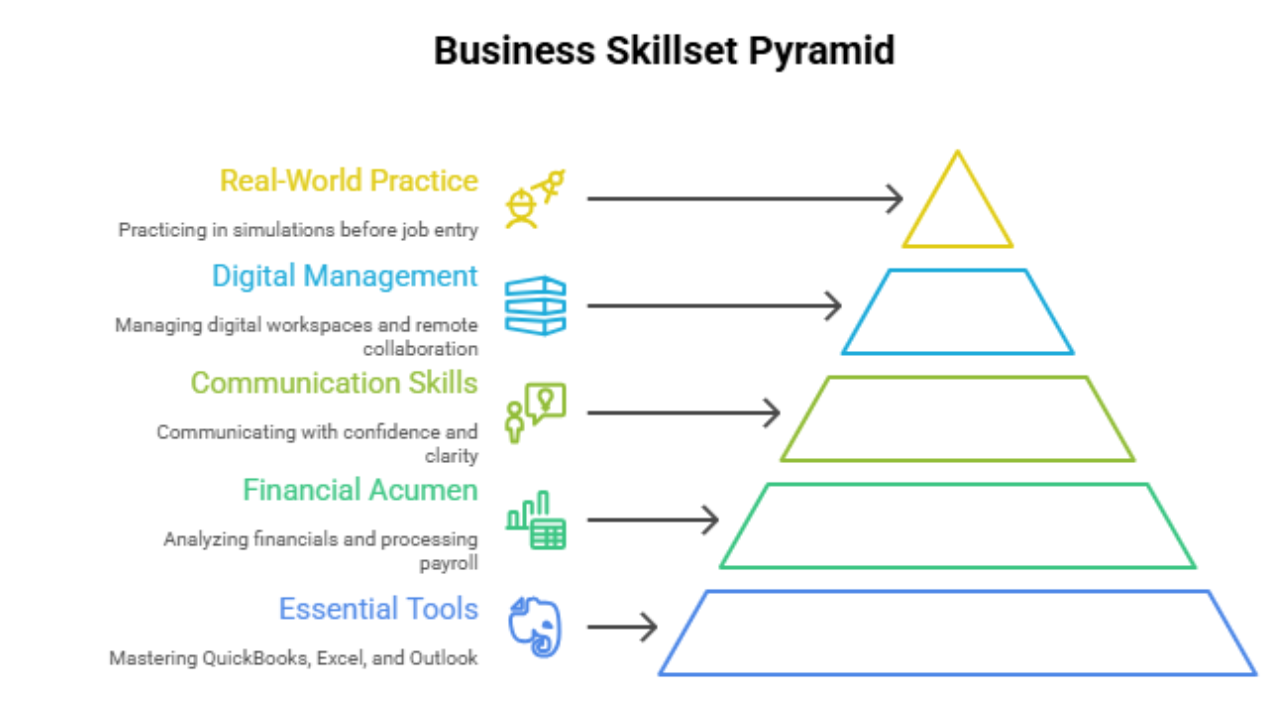
It’s not just about getting certified—it’s about being capable from day one. That means:
- Mastering tools like QuickBooks, Excel, and Outlook
- Knowing how to analyze financials and process payroll
- Communicating with confidence and clarity
- Managing digital workspaces and remote collaboration
- Practicing in real-world simulations before ever stepping into a job
If you’re looking to gain these skills fast, the CCI Business & Accounting Program is structured for career readiness in under 6 months.
Conclusion
The future of business and accounting belongs to professionals who combine technical expertise with adaptability, digital fluency, and strong communication skills. If you are serious about building important business skills and staying competitive, focus on hands-on learning and real-world application. When you master the right skills needed for accounting and practice them in realistic scenarios, you don’t just become qualified, you become job-ready.

 Pamela Christianson
 Pamela Christianson
 Pamela Christianson
 Pamela Christianson
 Pamela Christianson
 Pamela Christianson