








Generic selectors
Exact matches only
Search in title
Search in content
Post Type Selectors

Summary

When choosing a medical assistant program, consider accreditation, certification preparation, externship opportunities, faculty qualifications, class format, financial aid, schedule flexibility, and
ℹ️ This summary was generated by AI and may contain inaccuracies or omissions. Please refer to the full article for complete information.

What Does a Dermatology Medical Assistant Do? Skills, Duties, and Career Fit

Contact Us

    View full terms

    This enables CCI Training Center to contact you regarding our services via SMS message to the phone number you provided above. Message and data rates may apply. Text "HELP" for support and "STOP" to cancel.

    * By clicking the button below as my official signature, I consent to representatives of CCI Training Center contacting me about educational opportunities via phone, text message, and email. I understand that my consent is not a requirement
    for any purchase.

    For more information about our graduation rates, the median debt of students who completed the program, and other important information, please refer to the Gainful Employment Disclaimers.

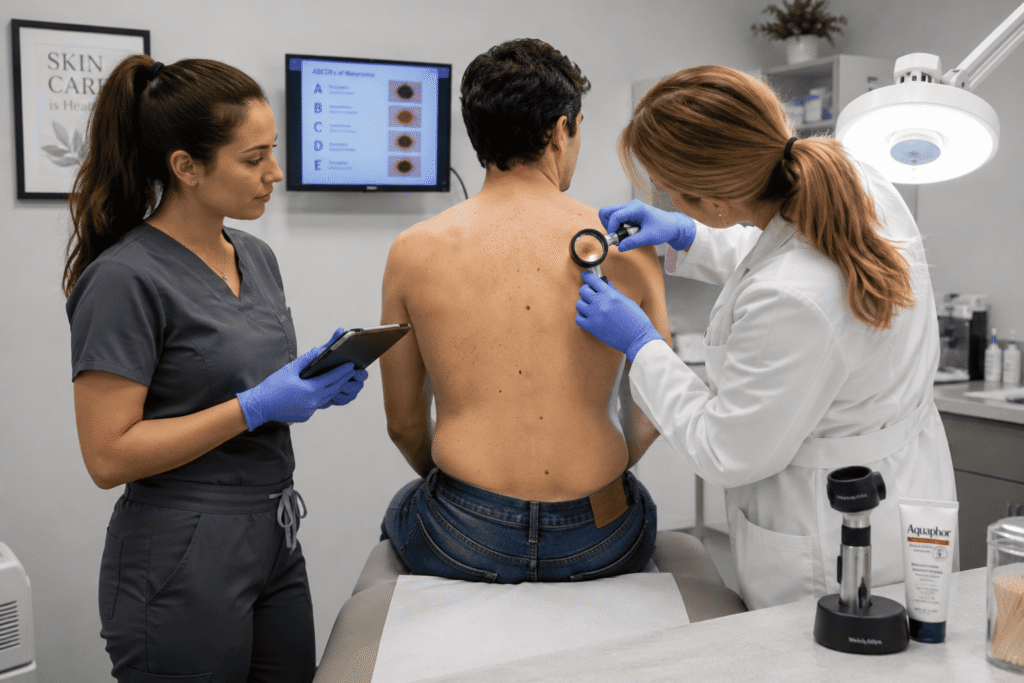
    Dermatology medical assistant assisting physician during full-body skin examination in clinic

    Quick Summary:

    A dermatology medical assistant plays a vital role in helping dermatologists provide both medical and cosmetic skin care. Their responsibilities include a combination of clinical duties, such as preparing patients for skin examinations, assisting with biopsies, wound care, cryotherapy, and cosmetic procedures, along with administrative tasks like scheduling appointments, managing electronic health records (EHRs), coordinating pathology reports, and handling insurance authorizations.

    After becoming a medical assistant, you don’t have to limit yourself to general practice. You can choose to specialize in areas like pediatrics, cardiology, orthopedics, dermatology, obstetrics and gynecology (OB-GYN), or urgent care, depending on your interests and career goals. Among these specialties, a dermatology medical assistant is a good career option to pursue.

    If you are considering this career path, your mind is probably full of questions, including;

    • What does a dermatology medical assistant actually do?
    • What skills do employers expect dermatology medical assistants to have?
    • What does a dermatology medical assistant’s typical workday look like? 

    This guide answers all of these questions and helps you understand whether dermatology is the right medical assistant specialty for you.

    What Is a Dermatology Medical Assistant?

    A dermatology medical assistant is a medical assistant who works specifically in a dermatologist’s office, a dermatology group practice, or a combined medical-cosmetic (med-spa) clinic. The core medical assisting scope of practice doesn’t change. You are still working under physician supervision, still barred from independent diagnosis or prescribing, but the day-to-day tasks shift heavily toward skin-specific procedures and an increasing share of cosmetic work like Botox and filler assistance, chemical peels, and laser treatments.

    Because dermatology patients range from a teenager with acne to an adult with a suspicious mole to a cosmetic patient wanting smoother skin, the derm MA needs comfort switching between very different patient conversations multiple times an hour.

    What Does a Dermatology Medical Assistant Do?

    Dermatology medical assistants wear many hats throughout the workday. Their responsibilities combine hands-on patient care with behind-the-scenes administrative work that keeps providers on schedule and ensures patients receive quality care. Let’s take a closer look at the clinical and administrative duties that make up this specialized role.

    1. Clinical Duties of a Dermatology Medical Assistant

    This is where the specialty really diverges from general medical assisting. Expect a mix of the following, depending on state scope-of-practice rules and the specific practice:

    • Patient intake and history: Reviewing the patient’s skin concerns, previous dermatologic conditions, current medications (especially those affecting healing or causing photosensitivity), allergies, and medical history before the provider enters the exam room.
    • Full-body skin check preparation: Positioning and draping patients appropriately, preparing examination rooms, and sometimes photographing lesions for the patient’s medical record or a mole-mapping system.
    • Skin biopsy setup: Preparing sterile instruments, setting up biopsy trays, handing instruments to the dermatologist during procedures, and applying dressings after tissue samples are collected.
    • Specimen handling: Correctly labeling, documenting, preserving, and preparing biopsy tissue samples for transport to the pathology laboratory, where accuracy is critical for diagnosis.
    • Wound care and dressing changes: Cleaning treatment sites, changing dressings, providing post-procedure wound care, and reinforcing aftercare instructions to patients.
    1. Administrative Duties of a Dermatology Medical Assistant

    Dermatology medical assistants also handle a variety of administrative responsibilities that keep the practice organized and running efficiently. From coordinating specialized appointments to managing insurance paperwork, these behind-the-scenes tasks ensure both providers and patients have a smooth experience throughout the care journey.

    Common administrative duties include:

    • Scheduling appointments: Coordinating medical visits, cosmetic consultations, skin cancer screenings, biopsies, phototherapy sessions, and follow-up appointments, each of which may require different time slots.
    • Insurance verification and billing support: Verifying patient insurance, distinguishing medically necessary treatments from cosmetic procedures, assisting with coding, and preparing billing documentation.
    • Electronic health record (EHR) management: Updating patient records, documenting visit information, uploading lesion photographs, recording biopsy results, and maintaining accurate clinical documentation.
    • Pathology and laboratory coordination: Tracking biopsy specimens, monitoring pathology reports, communicating results to providers, and ensuring timely follow-up with patients.
    • Patient communication: Answering patient questions, scheduling follow-up visits, providing pre- and post-procedure instructions, relaying pathology results under provider guidance, and coordinating referrals when necessary.
    • Medical inventory management: Monitoring and restocking dermatology-specific supplies such as biopsy punches, suture kits, cryotherapy canisters, specimen containers, dressings, injectable products, and personal protective equipment (PPE).
    • Procedure documentation: Preparing consent forms, documenting treatments performed, maintaining cosmetic treatment records, and ensuring all required paperwork is complete before and after procedures.
    • Referral coordination: Scheduling referrals to Mohs surgeons, plastic surgeons, oncologists, allergy specialists, or other healthcare providers when advanced care is needed.

    Although a medical assistant in dermatology has its own specialty-specific clinical skills, many of the administrative responsibilities are very similar to those of a general medical assistant. That’s why it’s important to enroll in a medical assistant program that provides comprehensive training in both clinical and administrative skills, along with an externship where you can apply what you have learned in a real healthcare setting. If you are still exploring your options, CCI Training Center’s Medical Assistant Program is worth considering.

    What Does a Typical Day Look Like for a Dermatology Medical Assistant?

    A medical assistant in dermatology’s daily responsibilities can vary depending on where you work. However, most dermatology medical assistants follow a similar workflow that balances direct patient care with administrative responsibilities.

    Here’s what a typical day might look like:

    TimeTypical Responsibilities
    8:00–8:30 AMPrepare exam rooms, sterilize instruments, stock biopsy trays, check phototherapy equipment, review the day’s schedule, and ensure all supplies are ready before patients arrive.
    8:30–11:30 AMRoom patients, record medical histories and medications, assist with full-body skin examinations, prepare patients for biopsies or cryotherapy, document findings in the EHR, and provide patient education.
    11:30 AM–12:30 PMLabel and prepare biopsy specimens for the pathology lab, restock procedure rooms, return patient calls, respond to portal messages, and complete clinical documentation.
    12:30–1:30 PMLunch break and prepare rooms for afternoon appointments if needed.
    1:30–4:30 PMAssist with cosmetic procedures such as Botox, dermal fillers, laser treatments, microneedling, or chemical peels, while also supporting follow-up appointments and UV phototherapy sessions.
    4:30–5:00 PMComplete documentation, schedule follow-up visits, coordinate pathology reports and referrals, clean and disinfect treatment rooms, restock supplies, and prepare the clinic for the next day.
    KEEP IN MIND: Every dermatology practice operates differently. Some clinics focus almost entirely on medical dermatology, while others specialize in cosmetic procedures or Mohs surgery. As a result, a medical assistant in dermatology’s daily routine may shift based on the patients you see, the procedures your providers perform, and the services offered by the practice.

    Conclusion

    Hopefully, this guide has given you a clear understanding of what a dermatology medical assistant does and what you can expect in this specialty. While these responsibilities can vary by scope of practice, the role consistently combines direct patient care with important behind-the-scenes support that helps dermatologists deliver efficient treatment.

    This article is written by

    Pamela Christianson
    Licensed educator in the State of Montana and Certified Medical Assistant (CMA, AAMA) with 10+ years of experience in healthcare education and allied health program leadership. Dedicated to delivering career-focused training that prepares students for success in today’s healthcare workforce.

    Share this article

    Frequently Asked Questions (FAQs)

    What does a dermatology medical assistant do every day?

    A dermatology medical assistant prepares patients for examinations, records medical histories, assists with biopsies, cryotherapy, wound care, and cosmetic procedures, manages medical records, coordinates appointments, and communicates with patients before and after procedures.

    Yes. Depending on state regulations and employer policies, dermatology medical assistants commonly prepare treatment rooms, assist dermatologists during Botox, dermal filler, laser, microneedling, and chemical peel procedures, and document treatments. They cannot independently perform procedures outside their legal scope of practice.

    No. Dermatologists perform the biopsy itself. Medical assistants prepare sterile instruments, assist during the procedure, label tissue specimens, apply dressings, and provide post-procedure instructions under the provider’s supervision.

    Successful dermatology medical assistants need attention to detail, strong communication skills, manual dexterity, knowledge of infection control, familiarity with dermatology terminology, proficiency with electronic health records (EHRs), and the ability to multitask in a fast-paced clinical environment.

    They commonly work in private dermatology practices, hospital outpatient dermatology clinics, multispecialty medical groups, Mohs surgery practices, academic medical centers, and medical spas that offer both medical and cosmetic dermatology services.

    Related Articles

    CCI Training Center Proudly Completes

    41 Years in Career Training Services