













Summary
Can Medical Assistants Work From Home? Remote Roles, Real Opportunities & How to Get Started

If you’re drawn to healthcare but want a career that fits your life, not the other way around, you’ve probably wondered whether medical assistants can work from home. It’s a fair question, and the answer is more encouraging than most people expect.
Hint: Yes, you can work remotely as a Medical Assistant.
The healthcare industry has shifted dramatically over the past few years, and the rise of telehealth, electronic health records, and virtual care platforms has opened a genuine pipeline of remote opportunities for trained medical assistants. This post breaks down exactly which roles are available, what you can and can’t do remotely, what employers are looking for, and how to put yourself in the best position to land a work-from-home healthcare career.
Quick Takeaways
- Medical assistants can work from home, primarily in administrative and telehealth support roles
- Clinical tasks like drawing blood, administering injections, or taking vitals must still be performed in person
- Telehealth growth has created a steady stream of remote MA job titles, including virtual medical assistant, telehealth coordinator, and remote patient monitoring specialist
- Certification significantly improves your chances of landing a remote role
- The median MA salary is $44,200, with the field projected to grow 12% through 2034
- A structured, teacher-led training program is the fastest path to qualifying for both clinic-based and remote healthcare work
Can Medical Assistants Really Work From Home?
The short answer is yes — and the industry data backs it up.
What’s Changed in Healthcare
According to industry forecasts, the telehealth market was projected to surpass $200 billion by the end of 2025 (which it did). That kind of growth doesn’t happen without a corresponding demand for support staff to keep virtual care running smoothly.
McKinsey data shows that telehealth utilization remains 38 times higher than pre-pandemic levels, which is a clear signal that virtual healthcare is now a permanent infrastructure, not a temporary workaround.
Healthcare organizations have responded by building remote-capable administrative and support teams. Large hospital systems, telehealth platforms, insurance networks, and outpatient practices now regularly post work-from-home positions for trained MAs. Some industry analysts project that 25–30% of all healthcare jobs could be performed remotely within the next decade.
The Short Answer — and the Honest Caveat
Yes, medical assistants can absolutely work from home. But it’s important to be clear-eyed about which parts of the role translate to a remote setting and which ones don’t.
Administrative functions, patient communication, telehealth support, and documentation work can all be done effectively from a home office. Clinical duties that require hands-on patient contact, i.e., drawing blood, administering injections, and preparing exam rooms, cannot. Knowing that distinction helps you target the right roles and market yourself effectively.
What Tasks Can a Medical Assistant Do Remotely?
Administrative Duties
A large share of what medical assistants do every day is already digitally driven. Appointment scheduling, insurance verification, prior authorization requests, and EHR data entry are all tasks that can be completed over a secure internet connection. Remote MAs handling these functions keep practices running efficiently without needing to be on-site.
NOTE: If you’re also interested in the billing and coding side of healthcare, exploring a medical billing and coding pathway can complement your MA training and open additional remote-friendly doors.
Telehealth Support Roles
As virtual appointments have become routine, telehealth MAs have become essential to virtual care teams. These roles involve preparing patients before video visits, managing documentation during or after appointments, following up on care plans, and triaging patient questions via phone or secure messaging platforms. Much of a telehealth MA’s day mirrors in-clinic work — minus the exam room. Communication, organization, and comfort with technology are the core competencies here.
Remote Patient Monitoring
Remote patient monitoring (RPM) is one of the fastest-growing corners of virtual healthcare. RPM coordinators help patients set up monitoring devices at home — for conditions like hypertension, diabetes, and heart disease — then review incoming data and flag concerns for the clinical team. It’s a meaningful, patient-facing role that requires no in-person presence. According to Glassdoor job listings, RPM coordinator roles consistently appear among the most in-demand remote positions for certified MAs.
What Tasks Must Be Done In Person?
Clinical Duties That Require Physical Presence
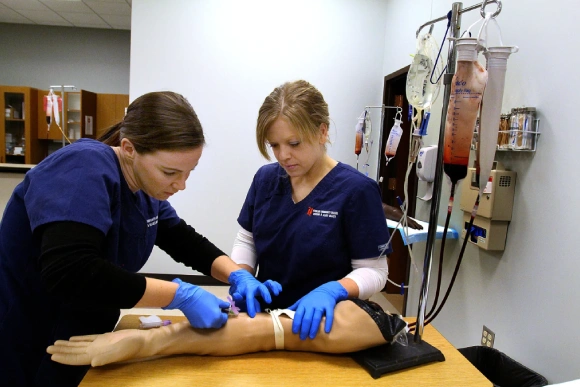
Being honest about this matters — both for your career planning and for patient safety. Taking vital signs, administering vaccines or injections, performing EKGs, collecting lab specimens, and assisting physicians during exams all require physical presence with the patient. These tasks are at the core of clinical medical assisting, and no amount of technology currently replaces the need for trained, credentialed hands in the exam room. If fully remote work is your long-term goal, focusing on certification with strong administrative and telehealth skills is the right strategic path.
Why In-Person Training Still Matters for Remote MAs
Here’s something many people overlook: even if your goal is a remote MA career, completing hands-on clinical training first gives you a meaningful competitive advantage. Employers hiring for virtual roles consistently prefer candidates who understand clinical workflows from the inside. Knowing how a patient visit flows, what physicians need during telehealth consults, and how documentation connects to clinical outcomes makes you a far stronger remote hire than someone with administrative skills alone.
If you want to learn in detail, check the difference between a clinical and an administrative medical assistant.
Remote Medical Assistant Job Titles to Know
The remote MA landscape has its own vocabulary. Knowing these titles helps you search smarter and spot opportunities you might otherwise overlook.
| Job Title | Core Remote Duties | Remote Potential |
| Telehealth Medical Assistant | Pre/post-visit prep, documentation, patient follow-up | High — fully remote in many settings |
| Virtual Medical Assistant | Scheduling, EHR management, insurance verification | High — common in telehealth platforms |
| Remote Patient Monitoring Coordinator | Device onboarding, data review, patient outreach | High — roles are fully remote by design |
| Remote Medical Scribe | Real-time documentation during telehealth visits | High — widely available across specialties |
| Care Coordinator | Chronic care management, referrals, patient education | Moderate to High — often hybrid |
Telehealth Medical Assistant
Telehealth MAs work directly within virtual care workflows, supporting providers before, during, and after video appointments. They handle chart preparation, patient intake via phone or portal, and follow-up communications. These roles require strong EHR skills, clear verbal communication, and the ability to keep multiple patients moving through a virtual queue simultaneously.
Virtual Medical Assistant / Care Coordinator
Virtual MAs and care coordinators often support multiple providers or practices at once. Their work spans scheduling, insurance coordination, patient outreach, and chronic care management tasks. According to remote healthcare career analysts, mid-level remote MA roles in telehealth support and care coordination typically pay between $18 and $25 per hour, with higher-complexity positions reaching $35 per hour.
Remote Medical Scribe
Medical scribes document provider-patient interactions in real time, allowing physicians to focus entirely on the patient during telehealth visits. It’s a detail-intensive role that demands excellent listening skills and fast, accurate documentation. Many scribing positions serve as fast-track entry points into remote healthcare work and are accessible to newly certified MAs.
How Much Do Remote Medical Assistants Make?
Salary Overview
According to the U.S. Bureau of Labor Statistics, the median annual wage for medical assistants was $44,200 in May 2024, with the top 10% earning more than $57,830. The BLS also projects 12% job growth for the field between 2024 and 2034 with approximately 112,300 openings expected each year. Exploring the highest-paying Medical Assistant specialties is worth doing early, since certification and focused skills are your two biggest earning levers whether you work on-site or remotely.
Remote vs. In-Person Pay Trade-Offs
Remote MA roles vary in pay depending on the employer and the complexity of work involved. Entry-level remote positions — scheduling, records management — tend to start at the lower end of the salary range. Roles that involve telehealth support, chronic care management, or RPM tend to offer more competitive compensation. The trade-off many MAs find worthwhile is the elimination of commuting costs and the added flexibility that comes with working from home — particularly valuable for career changers pursuing healthcare careers that don’t require a degree.
How to Land a Work-From-Home Medical Assistant Job
Do You Need Certification to Work Remotely?
Certification isn’t always legally required, but it’s a practical necessity for most remote roles. Employers hiring virtual MAs consistently prioritize certified candidates — particularly for positions involving telehealth support, EHR management, or patient-facing communication. A Certified Medical Assistant (CMA) or Registered Medical Assistant (RMA) credential signals that you’ve completed accredited training, understand clinical workflows, and can be trusted to handle sensitive patient information without in-person supervision. It’s the single most impactful credential you can hold when applying for remote positions.
Skills Employers Look For
Remote MA job postings consistently call out the same set of competencies:
- Proficiency with EHR platforms like Epic or Cerner
- Solid HIPAA compliance knowledge
- Reliable written communication
These are the baseline expectations for any remote role. Beyond that, employers want to see demonstrated experience with telehealth platforms, scheduling software, and the ability to manage tasks independently without direct supervision.
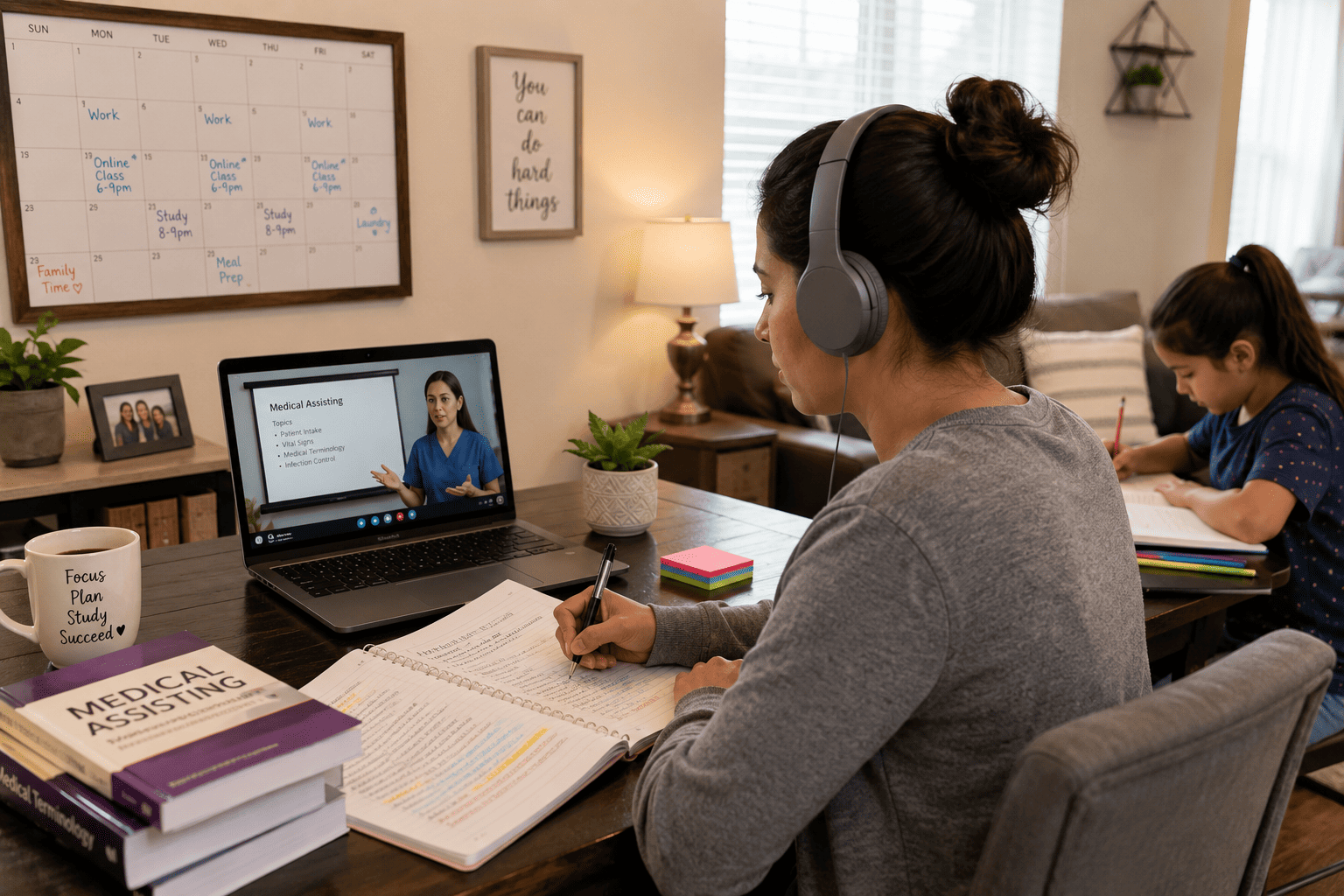
Setting up a HIPAA-compliant home workspace is also your responsibility as a remote MA. HIPAA compliance in a remote environment typically requires a private, secured workspace, a VPN-protected internet connection, and use of encrypted or employer-provided devices. Employers will often deliver onboarding training on their specific protocols, but arriving with existing HIPAA awareness puts you ahead from day one.
Where to Search and How to Stand Out
Job boards like Indeed, LinkedIn, and Glassdoor all support remote filters — use search terms like “telehealth medical assistant,” “virtual MA,” “remote care coordinator,” and “RPM coordinator” to surface the most relevant listings. Tailoring your resume to highlight administrative competencies, EHR platform experience, and any telehealth exposure puts you in a stronger position than a purely clinic-focused application. Certification, an externship with real-world documentation experience, and a clean home-office setup are the three factors that consistently separate candidates who land interviews from those who don’t. If you’re still comparing pathways, reviewing flexible, low-stress healthcare roles can help you confirm that medical assisting — especially in remote-capable settings — is the right fit for your goals.
Conclusion
Medical assisting is no longer a career confined to the clinic. Remote roles are real, they’re growing, and they’re accessible to trained, certified candidates who take the right preparatory steps. The key is completing an accelerated, teacher-led training program like the CCI Training Center Online Medical Assistant Program that covers both clinical fundamentals and the administrative skills that remote employers depend on — then pursuing certification to stand out in a competitive applicant pool.
If working from home in healthcare sounds like the right move for you, there’s no better time to take the first step.
Program Offered
- Pharmacy Technician Training
- Online Medical Assistant
- Medical Billing and Coding Specialist Program
- Cloud Computing Technician Training
- Computer Network Technician
- Business and Accounting
- Radiology Technician Training
- Medical Assistant Program
- Computer Support Technician
- Cybersecurity Program
- Virtual Assistant Training

This article is written by
Share this article
Program Offered
- Pharmacy Technician Training
- Online Medical Assistant
- Medical Billing and Coding Specialist Program
- Cloud Computing Technician Training
- Computer Network Technician
- Business and Accounting
- Radiology Technician Training
- Medical Assistant Program
- Computer Support Technician
- Cybersecurity Program
- Virtual Assistant Training
This article is written by
Share this article
Frequently Asked Questions
Can a medical assistant work fully remote with no in-person duties?
Some remote MA roles are fully virtual — particularly in telehealth support, RPM coordination, and virtual scribing. However, most clinical duties like taking vitals, drawing blood, or administering injections still require in-person presence. Fully remote positions focus almost entirely on administrative and patient communication responsibilities.
What certifications help medical assistants get remote jobs?
The most recognized credentials are the Certified Medical Assistant (CMA) from the American Association of Medical Assistants (AAMA) and the Registered Medical Assistant (RMA) from American Medical Technologists. Either credential signals to remote employers that you’ve completed accredited training and can handle clinical workflows confidently and independently.
Do remote medical assistant jobs pay less than in-person roles?
Pay varies by role type and employer. Entry-level remote positions may start slightly below in-clinic rates, but mid-level telehealth and care coordination roles are increasingly competitive. The BLS reports a median annual wage of $44,200 for MAs overall, and remote roles in specialized or high-demand areas can push well above that figure.
What equipment or setup do you need to work from home as a medical assistant?
Most employers require a reliable high-speed internet connection, a password-protected computer, a private workspace that unauthorized individuals can’t access, and a VPN for secure connection to patient records. Some employers provide devices directly; others expect you to have your own setup. A quality headset for patient calls and familiarity with telehealth platforms are standard expectations.
How do I find remote medical assistant job openings?
Search on Indeed, LinkedIn, and Glassdoor using terms like “remote medical assistant,” “telehealth MA,” “virtual care coordinator,” or “RPM coordinator.” Large hospital systems, telehealth platforms, and insurance companies are among the most frequent employers for remote roles. Networking with training program instructors, clinical contacts, and fellow graduates can also surface opportunities that never appear on public job boards.
Related Articles
 Pamela Christianson
 Pamela Christianson
 Pamela Christianson
 Pamela Christianson
 Pamela Christianson
CCI Training Center Proudly Completes
41 Years in Career Training Services