















If you want to build or switch to a healthcare career that allows you to help and interact with patients directly, then becoming an LVN (Licensed Vocational Nurse) could be the right choice for you.
However, people often confuse LVNs with other nursing roles. The title LVN is used only in Texas and California; elsewhere in the United States, the same role is called LPN (Licensed Practical Nurse).
To help you understand the role of an LVN better, we’ve compiled this guide that describes daily duties, differences between similar roles, and how to become one.
What Is The Meaning Of Vocational Nursing?
Vocational nursing is an entry-level healthcare profession that provides basic nursing care under the supervision of a registered nurse (RN) or physician. Vocational nurses are an essential part of a medical team, focusing on direct patient care and support.
Why The Different Titles LVN and LPN?
The LVN and LPN roles are essentially the same; the difference is geographic. California and Texas use Licensed Vocational Nurse, while every other state uses Licensed Practical Nurse
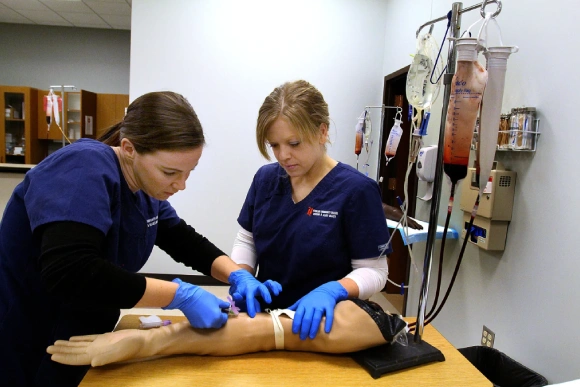
Both titles refer to nurses who provide basic medical care under supervision and must complete a state‑approved program and pass the NCLEX‑PN exam. Individual state nursing boards dictate their scopes of practice; some states allow properly trained LPNs/LVNs to start IVs, while others restrict IV therapy to RNs.
What Does an LVN Do?
LVNs focus on direct, hands-on care and support for patients. Here’s a detailed breakdown of LVNs’ roles and responsibilities:
- Monitoring vital signs: Check blood pressure, temperature, and other vital signs.
- Providing basic comfort: Change dressings, bathe and dress patients, assist with toileting and mobility.
- Administering medications and treatments: In some states, LVNs may administer prescribed medications and start IV drips; they also perform wound care and insert urinary catheters.
- Assisting with medical tests: Collecting samples and performing routine tests.
- Documentation and reporting: Record care provided and report patient status to RNs or physicians.
- Emotional support and patient education: Answer questions, listen to concerns, and teach family members how to care for loved ones.
Where Does an LVN Work?
Licensed vocational nurses usually work in:
- Hospitals: LVNs employed in hospitals usually help with wound care and monitor patients. However, most of the time, they are assisting with post-surgical recovery.
- Nursing homes: A majority of LVNs work in nursing homes. Here, they monitor vital signs, administer medications, and assist with daily patient care.
- Home healthcare: In this setup, LVNs offer one-on-one care to patients in their own homes. This includes everything from daily patient care assistance to medication management.
- Clinics: In a clinical setting, LVNs are responsible for collecting samples, administering medications, and educating patients.
Salary and Job Outlook
According to the Bureau of Labor Statistics, the median annual wage for LVNs/LPNs is $62,340 per year.
Additionally, employment is expected to grow 3 percent from 2023 to 2033.
Which City Pays the Most to LVNs/LPNs?
According to ZipRecruiter, Corcoran, CA pays the highest to LVNs/LPNs. Here are the top 10 high-paying cities in the US:
| City | Annual Salary | Monthly Pay | Weekly Pay | Hourly Wage |
| Corcoran, CA | $105,596 | $8,799 | $2,030 | $50.77 |
| Soledad, CA | $99,094 | $8,257 | $1,905 | $47.64 |
| Ione, CA | $94,881 | $7,906 | $1,824 | $45.62 |
| Portola Valley, CA | $92,330 | $7,694 | $1,775 | $44.39 |
| Santa Cruz County, CA | $91,921 | $7,660 | $1,767 | $44.19 |
| Avenal, CA | $91,594 | $7,632 | $1,761 | $44.04 |
| Scotts Valley, CA | $85,725 | $7,143 | $1,648 | $41.21 |
| Wasco, CA | $85,037 | $7,086 | $1,635 | $40.88 |
| San Quentin, CA | $83,639 | $6,969 | $1,608 | $40.21 |
| New Lisbon, WI | $83,345 | $6,945 | $1,602 | $40.07 |
NOTE: These salaries are for experienced LVNs/LPNS.
How to Become a LVN?
Step 1: Complete a State‑approved Practical Or Vocational Nursing Program
These programs are often offered by community colleges and technical schools and typically take about one year to complete. Coursework in these programs usually includes:
- Nursing fundamentals
- Anatomy and physiology
- Pharmacology
- Supervised clinical practice (hands-on training)
Step 2: Pass the NCLEX‑PN
After completing the program, you must pass the National Council Licensure Examination for Practical/Vocational Nurses (NCLEX‑PN) to obtain state licensure.
Step 3: Obtain Certifications
While not mandatory, many employers require proof of CPR or BLS certification.
Additionally, you may also earn credentials in fields such as IV therapy, gerontology, or wound care to expand on your skills and job opportunities.
Step 4: Apply for Jobs
Upon obtaining certifications and updating your resume, you can start applying for roles on reputed platforms such as:
NOTE: If you’re aiming for this career in Texas, adhere to the requirements stated by the Texas Board of Nursing. Likewise, check the requirements at the Board of Vocational Nursing and Psychiatric Technicians.
What Skills Are Required to Become a LVN?
- Medical knowledge: A good understanding of human anatomy, pharmacology, and medical terminology. These are usually taught in the training program.
- Communication skills: As an LVN, you’d be interacting with physicians, nursing staff, and RNs, so great communication skills are required.
- Patient care: You’d also be required to comfort patients and their families.
- Attention to detail: Carefully administering medications, precisely taking vitals, and adhering to nursing protocols are part of the job.
- Critical thinking: Sometimes medical situations require quick action, and as an LVN, you should be able to respond efficiently.
- Physical stamina: LVNs spend hours on their feet and are required to lift and assist patients, so physical stamina is a must.
LVN vs RN vs NP vs CNA: Clearing the Confusion
Now, you have a greater understanding of LVNs. However, people often confuse multiple nursing roles, namely LVN, RN, NP, and CNA. Therefore, it becomes essential to understand the difference between them:
| LVN (Licensed Vocational Nurse) | Registered Nurse (RN) | Nurse Practitioner (NP) | Certified Nursing Assistant (CNA) | |
| Minimum Education or Training Requirements | State‑approved practical/vocational nursing program, typically 1 year long. | Associate Degree in Nursing (ADN), which takes 2 years, or Bachelor of Science in Nursing (BSN), which takes 4 years. | Master of Science in Nursing (MSN) or a Doctor of Nursing Practice (DNP) degree, typically 3 years long. | State-approved training program, typically a couple of months. |
| Certification Required | NCLEX-PN exam | NCLEX-RN exam | Specialized nursing certification from either of these:
| State certification exam |
| Typical Duties | Basic patient care; administering medications, wound care, and treatment assistance. | Patient assessment, basic diagnosis, care planning, and supervising LVNs and nursing staff. | Develop and prescribe treatments, order tests, and diagnose patients. | Direct patient care/basic nursing tasks; bathing, feeding, repositioning, and hygiene care |
| Work Settings | Hospitals, nursing homes, clinics, and home healthcare. | Hospitals, nursing homes, doctors’ offices, and specialty clinics. | Private practice, hospitals, specialty clinics, and schools. | Hospitals, nursing homes, and long-term care |
| Average Salary | $62,340/ year | $93,000/year | $130,295/year | $39,430/year |
| Career Pathway | Registered Nurse (RN) | Nurse Practitioner (NP) or nursing educator | Healthcare administration, research, legal consulting, and medical aesthetics | Licensed Vocational Nurse (LVN) |
Final Words
A Licensed Vocational Nurse is a vital member of the healthcare team who delivers hands‑on patient care and bridges the gap between nursing assistants and registered nurses.
Whether you choose to remain an LVN or use it as a stepping‑stone, vocational nursing offers a rewarding career that makes a tangible difference in patients’ lives.
Program Offered
- Pharmacy Technician Training
- Online Medical Assistant
- Medical Billing and Coding Specialist Program
- Cloud Computing Technician Training
- Computer Network Technician
- Business and Accounting
- Radiology Technician Training
- Medical Assistant Program
- Computer Support Technician
- Cybersecurity Program
- Virtual Assistant Training

This article is written by
Share this article
What Is The Meaning Of Vocational Nursing?
Vocational nursing is an entry-level healthcare profession that provides basic nursing care under the supervision of a registered nurse (RN) or physician. Vocational nurses are an essential part of a medical team, focusing on direct patient care and support.Why The Different Titles LVN and LPN?
The LVN and LPN roles are essentially the same; the difference is geographic. California and Texas use Licensed Vocational Nurse, while every other state uses Licensed Practical Nurse Both titles refer to nurses who provide basic medical care under supervision and must complete a state‑approved program and pass the NCLEX‑PN exam. Individual state nursing boards dictate their scopes of practice; some states allow properly trained LPNs/LVNs to start IVs, while others restrict IV therapy to RNs.What Does an LVN Do?
LVNs focus on direct, hands-on care and support for patients. Here’s a detailed breakdown of LVNs’ roles and responsibilities:- Monitoring vital signs: Check blood pressure, temperature, and other vital signs.
- Providing basic comfort: Change dressings, bathe and dress patients, assist with toileting and mobility.
- Administering medications and treatments: In some states, LVNs may administer prescribed medications and start IV drips; they also perform wound care and insert urinary catheters.
- Assisting with medical tests: Collecting samples and performing routine tests.
- Documentation and reporting: Record care provided and report patient status to RNs or physicians.
- Emotional support and patient education: Answer questions, listen to concerns, and teach family members how to care for loved ones.
Where Does an LVN Work?
Licensed vocational nurses usually work in:- Hospitals: LVNs employed in hospitals usually help with wound care and monitor patients. However, most of the time, they are assisting with post-surgical recovery.
- Nursing homes: A majority of LVNs work in nursing homes. Here, they monitor vital signs, administer medications, and assist with daily patient care.
- Home healthcare: In this setup, LVNs offer one-on-one care to patients in their own homes. This includes everything from daily patient care assistance to medication management.
- Clinics: In a clinical setting, LVNs are responsible for collecting samples, administering medications, and educating patients.
Salary and Job Outlook
According to the Bureau of Labor Statistics, the median annual wage for LVNs/LPNs is $62,340 per year. Additionally, employment is expected to grow 3 percent from 2023 to 2033.Which City Pays the Most to LVNs/LPNs?
According to ZipRecruiter, Corcoran, CA pays the highest to LVNs/LPNs. Here are the top 10 high-paying cities in the US:| City | Annual Salary | Monthly Pay | Weekly Pay | Hourly Wage |
| Corcoran, CA | $105,596 | $8,799 | $2,030 | $50.77 |
| Soledad, CA | $99,094 | $8,257 | $1,905 | $47.64 |
| Ione, CA | $94,881 | $7,906 | $1,824 | $45.62 |
| Portola Valley, CA | $92,330 | $7,694 | $1,775 | $44.39 |
| Santa Cruz County, CA | $91,921 | $7,660 | $1,767 | $44.19 |
| Avenal, CA | $91,594 | $7,632 | $1,761 | $44.04 |
| Scotts Valley, CA | $85,725 | $7,143 | $1,648 | $41.21 |
| Wasco, CA | $85,037 | $7,086 | $1,635 | $40.88 |
| San Quentin, CA | $83,639 | $6,969 | $1,608 | $40.21 |
| New Lisbon, WI | $83,345 | $6,945 | $1,602 | $40.07 |
How to Become a LVN?
Step 1: Complete a State‑approved Practical Or Vocational Nursing Program
These programs are often offered by community colleges and technical schools and typically take about one year to complete. Coursework in these programs usually includes:- Nursing fundamentals
- Anatomy and physiology
- Pharmacology
- Supervised clinical practice (hands-on training)
Step 2: Pass the NCLEX‑PN
After completing the program, you must pass the National Council Licensure Examination for Practical/Vocational Nurses (NCLEX‑PN) to obtain state licensure.Step 3: Obtain Certifications
While not mandatory, many employers require proof of CPR or BLS certification. Additionally, you may also earn credentials in fields such as IV therapy, gerontology, or wound care to expand on your skills and job opportunities.Step 4: Apply for Jobs
Upon obtaining certifications and updating your resume, you can start applying for roles on reputed platforms such as: Indeed LinkedIn Health Career Center NOTE: If you’re aiming for this career in Texas, adhere to the requirements stated by the Texas Board of Nursing. Likewise, check the requirements at the Board of Vocational Nursing and Psychiatric Technicians.What Skills Are Required to Become a LVN?
- Medical knowledge: A good understanding of human anatomy, pharmacology, and medical terminology. These are usually taught in the training program.
- Communication skills: As an LVN, you’d be interacting with physicians, nursing staff, and RNs, so great communication skills are required.
- Patient care: You’d also be required to comfort patients and their families.
- Attention to detail: Carefully administering medications, precisely taking vitals, and adhering to nursing protocols are part of the job.
- Critical thinking: Sometimes medical situations require quick action, and as an LVN, you should be able to respond efficiently.
- Physical stamina: LVNs spend hours on their feet and are required to lift and assist patients, so physical stamina is a must.
LVN vs RN vs NP vs CNA: Clearing the Confusion
Now, you have a greater understanding of LVNs. However, people often confuse multiple nursing roles, namely LVN, RN, NP, and CNA. Therefore, it becomes essential to understand the difference between them:| LVN (Licensed Vocational Nurse) | Registered Nurse (RN) | Nurse Practitioner (NP) | Certified Nursing Assistant (CNA) | |
| Minimum Education or Training Requirements | State‑approved practical/vocational nursing program, typically 1 year long. | Associate Degree in Nursing (ADN), which takes 2 years, or Bachelor of Science in Nursing (BSN), which takes 4 years. | Master of Science in Nursing (MSN) or a Doctor of Nursing Practice (DNP) degree, typically 3 years long. | State-approved training program, typically a couple of months. |
| Certification Required | NCLEX-PN exam | NCLEX-RN exam | Specialized nursing certification from either of these:
|
State certification exam |
| Typical Duties | Basic patient care; administering medications, wound care, and treatment assistance. | Patient assessment, basic diagnosis, care planning, and supervising LVNs and nursing staff. | Develop and prescribe treatments, order tests, and diagnose patients. | Direct patient care/basic nursing tasks; bathing, feeding, repositioning, and hygiene care |
| Work Settings | Hospitals, nursing homes, clinics, and home healthcare. | Hospitals, nursing homes, doctors’ offices, and specialty clinics. | Private practice, hospitals, specialty clinics, and schools. | Hospitals, nursing homes, and long-term care |
| Average Salary | $62,340/ year | $93,000/year | $130,295/year | $39,430/year |
| Career Pathway | Registered Nurse (RN) | Nurse Practitioner (NP) or nursing educator | Healthcare administration, research, legal consulting, and medical aesthetics | Licensed Vocational Nurse (LVN) |
Final Words
A Licensed Vocational Nurse is a vital member of the healthcare team who delivers hands‑on patient care and bridges the gap between nursing assistants and registered nurses. Whether you choose to remain an LVN or use it as a stepping‑stone, vocational nursing offers a rewarding career that makes a tangible difference in patients’ lives.Program Offered
- Pharmacy Technician Training
- Online Medical Assistant
- Medical Billing and Coding Specialist Program
- Cloud Computing Technician Training
- Computer Network Technician
- Business and Accounting
- Radiology Technician Training
- Medical Assistant Program
- Computer Support Technician
- Cybersecurity Program
- Virtual Assistant Training
This article is written by
Share this article
Program Offered
- Pharmacy Technician Training
- Online Medical Assistant
- Medical Billing and Coding Specialist Program
- Cloud Computing Technician Training
- Computer Network Technician
- Business and Accounting
- Radiology Technician Training
- Medical Assistant Program
- Computer Support Technician
- Cybersecurity Program
- Virtual Assistant Training
This article is written by
Share this article
Frequently Asked Questions FAQ's
What does LVN mean in nursing?
LVN stands for Licensed Vocational Nurse. It is the term used in California and Texas for nurses who have completed a vocational nursing program and passed the NCLEX‑PN exam. Outside those two states, the same role is called Licensed Practical Nurse (LPN). Both LVNs and LPNs perform the same functions: they provide basic medical care under the supervision of RNs and doctors.
Is it better to do LVN or RN?
It depends on your goals. LVN programs are shorter (about one year) and provide a fast entry into nursing.
Whereas RN programs require at least a two‑year associate degree or a four‑year bachelor’s degree, but offer a broader scope of practice and significantly higher pay.
What is the highest salary an LVN can earn?
According to ZipRecruiter, the highest annual salary offered to an LVN is $105,596 in California.
As for the average salary for this role, it is $62,340 per year.
What’s the difference between a CNA and an LVN?
Certified Nursing Assistants (CNAs) receive a few weeks of training and help patients with activities of daily living—bathing, dressing, eating, transferring, and recording vital signs.
LVNs complete about a year of vocational schooling and are licensed to perform more complex tasks: monitoring vital signs, administering medications and injections, changing dressings, inserting catheters, collecting samples, documenting care, and supervising nursing assistants.
Is LVN a bachelor’s degree?
No. LVN training is a postsecondary non‑degree award. Most programs last about 12 months and culminate in a certificate or diploma. To earn a bachelor’s degree in nursing (BSN), you must complete a four‑year program and pass the NCLEX‑RN; some universities offer LVN‑to‑BSN pathways.
Do LVNs get paid more than CNAs?
Yes. LVNs earned a median salary of $62,340, whereas nursing assistants earned $39,530.
Can I go from LVN directly to a BSN?
Yes. LVN‑to‑BSN pathways allow vocational nurses to earn a Bachelor of Science in Nursing.
Related Articles

 Pamela Christianson
 Pamela Christianson
 Pamela Christianson
 Pamela Christianson
 Pamela Christianson

CCI Training Center Proudly Completes
41 Years in Career Training Services