








Medical assistants do different tasks depending on where they work. Here are some everyday things they do:
Office Work: MAs handle administrative duties. They set appointments, organize medical records, manage bills, and get patients the right help.
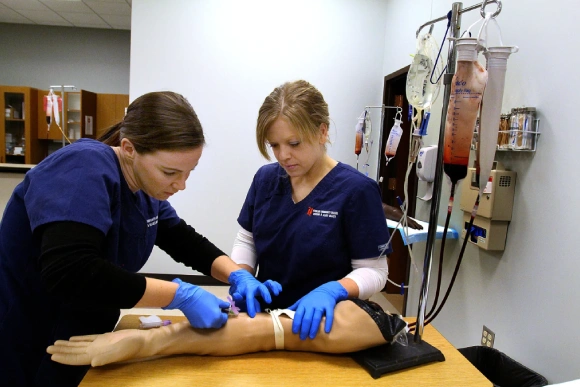
Medical Tasks: MAs assist physicians and nurses with clinical tasks. They check vital signs, prepare patients for check-ups, collect samples for tests, give medicines, and do simple lab tests.
Taking Care of Patients: MAs provide direct patient care. They explain treatment plans and how to take care of themselves.
Keeping Equipment Clean: MAs make sure medical tools are clean and work right. They might also help in minor surgical procedures.
Writing Things Down: MAs write patient information, medical history, and treatment plans in electronic health records (EHRs).
What medical assistants can do might differ in each state, so it’s essential to know the rules where you want to work.
Medical assistants work in various healthcare settings, and here’s what they do:
Doctor’s Offices: MAs help doctors in their private offices.
Hospitals: They assist in different parts of hospitals, like the emergency room and clinics.
Clinics: In outpatient clinics, they support patients who don’t need to stay in the hospital.
Urgent Care Centers: They provide quick care for non-serious health issues.
Specialized Clinics: MAs work in dermatology, cardiology, or orthopedics.
Nursing Homes: Some work in homes for the elderly, caring for older people.
Medical Laboratories: They do basic tests and help collect and handle samples.
The need for medical assistants is increasing because there are more older people. Also, it’s getting easier to get healthcare, and medical technology is improving.
To become a medical assistant, you must complete a training program. There are different types of programs available, including:
Specific skills and qualifications are required to excel as a medical assistant. These include:
The top level for a medical assistant is Certified Medical Assistant (CMA). To become a CMA, MAs need to pass an exam from the American Association of Medical Assistants (AAMA). Being a CMA shows that an MA is skilled and dedicated.
To take the CMA exam, you should finish a medical assistant program accredited by the Commission on Accreditation of Allied Health Education Programs (CAAHEP) or the Accrediting Bureau of Health Education Schools (ABHES). You’ll also need to complete an internship or work in a medical place.
Certification is only sometimes needed to work as a medical assistant, but it’s a good idea. It can help you get better jobs and higher pay. In some states, you might have to get certified or registered to work as a medical assistant.</span
An important thing to keep in mind is that every workplace is different, and medical assistants may be expected to perform a combination of duties specific to the needs of their medical office. Here are a few examples of how different needs can change the job description:
In a smaller private practice, a medical assistant may be expected to schedule patient appointments and provide patient care, such as taking weight and height measurements. Meanwhile, a medical office with a large staff, such as a group practice, may separate the roles of patient care and administrative work.
While a small private practice may assign a medical assistant to take X-rays or perform blood draws, a high-volume practice in a hospital may direct their patient to the radiology or diagnostic center within their building. A large hospital will most likely have a billing department, while in private practice, a medical assistant may oversee the processing of billing and insurance claims.
The specialty or subspecialty of a medical facility affects the expertise and daily duties of its medical assistant. For example, an administrative medical assistant at an urgent care clinic will frequently encounter work-related injuries and worker’s compensation, while administrative medical assistants at a dermatology or other specialty clinic may be required to send and receive referrals.
With campuses in Dallas and Arlington, CCI Training Center offers comprehensive, accelerated career training in Medical Assisting with Nutrition and Weight Management, among other healthcare career options.
Medical assistants work in various healthcare settings, and their work hours can vary depending on the facility’s operating hours and patient demand. Some of the typical work schedule options for medical assistants include:
While there are no formal education requirements to become a medical assistant, most employers prefer candidates who have completed a training program. Additionally, some states may have specific licensing or certification requirements. Here’s what you need to know:
Being a medical assistant can be a fulfilling career if you’re interested in healthcare and enjoy helping patients. With more people needing healthcare, medical assistants are becoming even more critical.
If you’re considering becoming an MA, choose a good training program that suits your needs and goals. Online programs, like those offered by CCI Training Center, give you flexibility and quality education.
When you learn the right skills in an outstanding MA program, you can enter the healthcare field with great confidence. You’ll make a very positive impact on the lives of the patients. So, don’t hesitate to start your exciting journey toward a truly fulfilling career as a medical assistant. You’ll discover so many fantastic opportunities waiting for you. Good luck!
This article is written by
Share this article
This article is written by
Share this article


CCI Training Center Proudly Completes
41 Years in Career Training Services