









Generic selectors
Exact matches only
Search in title
Search in content
Post Type Selectors

Summary

Medical Administrative Assistants play a crucial role in healthcare offices, managing various tasks like patient coordination and administrative workflows. They need skills like organization,
ℹ️ This summary was generated by AI and may contain inaccuracies or omissions. Please refer to the full article for complete information.

Physical and Health Requirements for LSRT Students

Contact Us

    View full terms

    This enables CCI Training Center to contact you regarding our services via SMS message to the phone number you provided above. Message and data rates may apply. Text "HELP" for support and "STOP" to cancel.

    * By clicking the button below as my official signature, I consent to representatives of CCI Training Center contacting me about educational opportunities via phone, text message, and email. I understand that my consent is not a requirement
    for any purchase.

    For more information about our graduation rates, the median debt of students who completed the program, and other important information, please refer to the Gainful Employment Disclaimers.

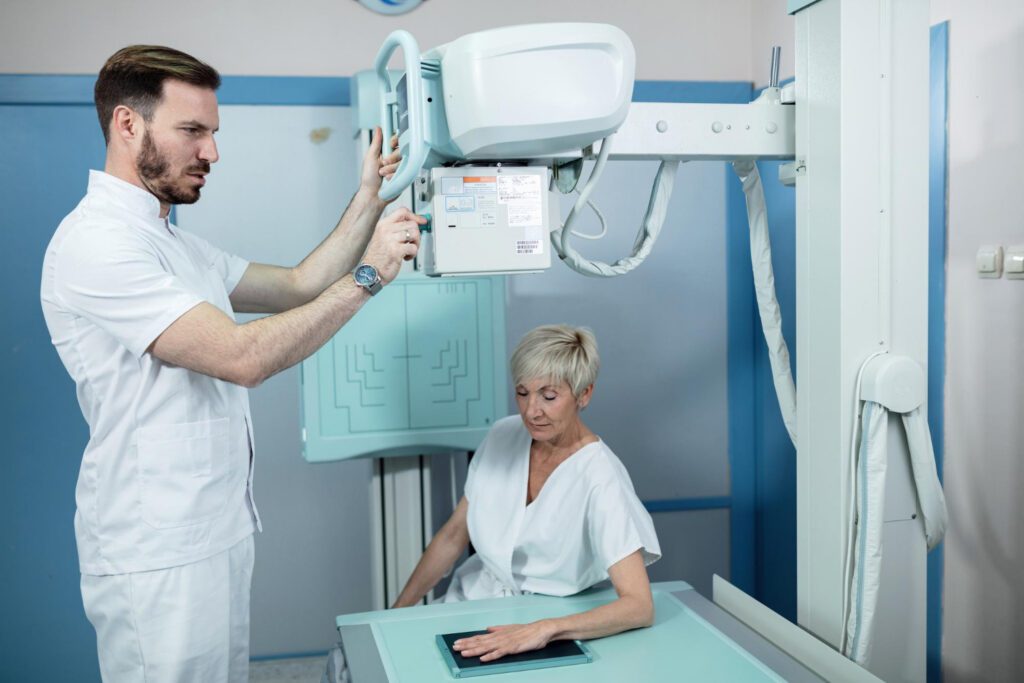
    Physically fit limited-scope radiology technician performing a hand X-ray.
    Key Takeaways:
    • 85-90% of the job of a limited-scope rad tech is on foot, so good stamina is a must.
    • Good joint health is needed as a lot of bending and kneeling is involved.
    • Decent pushing muscles are needed, as rad technicians often push 100+ lbs patients on stretchers.
    • Proof of immunity or vaccination for measles/mumps/rubella (MMR), varicella (chickenpox), and more.

    Not everyone entering an LSRT program is fresh out of high school. Many students are career changers, parents, or professionals starting over, and that often leads to asking themselves some very real questions, like;

    • Will I be able to handle the physical side of the job? 
    • Are there health requirements I should worry about before applying?

    These concerns are especially common for people stepping into healthcare from a completely different field. One reason this career attracts so many career changers is its strong growth outlook.

    According to the U.S. Bureau of Labor Statistics, employment for radiologic and MRI technologists is projected to grow 5 per cent from 2024 to 2034, faster than the average for all occupations. As imaging services continue to expand across hospitals, outpatient centers, and physician offices, this steady growth also supports increased demand for limited-scope radiologic technicians.

    With more patients requiring diagnostic imaging, healthcare facilities rely not only on fully registered technologists but also on trained limited-scope professionals to assist with routine X-ray procedures and maintain workflow efficiency.

    But here’s what you need to know: LSRT programs often include externships that are hands-on. Students spend long hours standing, helping patients move safely, and working closely with imaging equipment in clinical environments.

    Because of this, programs set specific physical and health requirements for LSRT students to ensure they can train safely and confidently. To know what the physical and health requirements for LSRT students, read this blog to the very end!

    What Are The Physical Requirements for LSRT Students?

    As highlighted in the introduction, in practice, LSRTs work in high-tech imaging suites. This environment underscores the significance of physical demands. Therefore, programs and employers consistently require students to meet these physical requirements for LSRT students:

    1. Stand/Endure Long Shifts

    Be able to stand and walk for 85–90% of a typical 8-hour work shift with sustained physical stamina, postural stability, and consistent adherence to clinical safety standards.

    2. Movement & Flexibility

    Movement and flexibility are essential in LSRT roles. This is because this profession needs frequent bending, stooping, crouching, and kneeling, often 20+ times per hour, to position patients accurately and operate imaging equipment efficiently.

    3. Lift or Move Patients and Equipment

    While there are no traditional-style clinical rotations, (limited-scope) radiology technicians are required to routinely push heavy mobile units (up to 100+ lbs, including stretchers, portable X-ray machines, and wheelchairs) without injury. Therefore, the person should be able to manage all of these physically.

    4. Manual Dexterity

    Another important LSRT program physical demand is the use of fine motor skills to operate complex imaging controls, set up precise equipment, and handle delicate parts. Technologists must accurately adjust machine settings and attach components.

    Now that you have a rough idea of the physical requirements for LSRT student standards, prospective LSRT students should honestly assess their strength, balance, and stamina.

    After that question yourself, “Can I meet the LSRT physical requirements”?

    If you think “yes”, go ahead! 

    The purpose of setting these physical requirements for LSRT students is to ensure they can perform clinical duties safely and reduce the risk of injury during training and practice.

    What Are the Health Requirements For Limited Scope Radiologic Technologists?

    Apart from physical fitness, health requirements for limited scope radiologic technologists are stringent. Most LSRT programs require students to have up-to-date vaccinations and screenings before enrolling. Let’s learn about these common requirements in brief:

    1. Immunizations

    Proof of immunity or vaccination for measles/mumps/rubella (MMR), varicella (chickenpox), hepatitis B, and tetanus/diphtheria/pertussis (Tdap). Many programs also require an annual influenza shot. Many states (e.g., Massachusetts) even mandate meningococcal vaccine for health students under 21.

    2. Tuberculosis (TB) Screening

    A recent negative TB test (skin or blood test) or chest X-ray clearance is usually required for medical clearance for LSRT programs. This ensures students are free of contagious TB before patient contact.

    3. Drug Screen Check

    Because students work with patients and sensitive equipment, programs typically require a clean criminal background check and a negative drug test. Failure in this medical clearance for limited-scope technician training programs can prevent placement in clinical sites.

    4. Sensory Capabilities

    Have clear eyesight and hearing to read orders/charts, evaluate images on screens, and respond to alarms. They must verbally communicate instructions and reassurance to patients, ensuring cooperation and safety.

    If you meet or can prepare to meet these physical or health requirements for LSRT students, this training can be a viable and rewarding step in your career change. And if you don’t have a specific degree in this field and are looking for an entry-level pathway, you can consider enrolling in the (limited-scope) Radiology Technician Training program at CCI Training Center.

    However, if you are unsure if you meet the mentioned requirements (both physical and health), then you can contact our admission services to learn more.

    This 8-month, beginner-friendly program consists of 10 courses. The first four months are delivered online through live lectures, labs, and simulations, followed by a four-month externship at medical facilities near the student. Upon completion, graduates earn a Limited Scope Radiology Technician certificate and are prepared for the ARRT-administered state licensing exam.

    Conclusion

    By reading this blog, one thing must be clear to you so far that success in an LSRT program demands both physical readiness and up-to-date health clearances. These standard physical and health requirements for LSRT students aren’t meant to discourage you; they ensure you work safely, prevent injuries, and protect your long-term health in a clinical setting.

    FAQ

    Can I meet LSRT physical requirements if I am changing careers?

    Yes. Many LSRT students are career changers. As long as you meet the physical and health requirements for LSRT students, you are all good to pursue your career in this field.

    LSRT students must meet physical demands, such as standing for long shifts, lifting equipment, and patient positioning, as well as health requirements, including vaccinations, TB screening, vision and hearing checks, and drug screening.

    Yes. At CCI Training Center, we offer a limited-scope radiology technician training program for students without prior healthcare degrees. To enrol, fill out our request info form, and one of our experts will get in touch with you as soon as possible.

    You can prepare by improving core strength, flexibility, and stamina, practicing proper lifting techniques, and addressing any health clearances (vaccinations, screenings) early in the application process.

    Absolutely! With the growing demand for senior radiologic technologists in the U.S., limited scope radiology technician training can lead to stable entry-level roles in clinics, imaging centers, and healthcare facilities.

    Related Articles

    CCI Training Center Proudly Completes

    41 Years in Career Training Services