












Summary

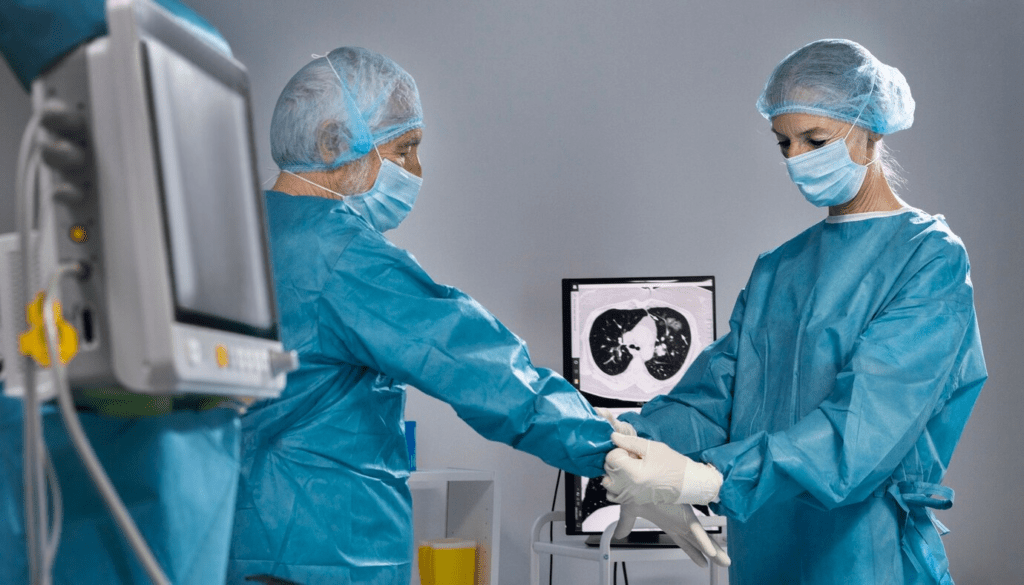
The healthcare industry needs a lot of skilled workers – you can say that A MILLION or even more. If we talk about nurses, they work directly with patients in different medical settings.
However, the job description for a radiology technician is focused on one part of patient care.
While both of them work closely together, their jobs, training, and skills are different in meaningful ways.
Let’s check out the key differences between these two roles.
1. Scope of Practice
The radiology nurses and Radiology technician’s job descriptions are different. They have unique roles in patient care and imaging. How? Let’s find out.
Radiologic Technician
Radiologic technicians usually focus on the technical parts of imaging, including:
Operating Imaging Equipment:
CT scans, X-rays, MRIs, and mammography machines are used to ensure the patient is positioned correctly for clear images.
Patient Preparation:
The procedure, position of the patient, and use of protective gear like lead aprons to reduce radiation exposure are taken care of.
Image Acquisition:
High-quality images are used for accurate diagnosis. They do it by adjusting the equipment and choosing the proper imaging techniques.
Radiation Safety:
Proper safety rules are followed to limit radiation exposure for both patients and staff. They use protective gear and take care of the imaging equipment.
Image Processing and Evaluation:
The images are processed digitally to ensure they meet diagnostic standards before forwarding them to the radiologist.
Radiology Nurse
They do –
Patient Assessment:
Checking the patient’s medical history, health, and risks related to the imaging procedure are the pros of a radiology nurse.
Patient Education:
Making patients and families aware of the procedure. They inform them of what preparations are needed and what to do afterward.
Assistance:
Helping with biopsies, angiography, and catheter placements in interventional radiology.
2. Teamwork and Collaboration

Collaboration is necessary in radiology care, but the extent and nature of teamwork differ between those two roles.
Radiologic Technician
Radiologic technicians work following the supervision of radiologists. These are the pros of a radiology Technician and then they collaborate with –
- Nurses, to ensure that the patients are prepared for imaging.
- Referring physicians that clarify imaging requirements.
Radiology Nurses
RNs work closely with –
- Radiologists to get assistance during the procedures.
- Anesthesiologists to ensure the safety and comfort of the patients.
- Both – to take care of the patients in transferring from inpatient units.
- Both – to follow-up after imaging.
3. Interaction with the Patients
Their way of interacting with the patients differs.
Radiologic Technicians
RT’s interaction is made during the imaging process. They –
- Thoroughly explain the entire process.
- Provide instructions.
- Ensure the correct positioning of the patients on the examination table.
- Adjust equipment.
Radiology Nurse
RNs take care of every measure of patient care. They –
- Address the needs of the patients.
- Make sure patient concerns are heard.
- Create a calming environment for anxious patients.
4. Education

When it comes to education, here is what you need to know.
Radiologic Technicians
So, how long is the education process as a radiology tech? Their studies include –
- anatomy,
- physiology,
- computer fundamentals,
- medical terminology,
- basic pharmacology,
- phlebotomy,
- imaging techniques, and
- hands-on practice.
To work as a technician, they must pass a certification exam.
It is required in most states when it comes to the Radiology Technician certification.
Some technicians also specialize in –
- CT,
- MRI,
- mammography, or
- Interventional radiography (IR) can be done by getting extra certifications.
Radiology Nurses
Radiology nurses need to become registered nurses (RNs) first.
And if anyone wants to specialize in radiology nursing, they usually need to earn additional certifications first.
Those include the Certified Radiology Nurse (CRN) credential from the Radiologic Nursing Certification Board.
To get this certification, they need experience in radiology nursing. However, they must pass an exam that covers patient care, imaging methods, and radiology procedures.
5. Collaboration
If we talk about their collaboration, they do their job with various other health experts.
But, their line of collaboration differs. How?
RNs work more with radiologists and anesthesiologists depending on the patient’s needs.
You can say that they often act as an intermediary between the two departments.
On the contrary, RTs collaborate with radiologists to provide technical details about the images.
However, their career advancements are also very different.
RNs can get certifications and advanced practice roles, but RTs seek advanced imaging modality work or take on supervisory roles.
So, Which One Is Harder – Radiology Tech vs Nurse?

Nursing school can be more complicated than radiology technician school. It is because students registered for nursing spend more time gaining practical experience. They need more detailed knowledge regarding the human body and medicine.
If you are interested in healthcare and technology but prefer a focused area of study, consider becoming a radiologic technician.
Wrapping Up
Both Radiologic Technicians and Radiology Nurses are the main pillars of radiology care.
However, their training, focus, and interaction with patients vary greatly. Understanding these key differences can help guide you on the right path and help you choose the career that fits your interests and skill levels.
RTs and RNs play complementary roles in patient care, even if they are different.
Nurses focus more on patient care, monitoring, and preparations. However, technicians specialize in imaging procedures.

 Pamela Christianson
 Pamela Christianson
 Pamela Christianson
 Pamela Christianson
 Pamela Christianson
 Pamela Christianson