











Generic selectors
Exact matches only
Search in title
Search in content
Post Type Selectors

Are Compounding Pharmacies Still Necessary?

Contact Us

    View full terms

    This enables CCI Training Center to contact you regarding our services via SMS message to the phone number you provided above. Message and data rates may apply. Text "HELP" for support and "STOP" to cancel.

    * By clicking the button below as my official signature, I consent to representatives of CCI Training Center contacting me about educational opportunities via phone, text message, and email. I understand that my consent is not a requirement
    for any purchase.

    For more information about our graduation rates, the median debt of students who completed the program, and other important information, please refer to the Gainful Employment Disclaimers.

    Compounding Pharmacies Still Necessary

    Are Compounding Pharmacies Still Necessary?

    With advancements in medicine production and easy availability of both OTC and prescription medications, it is natural to ask, “Are compounding 

    pharmacies still necessary?” In short, yes. 

    Compounding pharmacies are essential as they offer prescription medication unavailable in a specific doses and non-standard combinations of medication. 

    Key Takeaways

    • Compounding pharmacies customize medications when commercial products don’t meet a patient’s needs.
    • They prepare sterile and non‑sterile products and operate under 503A or 503B regulations.
    • Compounding is appropriate for unique doses, alternative dosage forms, allergen‑free or flavored medications, and shortages.

    What Is a Compounding Pharmacy?

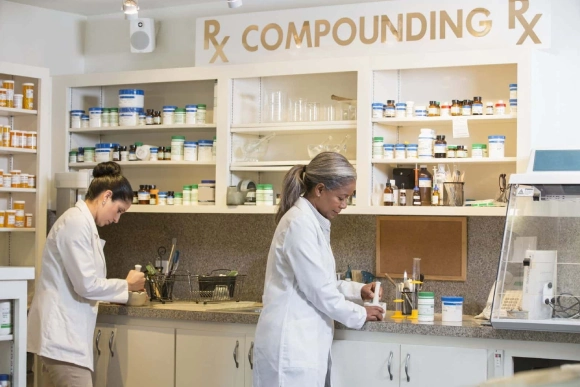
    A compounding pharmacy is a specialized facility that combines, mixes, or alters medications to tailor fit a patient in situations where, for some reason, a common medication won’t work. 

    Some patients may be allergic to an ingredient in the medication, and a compounding pharmacy can alter the medication to eliminate that ingredient. Where a patient, perhaps an elderly person or a small child, may be unable to swallow a pill, a compounding pharmacy can create the medication in liquid form to allow the patient to take the medication more easily. 

    A compounding pharmacist can also add flavoring to a bad-tasting medication, or create a child-size dosage of a medication that’s only manufactured in an adult dosage. They can even create a topical form of a medication, such as a cream or gel, which allows the medication to be absorbed through the skin. In some cases, when a drug manufacturer discontinues a drug, a compounding pharmacy may be able to duplicate that medication on a small scale for patients who need to continue taking it.

    How Many Types of Compounding Pharmacies Are There?

    US law recognizes two categories of compounders:

    • 503A Pharmacies: These prepare medications only when a doctor writes a specific prescription for an individual patient.
    • 503B Outsourcing Facilities: These can produce larger batches of sterile medications for hospitals and clinics. These facilities must meet more stringent quality and inspection standards.

    Why is Compounding Pharmacy Necessary?

    Compounding is used when a mass‑produced medicine doesn’t meet a patient’s needs. While we touched on some of the situations above, here are some more scenarios in which a doctor may prescribe a compounded medication:

      • Custom strength or dosage: A patient requires a dose that isn’t manufactured commercially.
      • Different dosage form: Children, older adults or people with swallowing problems may need a liquid, topical cream, suppository or dissolvable tablet instead of a pill.
      • Removing allergens: Eliminating inactive ingredients such as lactose, gluten, dyes or preservatives.
      • Improved flavor: Adding flavors (e.g., fruit for kids or chicken/beef for pets) to mask unpleasant tastes.
      • Drug shortages or discontinuations: Compounding can fill gaps when manufactured drugs are in short supply or discontinued.
      • Combination medications: Combining multiple active ingredients into a single dose for people who take several medicines.
    • Hormone replacement therapy (HRT) and testosterone replacement therapy (TRT): Compounding allows personalized dosing for hormonal imbalance.
    • Personalized nutraceuticals and supplements: Compounded nutraceuticals deliver precise amounts of vitamins or supplements.

    Are Compounding Pharmacies Safe?

    Generally, these are safe; however, since compounded drugs are custom-made, they do not go through the same FDA approval process as mass‑produced drugs, which can increase the risk of the following:

    • Incorrect ingredients or contamination
    • Dosing errors
    • Variable potency

    With that said, compounded pharmacies must follow the guidelines laid out by the US Pharmacopeia (USP). Additionally, the Drug Enforcement Administration oversees controlled substances in compounded drugs.

    How to Choose the Right Compounding Pharmacy?

    To minimize risks, patients should work with experienced pharmacists and technicians and ask key questions:

    • Licensing: Is the pharmacy licensed to dispense medications in your state? Verify with your state Board of Pharmacy.
    • Training: Are the pharmacists board-certified (e.g., BCSCP for sterile compounding), and are technicians certified through recognized programs like PTCB?
    • Quality controls: Does a third-party lab test the products for potency and contamination? Ask whether the facility follows USP <795> and USP <797> standards.
    • Accreditation: Is the pharmacy accredited by the Pharmacy Compounding Accreditation Board (PCAB)? PCAB accreditation is considered the gold standard.
    • Be wary of online purchases: The FDA warns that online suppliers selling compounded GLP‑1 drugs may not meet quality standards.

    The Alliance for Pharmacy Compounding maintains a searchable directory of licensed compounding pharmacies. You can search for a reputable compounding pharmacy before visiting. 

    Your healthcare provider can also recommend trusted pharmacies.

    Compounded Weight-Loss Drugs (Semaglutide & Tirzepatide)

    Compounding pharmacies have been in the news lately due to selling counterfeit versions of weight-loss drugs like Ozempic that contain glucagon‑like peptide‑1 (GLP‑1) receptor agonists, such as semaglutide. However, compounding these medications carries unique risks:

    • Unapproved chemical forms: Some compounders have used semaglutide sodium or semaglutide acetate, which are not FDA‑approved ingredients.
    • Dosing errors: FDA-approved products come in pre-filled pens. Compounded versions often require self‑measuring, increasing the risk of overdose or underdose.
    • Legality: When the FDA removes a drug from the shortage list, pharmacies must stop compounding it. Compounding GLP‑1 drugs without a legitimate shortage may violate federal law.

    For patients seeking tirzepatide weight‑loss injections, the safest option is FDA‑approved products. Compounded alternatives should only be used when a genuine shortage exists and should come from a 503B outsourcing facility or a PCAB‑accredited 503A pharmacy. Always consult your healthcare provider.

    Can Pharmacy Technicians Compound Medications?

    Pharmacy technicians often assist licensed pharmacists with compounding. Their duties may include measuring ingredients, operating sterile hoods, labeling finished products and maintaining equipment.

    In the US, technicians must be registered with their state board and often obtain certification like Certified Pharmacy Technician (CPhT). Additional credentials, such as the PTCB’s Non‑Sterile Compounding Certificate or Certified Compounded Sterile Preparation Technician (CSPT), demonstrate specialized training. 

    Looking to become a pharma tech? You can get job-ready in as little as 25 weeks with the CCI Training Center Pharmacy Technician Training Program.  

    Is Compounding Still Worth It Today?

    Yes, compounding pharmacies continue to play an essential role. They fill the gap for patients who need personalized medications or face drug shortages.

    However, the benefits must be weighed against the risks of contamination and dosing errors. Selecting a reputable, accredited pharmacy and involving your healthcare provider is crucial.

    This article is written by

    Carey Maceira
    An accomplished leader in the allied health career education sector, Carey enjoys managing career education programs, teaching, and mentoring adult students. Her success in working in the field drives her to go above and beyond each and every day.

    Share this article

    Frequently Asked Questions FAQ's

    Are compounded drugs FDA‑approved?

    No. Compounded drugs are not approved by the Food and Drug Administration (FDA), which means the agency does not evaluate them for safety, effectiveness or quality before they reach patients.

    A compounded medication may be necessary when a patient cannot take or tolerate a commercially available product.

    Licensed pharmacists are allowed to compound medications. Pharmacy technicians may also assist pharmacists with compounding.

    Coverage depends on your insurance plan. Some plans cover compounded medications when they are medically necessary and no suitable commercially available alternative exists.

    Related Articles

    CCI Training 40 Years Anniversary

    CCI Training Center is proud to have completed 40 years in service.